
 Indian dancers liven up the Indian Dance by entertaining as well as enlightening the people. The performance of the artists intensifies the dancing sequence and highlights the theme. The dances of India are either religiously reverent in nature, based on mythology, or they are intended to mark occasions, special ceremonies such as marriage, birth of a child or other auspicious events.
Indian Dancers
Indian dancers liven up the Indian Dance performance with their presentation and expanded each dance with their contribution. They have outstanding contribution in popularising the different forms of dances.
Introduction
Indian dancers liven up the Indian Dance by entertaining as well as enlightening the people. The performance of the artists intensifies the dancing sequence and highlights the theme. The dances of India are either religiously reverent in nature, based on mythology, or they are intended to mark occasions, special ceremonies such as marriage, birth of a child or other auspicious events.History of Indian Dancers
The very essence of Indian dance can be found prominently in its classical form. Classical dance refers to "Natya", whose theory can be traced back to "Natya Shastra" of Bharat Muni. Indian dance with its distinct flavour of "Natya", "leela", "rasa", and "mudra" has illustrated the rich ethnicity of India since the ancient times. "Natya Shastra" has categorized eight classical dance forms namely "Bharatnatyam", "Kathak", "Kathakali", "Kuchipudi", "Manipuri", "Mohiniaattam", "Odissi" and "Sattriya". These classical dances were performed by the "Devadasis" to gratify the almighty. In the ancient days, dance performances took place inside the sanctum of the temples. However, in the medieval era dance performances were taken to the courts of the kings and the concept of `Rajanarthakis` developed. Gradually, dance began to be appreciated as a separate art form and Indian Dancers started taking keen interest in this creative field.
Indian Classical Dancers
 Indian Classical Dancers are the torch bearers` of Classicism who have had forayed into self chosen ways of traditional upswings to become the dancers they have become. Some of the well know2n Classical Dancers are Alokananda Roy, Swami Haridas, Amita Dutt, Chitra Vishweswaran, Padma Subramanyam, Madhavi Mudgal, Mahua Mukherjee and many other exponents.
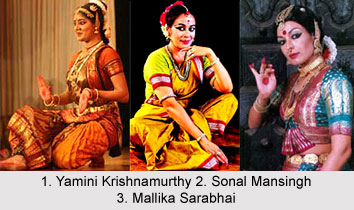
Sonal Mansingh : Sonal Mansingh is one of the finest classical dancers of the country, who has made her mark in the field of Odissi Dance. She was born on 1st May 1943 to a devout mother Poornima Pakvasa who had a love for creative art. Sonal Mansingh took up dance as profession at a time when it still had not gained respectability as a profession. Prejudices still exist in order that a dancer was called names like `nautch girl`, she did not pay heed to such snide remarks. She grew up in a family, which emphasized through their living, the values of the free Indian spirit. Her grand father Mangaldas Pakvasa, a freedom fighter was a man who believed in equality of gender. He instilled in her, timeless values that she still cherishes today and encouraged her artistic talents, which she wanted to use to serve the cause of culture with dignity through dance. So the support from grandfather and mother to learn dance raised the great dancer. To her dance is a part of the environment and dance forms should reflect issues of the society and she firmly believes that art forms have the power to bring even countries closer. Some of her choreographic works reflects issues concerning women and environment.
Yamini Krishnamurthy : Yamini Krishnamurthy is an exponent of Bharatnatyam and Kuchipudi and has dedicated her life to Indian classical dance for decades. This eminent dancer of Bharatnatyam and Kuchipudi, Yamini Krishnamurthy was born into a Telugu family on a full moon night in 1940 at Madanapalli, Andhra Pradesh. Yamini`s father, M. Krishnamurthy, was a Sanskrit scholar and grandfather was an expert in Urdu poetry. Her grandfather named her `Yamini Poornatilaka`, that means "a beautiful mark on the brow of light". Her charisma and stage presence were recognized when she gave her debut in 1957 in Chennai. She became one of the most admired dancers in the country by 1960. Her performances brought about national and international recognition to the classical styles of Bharat Natyam and Kuchipudi. Yamini`s played significant role in popularizing Kuchipudi that was then emerging as a solo dance form of Andhra Pradesh in southern India.
Mallika Sarabhai : Mallika Sarabhai is one of the most renowned Kuchipudi and Bharatanatyam dancers in India today. This performer and creator of many talents developed from being a young, internationally acclaimed classical dancer and film personality, to being an activist and commentator on social issues. Positive reassertion of images of womanhood has been reflected through her dance, theatre and writing. She exercises the vocabularies of Indian traditions as biting tools to carve new reactions in a culture, which favors conservatism. As dancer, actress, choreographer, writer, or instigator of community projects she challenges audiences to sit up and think, realign themselves to questions of ecology, women`s place in society, gender awareness, cultural atrophy, the very place of the arts in our society. Dynamic, charming and dry-witted, she is a rare creature in the arts. It is her expertise and deep knowledge of two forms of Indian classical dance, Bharatanatyam and Kuchipudi from Tamil Nadu and Andhra Pradesh respectively at the root of Mallika`s performance. Mallika received her first award in 1977. Along with many salutations she was the recipient of the "French Palme D`or", the highest civilian award by the French Government and in Paris she was honored as the `Best Soloist Artist` among 400 dancers from 25 countries among other awards.
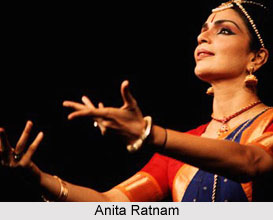
Anita Ratnam : Anita Ratnam is one of the most talented and accomplished classical dancers of the Indian subcontinent. She has been trained as a Bharatanatyam, Mohiniattam as well as a Kathakali dancer and is counted amongst the best choreographers of the South. With performances over 1000 and a three-decade career span Anita Ratnam is also handling the responsibility of being a Choreographer, cultural commentator, writer, speaker and television personality. She should be applauding for the role she is playing in the promotion of Indian dance internationally.
Under Adyar K. Lakshmanan, Anita had her formal training in dance. Later, she enrolled herself in Rukmini Devi Arundale`s `Kalakshetra` for a Postgraduate diploma in Dance. From the University of New Orleans Anita completed her Master`s degree in Theatre and Television. She also worked as a Television Producer in the United States for ten years. Anita was nominated for the Emmy and Ace awards as an appreciation of her work during her reign in United States. Anita also made an initial venture into films and played the role of an antagonist in Rajiv Menon`s famous movie, `Kandukondain Kandukondain`.
 Amita Dutt : She received her Kathak training under Pandit Birju Maharaj, Sm. Bela Arnab, Sm. Ram Mohan Mishra, Rajendra Gangani, Bandana Sen, Smt. Susmita Mishra and Pandit Vijai Shankar. She trained Kathakali under Guru Govindan and Odissi under Guru Muralidhar Majhi. She received her lessons in folk dance under Sm. Arati Majumdar, and Ram Gopal Bhattacharya taught her Pandit Uday Shankar style of dancing. She trained under Kalanidhi Narayan for Satvik Abhinaya. Pandit Birju Maharaj, Ram Gopal Bhattacharya and Santi Bose taught her the art of choreography.
Apart from solo renditions, Amita has been continuously experimenting with new choreographic technique. She has staged a number of successful productions including Nazrul nana Chande, Biswa Beena Robey, Durga, Chitra Jhankar, East West Encounter, Joyodhwani, Amrapali, Varsha and Basant-Bahar.
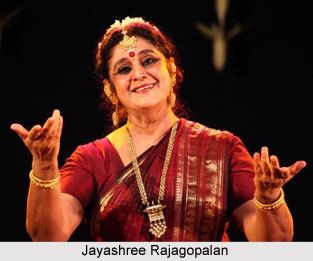
Jayashree Rajagopalan : Jayashree Rajagopalan was inducted into the art of dance. She perfectly exaggerated her art with strong and active practice, love and commitment. She has catered her audiences in almost all major cities and festivals all over India through her solo concerts and ballets. At the international festival held at Athens, at the Festival De La Mer at Mauritius and at Singapore she has performed her concert. She has bagged the unparallel exclusive right of representing India in France in the International summer Festival. She has demonstrated for major universities and organizations also. Jayashree Rajagopalan has been esteemed as a performing artiste of rare quality. Kavi Kalidasa`s "Shakuntalam", the "Ramayana", excerpts from the Bhagvatam, the "Dasavataram" and Rabindranath Tagore`s work "Chandalika" are the dance dramas that she has choreographed and presented to cater the audience.
 Chitra Vishweswaran : Chitra Vishweswaran is famed as one of the leading Bharatnatyam dancers of India. Along with being an amazing dancer, she is also an excellent teacher and a brilliant choreographer. Chitra has enriched the traditional Indian dance style with contributing her own concepts through her experimentation and innovations. She produced and choreographed several dance dramas in her own style, which were highly acclaimed. Some of them are `Devi Ashta Rasa Malika`, `Panchali` based on Subramania Bharathi`s Panchali Sabadam, `Raghuvamsa Thilakam`, `Ayothi Mannan`, `Dwarakanatham Bhaje`, `Dasavatharam`, and `Nritya Srinkhala`.
Madhavi Mudgal : Madhavi Mudgal is trained in Bharatnatyam and Kathak under great gurus and have also performed these dance styles. Later she turned to Odissi, under the teacher Guru Hare Krishna, which she adopted as her preferred medium. She has also learned Odissi under the teaching of the renowned Guru Kelucharan Mahapatra. Madhavi has been actively involved in propagating the art of Odissi in New Delhi and other parts of India as well as the world, through teaching, performing and conducting workshops. She has trained a number of accomplished students who are performers now. In 1985 she organized a seminar and festival, Angahaar, a first of its kind event in New Delhi when gurus, scholars and dancers met to revisit the origins of Odissi and think about the future trends of the dance form.
Dr. Padma Subrahmanyam : Dr. Padma Subramanyam, the legendary Bharatnatyam dancer is a rare combination of a dancer, research scholar, choreographer, music composer & musician, teacher and author. Padma Subramanyam enchants spectators with perfect movements and hand gestures, timing, original ideas and emotes beautifully with her face. She imparts her immense knowledge to others by teaching dance, conducting workshops, giving lectures, doing research and writing articles This multi faceted and talented artist is famous in India as well as abroad, several films and documentaries have been made in her honor by countries like Japan, Australia and Russia.
Saroja Vaidyanathan : Saroja Vaidyanathan, a Bharatnatyam exponent, choreographer, and Guru has given performances at almost all major Centres in the country and in Nepal, Sri Lanka, Mauritius, Korea, Japan, Ukraine, UK, USA and Canada. During ASEAN Summit 2002, she was on a Cultural tour programme to Laos, Cambodia, Malaysia, and Singapore accompanying the Indian Prime Minister.
Western Indian Dancers
Western Indian dancers have made significant contributions in the niche of Indian dances, be it in the field of Odissi, Bharatnatyam, Kuchipudi or the various others. Some of these skilled dance performers are exponents of traditional Indian dances, while some others specialize in the genre of contemporary Indian dances. Dancers like Uday Shankar, Kanak Rele, Mallika Sarabhai, Sunanda Nair and many others have received several civilian and international awards and recognition for their role in expanding different types of Indian dances.
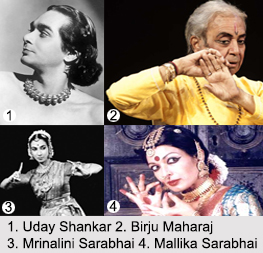
Uday Shankar : A veteran Indian choreographer and dancer, Uday Shankar is renowned for bringing about a unique fusion of Western theatrical elements and traditional Indian classical dances. He emphasized on the importance of Indian folk dances, classical dances and tribal dances, thereby popularizing the rich heritage of the country across the globe, especially during his performances in Europe and the United States. He was honoured with Sangeet Natak Akademi, the Sangeet Natak Akademi Fellowship for lifetime achievement, the Padma Vibhushan and several others. He was born in Rajasthan.
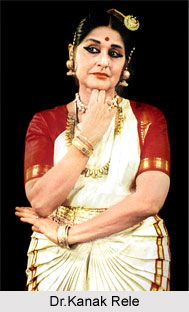 Kanak Rele : Born in the state of Gujarat, Dr.Kanak Rele is a famous exponent of the Mohiniyattom dance form and has founded the Nalanda Dance Research Centre in Mumbai. She is also the principal and founder of the Nalanda Nritya Kala Mahavidyalaya, also in Mumbai. She has received prestigious awards like Gaurav Puraskar which was offered by the Government of Gujarat and Padma Shri by the Government of India, besides being awarded with the title `Kala Vipanchee` by Vipanchee which is an institute imparting lessons in Indian dances. Other awards include Kalidas Samman conferred by the Government of Madhya Pradesh, Sangeet Natak Akademi Award, M S Subbalakshmi Award and the Padma Bhushan award which was offered by the Government of India. She was born in Gujarat.
Medha Yodh : Medha Yodh is a Gujarati dancer, who belongs to the region of Ahmedabad and is an exponent of Indian classical dances. She is credited for composing a documentary on the dance form of `Garba` and she also imparts lessons in the field of Bharatnatyam dance form in America.
Mrinalini Sarabhai : Mrinalini Sarabhai is a noted Indian dancer who has imparted training to students in dance forms like Kathakali and Bharatnaytam. Born in Ahmedabad, Gujarat, she is the founder and director of Darpana Academy of Performing Arts. She is a recipient of numerous awards like Padma Bhushan by the Government of India, Padma Shri, Sangeet Natak Akademi Fellowship Award and the title of `Degree of Doctor of Letters` which was offered by the University of East Anglia, United Kingdom.
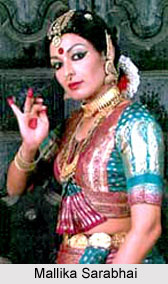 Mallika Sarabhai : The daughter of Mrinalini Sarabhai, Mallika Sarabhai is an Indian dancer of great repute and was born in Ahmedabad, Gujarat. She is an experienced Bharatnatyam and Kuchipudi dancer and has been offered several honours and awards like Padma Bhushan, Theatre Pasta Theatre Awards, Sangeet Natak Akademi Award, Kala Shiromani Puraskar, Woman of the Year Award by the Indian Merchants` Chamber and many others.
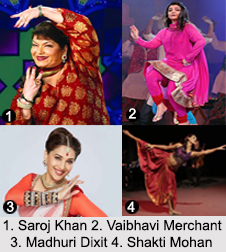
Shakti Mohan : Shakti Mohan is a young dancer who hails from the state of Maharashtra and performs various types of contemporary dances. She has appeared in the songs in movies like `Tees Maar Khan` and `Rowdy Rathore` and has won an overwhelming amount of Rs. 50 lakhs as cash prize in the dance reality show `Dance India Dance`.
 Sunanda Nair : Maharashtra boasts of another celebrated dancer who specializes in the dance form of Mohiniyattom and is the disciple of the reputed Mohiniyattom dancer Kanak Rele. She was born in Mumbai. She received innumerable accolades for popularizing the classical dance style of the state of Kerala. Her awards include Nelluvai Nambeeshan Smarak Award for her contribution in the arena of Mohiniyattom dance form, `Singer Mani` award from Sur Singad Sansad, Mumbai, Global Excellence Dance Award from New Orleans, Presidents Award for Community Service, yet again from New Orleans
Shashi Sankhla : Shashi Sankhla is a famous Kathak dancer who belongs to Jaipur, Rajasthan and has been offered awards like Sangeet Natak Akademi Awards 2008. She is the principal of Jaipur Kathak Kendra.
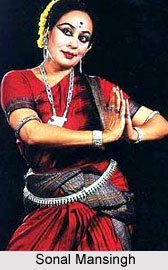
Sonal Mansingh : Sonal Mansingh was born in Mumbai, Maharashtra and is a distinguished Indian dancer who is proficient in `Odissi`, `Bharatnatyam`, `Chhau` and `Kuchipudi`. She has travelled to several places in order to perform these forms of dances and has also been honoured with awards. The Padma Bhushan, Padma Vibhushan, Kalidas Samman which has been awarded by the Government of Madhya Pradesh, etc.
Numerable types of Indian dances like tribal or folk dances, Indian classical dances and others have been experimented with and skillfully developed by these talented dancers.
Uday Shankar : A veteran Indian choreographer and dancer, Uday Shankar is renowned for bringing about a unique fusion of Western theatrical elements and traditional Indian classical dances. He emphasized on the importance of Indian folk dances, classical dances and tribal dances, thereby popularizing the rich heritage of the country across the globe, especially during his performances in Europe and the United States. He was honoured with Sangeet Natak Akademi, the Sangeet Natak Akademi Fellowship for lifetime achievement, the Padma Vibhushan and several others. He was born in Rajasthan.
Kanak Rele : Born in the state of Gujarat, Dr.Kanak Rele is a famous exponent of the Mohiniyattom dance form and has founded the Nalanda Dance Research Centre in Mumbai. She is also the principal and founder of the Nalanda Nritya Kala Mahavidyalaya, also in Mumbai. She has received prestigious awards like Gaurav Puraskar which was offered by the Government of Gujarat and Padma Shri by the Government of India, besides being awarded with the title `Kala Vipanchee` by Vipanchee which is an institute imparting lessons in Indian dances. Other awards include Kalidas Samman conferred by the Government of Madhya Pradesh, Sangeet Natak Akademi Award, M S Subbalakshmi Award and the Padma Bhushan award which was offered by the Government of India. She was born in Gujarat.
Medha Yodh : Medha Yodh is a Gujarati dancer, who belongs to the region of Ahmedabad and is an exponent of Indian classical dances. She is credited for composing a documentary on the dance form of `Garba` and she also imparts lessons in the field of Bharatnatyam dance form in America.
Mrinalini Sarabhai : Mrinalini Sarabhai is a noted Indian dancer who has imparted training to students in dance forms like Kathakali and Bharatnaytam. Born in Ahmedabad, Gujarat, she is the founder and director of Darpana Academy of Performing Arts. She is a recipient of numerous awards like Padma Bhushan by the Government of India, Padma Shri, Sangeet Natak Akademi Fellowship Award and the title of `Degree of Doctor of Letters` which was offered by the University of East Anglia, United Kingdom.
Mallika Sarabhai : The daughter of Mrinalini Sarabhai, Mallika Sarabhai is an Indian dancer of great repute and was born in Ahmedabad, Gujarat. She is an experienced Bharatnatyam and Kuchipudi dancer and has been offered several honours and awards like Padma Bhushan, Theatre Pasta Theatre Awards, Sangeet Natak Akademi Award, Kala Shiromani Puraskar, Woman of the Year Award by the Indian Merchants` Chamber and many others.
Shakti Mohan : Shakti Mohan is a young dancer who hails from the state of Maharashtra and performs various types of contemporary dances. She has appeared in the songs in movies like `Tees Maar Khan` and `Rowdy Rathore` and has won an overwhelming amount of Rs. 50 lakhs as cash prize in the dance reality show `Dance India Dance`.
Sunanda Nair : Maharashtra boasts of another celebrated dancer who specializes in the dance form of Mohiniyattom and is the disciple of the reputed Mohiniyattom dancer Kanak Rele. She was born in Mumbai. She received innumerable accolades for popularizing the classical dance style of the state of Kerala. Her awards include Nelluvai Nambeeshan Smarak Award for her contribution in the arena of Mohiniyattom dance form, `Singer Mani` award from Sur Singad Sansad, Mumbai, Global Excellence Dance Award from New Orleans, Presidents Award for Community Service, yet again from New Orleans
Shashi Sankhla : Shashi Sankhla is a famous Kathak dancer who belongs to Jaipur, Rajasthan and has been offered awards like Sangeet Natak Akademi Awards 2008. She is the principal of Jaipur Kathak Kendra.
Sonal Mansingh : Sonal Mansingh was born in Mumbai, Maharashtra and is a distinguished Indian dancer who is proficient in `Odissi`, `Bharatnatyam`, `Chhau` and `Kuchipudi`. She has travelled to several places in order to perform these forms of dances and has also been honoured with awards. The Padma Bhushan, Padma Vibhushan, Kalidas Samman which has been awarded by the Government of Madhya Pradesh, etc.
Numerable types of Indian dances like tribal or folk dances, Indian classical dances and others have been experimented with and skillfully developed by these talented dancers.
Famous Indian Dancers
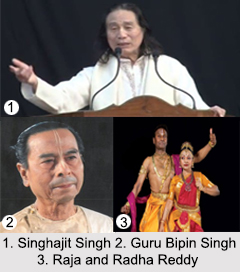 Following are the famous Indian Dancers:
Uday Shankar: He is known as the Father of Modern Dance in India. He initiated a revitalization movement of classical Indian dances in 1930. He is best known for creating a fusion style of dance, adapting European theatrical techniques to Indian classical dance, instilled with elements of Indian classical, folk, and tribal dance.
Birju Maharaj: Brijmohan Mishra popularly known as Pandit Birju Maharaj is the descendant of Ishwari Prasad, who is said to be the first celebrated Kathak teacher. He is famous for his experiments with dance-drama and Kathak, infusing the two in exclusive and unseen ways. He has also worked in Bollywood films and composed the music and sang for two dance sequences in the Satyajit Ray`s "Shatranj ke Khilari".
Mrinalini Sarabhai: She is credited with bringing Bharatnatyam out of its "Devdaasi" shadows. She"s the pioneer of making "Bharatnatyam" an acceptable dance form outside temples. Along with her husband, the legendary Vikram Sarabhai, she started the Darpana Academy of Performing Arts, and has contributed immensely to Gujarat`s classical dance scene.
Guru Kelucharan Mohapatra: He is a master in the domain of Odissi dance. For ten long years, Guru Kelucharan Mahapatra was closely associated with Odissi Research Centre in Bhubaneshwar and made priceless contributions to the work of Odissi style. He has taken Odissi dance to new and dizzying heights.
Mallika Sarabhai: She is a celebrated Kuchipudi and Bharatnatyam dancer and is the daughter of dancer Mrinalini Sarabhai. She took over the reins of "Darpana" and also launched "Darpana for Development".
Rukmini Arundale: She is one of the pioneers of the revitalization of Indian classical dance and also trained in ballerina. Rukmini Devi promoted "Bharatnatyam" and had an enormous role to play in the upliftment of "Bharatnatyam". She is also featured on India Today"s list of "100 People Who Shaped India".
Sonal Mansingh: She is one of the most celebrated exponents of Odissi and Bharatnatyam. She founded the Centre for Indian Classical Dances (CICD) in New Delhi in 1977. She"s also trained in Chhau and Indian music.
Singhajit Singh: He is one of the famous Manipuri dancers who played a vital role in popularizing the Manipuri dance among youth. He founded his own dance institution called the Manipuri Nrityashram in 1998. He"s known for incorporating innovative techniques as well as other Manipuri dance forms such as "Thang-ta", "Nata-sankirtana", "Lai-haraoba" and "Rasleela" into the traditional Manipuri structure.
Balasaraswati: She was the first to perform Bharatnatyam outside South India and has showcased "Bharatnatyam" across the globe. Her performances have won the appreciation of dance maestros from around the world including Shambhu Maharaj, Dame Margot Fonteyn, Martha Graham among others.
Sunanda Nair: She is one of the prominent Indian classical dancers who essayed a key role in popularising Mohiniyattam. She is the first one to receive a Master`s degree in Mohini Attam from Nalanda Nritya Kala Mahavidyalay affiliated to the University of Mumbai. Nair has won many awards for her immense contribution in the field of classical dancing.
Chinta Krishnamurthy: Chinta Krishnamurthy was a well known performer and guru of Kuchipudi dance. He played a crucial part, along with Banda Kanakalingeswara Rao in establishing the Shri Siddhendra Kalakshetram in Kuchipudi. He was bestowed with the Sangeet Natak Akademi Award.
Poushali Chatterjee: She has choreographed a number of dance dramas, the chief among them being "Krishnaleela", Rabindranath Tagore"s "Kalmrigaya" and "Maharshi Bhagyachandra", a dance drama based on the life of the pioneer of Manipuri Dance. In 1996, Poushali opened her own institution, Nandanik Manipuri Dance Academy.
Guru Kunju Kurup: He was one of the most famous Kathakali artists, who was a Padma Bhushan awardees of 1971. He succeeded in creating fresh aesthetics of Kathakali acting-dancing through inspiring presentation of "rasa" and "bhava abhinaya".
Sougaijam Thanil Singh: He is an Indian classical dancer, famous for his expertise in the classical dance forms of Manipuri and Nata Sankirtana. He has performed on many stages in India and abroad. He is a member of the Ministry of Culture of the Government of India and a recipient of the 1980 Manipuri State Kala Academy Award.
 Guru Bipin Singh: He was a choreographer and teacher of Manipuri dance. He choreographed many dance-dramas and solo dances and produced many students.
Raja and Radha Reddy: Raja and Radha Reddy are a Kuchipudi dancing couple, gurus and choreographers. The Government of India have conferred on them the Padma Shri and Padma Bhushan awards. They have choreographed many pieces namely, `Shivas Dance`, `Mahanatam`, `Shiva Leelas`, `Raasa Shabdam`, `Kuru Yadhunanandana Ashtapadi` and many more.
Kalamandalam Sivan Namboodiri: He is an Indian classical theatre performer, the first person from outside "chakyar" community to practice Koodiyattam from Kerala. He was awarded Padma Shri, in 2012, for his contributions to the art of "Koodiyattam".
Saroj Khan: Nirmala Nagpal, popularly known as Saroj Khan is one of the most outstanding Indian dance choreographers in Hindi cinema. With a career span of over forty years, she choreographed more than 2000 songs.
Priyambada Mohanty Hejmadi: She is an Indian classical dancer of Odissi, art writer, a biologist and a former vice chancellor of Sambalpur University. She has written several articles and a book, "Odissi: An Indian Classical Dance Form". The Government of India awarded her the Padma Shri.
Vaibhavi Merchant: She is an Indian dance choreographer working in Bollywood films. She is the winner of National Film Awards.
Yamini Reddy: She is an Indian classical dancer, a kuchipudi exemplar. She is the daughter of famous dancing couple Drs. Raja Reddy and Radha Reddy. She is the winner of Sangeet Natak Akademi Bismillah Khan Yuva Puraskar for dedication towards Kuchipudi Dance.
The other famous Indian Dancers are Mani Madhava Chakyar, Pattikkamthodi Ravunni Menon, Kalamandalam Kalyanikutty Amma, M. S. Sundari Bai, Deepti Omchery Bhalla, Moozhikkulam Kochukuttan Chakyar, Guru Chandrasekharan, Meenakshi Chitharanjan, Haobam Ongbi Ngangbi Devi, Vazhenkada Kunchu Nair, Sneha Kapoor, Lakshmi Gopalaswamy, Shakti and Mukti Mohan, Rajashree Warrier, Kapila Venu, Sharmistha Mukherjee, Madhuri Dixit and so on.
Recently updated articles in Indian Dances
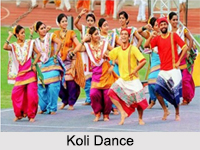
Koli Dance
A folk-dance form of Maharashtra, the Koli dance is mainly performance by the Koli community of the region. Known for their primary profession of fish...
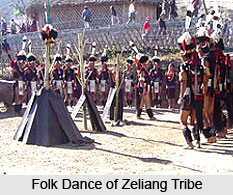
Folk Dances of Nagaland
Folk Dances of Nagaland reflects the naga tradition and culture of the local habitants. In most of the cases, naga dances are monopoly of men with som...
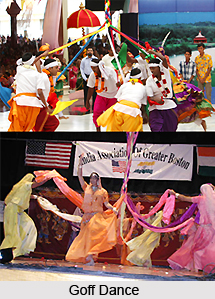
Goff Dance
Goff dance of Goa is performed during the Shigmo festival in the month of Phalgun in Hindu calendar. Goan peasants mainly practice this dance after th...
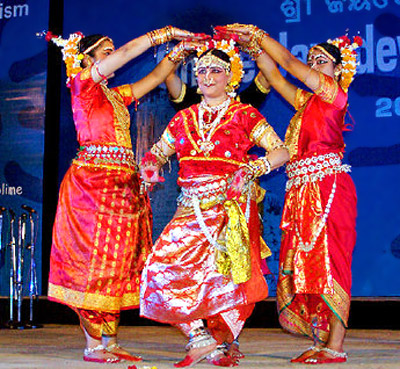
Abhinaya Chandrika
Abhinaya Chandrika is an ancient text on Odissi dance that explain every minute details of Odissi performance. The text explains about different mudra...
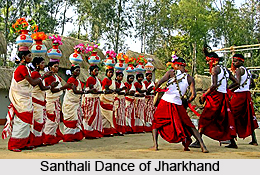
Santhali Dance
Santhali dance is a vibrant folk tradition of the Santhal tribe, reflecting the deep connection of the Santhal tribe with nature, community, and celeb...
Related articles in Indian Dances
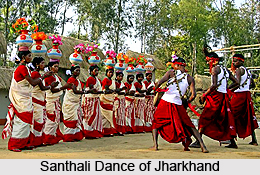
Santhali Dance
Santhali dance is a vibrant folk tradition of the Santhal tribe, reflecting the deep connection of the Santhal tribe with nature, community, and celeb...
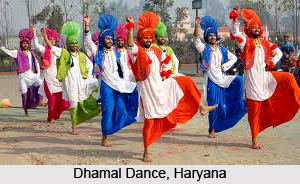
Dhamal Dance
A folk dance form of Haryana, the Dhamal Dance has its roots in the days of the Mahabharata. This dance form is primarily performed by men in the outd...
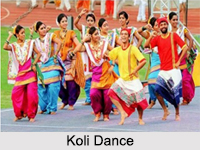
Koli Dance
A folk-dance form of Maharashtra, the Koli dance is mainly performance by the Koli community of the region. Known for their primary profession of fish...
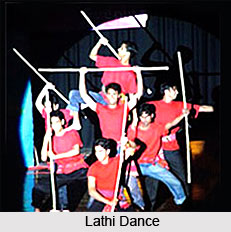
Lathi Dance
Lathi dance is a dance form of West Bengal performed on the occasion of Muharram.
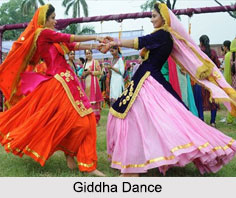
Giddha Dance
Giddha Dance of Punjab, performed only by the women, is a very popular folk art form in India. During Lohri, the Punjabi women reveal their joy throug...