Introduction

The Padma Awards stand among India’s highest civilian honors, announced each year on the eve of Republic Day. They are presented in three categories, namely- Padma Vibhushan for exceptional and distinguished service, Padma Bhushan for distinguished service of a higher order, and Padma Shri for distinguished service in various fields. These awards aim to recognize remarkable contributions across diverse disciplines where public service plays a vital role. The recipients are selected based on the recommendations of the Padma Awards Committee, which is constituted annually by the Prime Minister. Notably, the nomination process is open to all citizens, allowing even self-nominations.
Padma Shri Awards

Padma Shri Award is one of the most honorable and prestigious civilian awards in India. The award was instituted in the year 1954. The name of the Padma Shri Award came from a Sanskrit word `Padma`, which means a beautiful flower, Lotus. The award is presented by the Government of India and is ranked fourth among all the national awards given in India. Padma Shri Award is given to eminent personalities from different parts of the Indian society. It recognizes their outstanding contributions to their respective fields like Arts, Education, Industry, Literature, Science, Sports, Social Service and Public Service.

History of Padma Shri Award

The Government of India introduced the Padma Vibhushan, along with the Bharat Ratna, in 1954. Initially, the Padma Vibhushan comprised three classes, which were restructured and renamed in 1955 as Padma Shri (for distinguished service), Padma Bhushan (for distinguished service of a high order), and Padma Vibhushan (for exceptional and distinguished service). Among these, the Padma Vibhushan stands as the highest Padma honor.

Padma Shri Awards

The Padma Awards, together with the Bharat Ratna, have faced suspension on two occasions. The first occurred in 1978, when Prime Minister Morarji Desai’s government argued that the awards conflicted with Article 18 of the Indian Constitution, which abolishes titles, stating that “no title, not being a military or academic distinction, shall be conferred by the State.” The awards were reinstated in January 1980 after Indira Gandhi returned to power. They were suspended once again between 1992 and 1997 following legal challenges questioning their constitutional validity under the same article. However, the Supreme Court ultimately ruled that the Bharat Ratna and Padma Awards are not “titles” within the meaning of Article 18, affirming them as national honors.

The Padma Shri is awarded to Indian citizens for their distinguished contributions across various fields without any discrimination based on race, occupation, position or sex. On occasions, this award has also been conferred upon non-Indian individuals who have made notable contributions to India in different capacities.

Design of Padma Shri Award

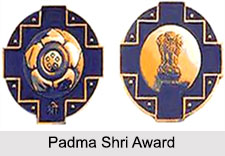
The Padma Shri medal is circular in shape with a toned bronze finish, featuring a geometric design accented by knobs at each corner and a raised central portion. On the obverse side, a lotus flower is embossed at the center, with the word “Padma” inscribed above and “Shri” below in Devanagari script. The term “Padma” translates to “lotus” in Sanskrit, while “Shri” is a Sanskrit-derived honorific meaning “Noble One in Blossom.” The geometric patterns are rendered in burnished bronze, and all embossing is finished in white gold, giving the medal a refined contrast.

The reverse side of the medal bears the State Emblem of India at its center, with the national motto—Satyameva Jayate (“Truth Alone Triumphs”) engraved below it. This elegant design symbolizes both national pride and the spirit of distinguished service recognized by the honor.

Nominations of Padma Shri Award

Nominations for the Padma Shri Award are open to all Indian citizens and can be submitted online through the Rashtriya Puraskar Portal. Recommendations may be made by anyone, including self-nominations. Each submission must include a detailed citation highlighting the nominee’s distinguished service and contributions in their respective field.

Any individual or organization in India dedicated to the nation’s welfare is eligible for nomination. However, serving government employees, including those in Public Sector Undertakings (PSUs), are generally ineligible, except for doctors and scientists.

The nomination period typically runs from March 15 to July 31 each year, and the awardees are formally announced on the occasion of Republic Day.

Regulation of Padma Shri Award

The Padma Shri is conferred by the President of India during a ceremonial presentation, where each awardee receives a Sanad (certificate) signed by the President along with a medallion. The selection of recipients is based on the recommendations of the Padma Awards Committee, which is constituted annually by the Prime Minister.

Padma Shri Awards

The committee is chaired by the Cabinet Secretary and includes the Home Secretary, the Secretary to the President, and four to six eminent individuals from various fields as members. Once finalized, the committee’s recommendations are submitted to the Prime Minister and the President for approval.

The list of honorees is announced every year on January 26, coinciding with India’s Republic Day, and is officially published in The Gazette of India—the government’s formal record issued weekly by the Department of Publication, Ministry of Urban Development. The award is considered official only after its publication in the Gazette.

Fields of Activities/ Disciplines Recognized

The Padma Shri award aims to honour individuals for their distinguished contribution in various spheres including:

·       Art – encompassing music, painting, sculpture, photography, cinema, theatre, and related fields.

·       Social Work – including social service, charitable activities, and contributions to community development projects.

·       Public Affairs – covering areas such as law, public life, and politics.

·       Science & Engineering – including space engineering, nuclear science, information technology, and research and development in science and allied subjects.

·       Trade & Industry – covering banking, economic activities, management, tourism promotion, and business.

·       Medicine – recognizing achievements in medical research and specialization in systems such as Ayurveda, Homeopathy, Siddha, Allopathy, and Naturopathy.

·       Literature & Education – including journalism, teaching, literary composition, poetry, promotion of education and literacy, and educational reforms.

·       Civil Service – honouring distinction and excellence in administration by government servants.

·       Sports – including achievements in popular sports, athletics, adventure, mountaineering, promotion of sports, and yoga.

·       Others – for contributions not covered above, such as the promotion of Indian culture, protection of human rights, and wildlife conservation.

Selection of Padma Shri Awardees

Although the Padma Awards Committee does not follow any strict formula or rigid criteria for selection, it primarily considers an individual’s lifetime achievements when evaluating candidates. A key factor in the selection process is the presence of a genuine element of public service within the nominee’s accomplishments.

The Padma Shri is awarded for special services rather than merely for long or sustained service. It recognizes not just excellence in a particular field but what is often described as “excellence plus” — contributions that extend beyond professional success to create a broader social impact.

Before final approval, all selected candidates undergo thorough background verification by government investigative agencies to ensure their integrity and conduct are beyond reproach.

Padma Shri Awardees

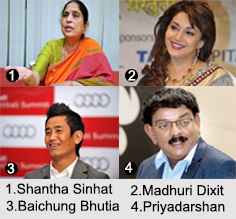
Thousands of people have received the Padma Shri award till date and some of the eminent ones among them are Madhuri Dixit, Baichung Bhutia, Priyadarshan, Arijit Singh, Virat Kohli, Kunjarani DeviShiny Abraham, Vijay Amritraj and Kiran Mazumdar. Some of the early recipients of the Padma Shri award are Asha Devi Aryanayakam, Surinder Kumar Dey, Mathura Das, Akhil Chandra Mitra, K. Shankar Pillai, and more.

Here is a list of all the Padma Shri Awardees based on diverse fields and year of recipience.

Padma Shri Awards in Literature & Education

Padma Shri Awards in Arts

Padma Shri Awards in Civil Service

Padma Shri Awards in Medicine

Padma Shri Awards in Science & Engineering

Padma Shri Awards in Public Affairs

Padma Shri Awards in Social Work

Padma Shri Awards in Sports

Padma Shri Awards in Trade & Industry

Padma Shri Awardees (1954-59)

Padma Shri Awardees (1960-69)

Padma Shri Awardees (1970-1979)

Padma Shri Awardees (1981-1989)

Padma Shri Awardees (1990-1999)

Padma Shri Awardees (2000-2009)

Padma Shri Awardees (2010-2019)

Padma Shri Awardees (2020-2029)

Refusals of Padma Shri Award

Several notable figures have either declined, refused, or returned the Padma Shri for different reasons. Among them are musician Hemanta Kumar Mukherjee, sitar maestro Vilayat Khan, academic and author Mamoni Raisom Goswami, journalist Kanak Sen Deka, and acclaimed Bollywood screenwriter Salim Khan—all of whom chose to decline the honour.

Some recipients, such as environmentalist Sunderlal Bahuguna and English billiards champion Michael Ferreira, initially refused the Padma Shri but later accepted higher distinctions like the Padma Bhushan or Padma Vibhushan. Others, including filmmaker Aribam Syam Sharma, author Phanishwar Nath 'Renu', Punjabi writer Dalip Kaur Tiwana, and renowned poet Jayanta Mahapatra, accepted the award but later returned it in protest or discontent.

In 2022, legendary Bengali singer “Gitashri” Sandhya Mukhopadhyay, then 90, also declined the Padma Shri on the eve of India’s 73rd Republic Day. The veteran artist, whose illustrious career spanned over eight decades, felt that the honour did not reflect the true scope of her contribution to music. Following her refusal, her name was subsequently omitted from the official Padma awardees list that year.