 Indian epic poetry is the epic poetry written in Indian subcontinent. Indian epic poetry cannot be described in its fullest glory and enormity without comprehending the Epic Period. Its political scenario and the entire royal household are associated with their patronage of arts and literary pursuits.
Epic poetry in India is the portrayal of Greater India in Sanskrit epics, namely the "Mahabharata" and the "Ramayana", as well as "Puranic" literature (the itihasa). The historical contexts of the Sanskrit epics comprise the late Vedic "Mahajanapadas" (from approximately 1500 B.C.) and the consequent formation of the legendary Mauryan Empire, the beginning of the "golden age" of Classical Sanskrit literature.
History of Indian Epic Poetry
In India, literature, like the whole face of nature, is balanced upon a gigantic scale. Poetry, born amidst the majestic panorama of the Himalayas and fostered in a climate which had inflamed the imaginative potential, had developed itself with oriental extravagance. Hindus, like the Greeks, have only two great epic poems - the "Ramayana" and the "Mahabharata", enlaced in ancient wonders of Sanskrit literature, considered the most primeval harbingers of the long legends of Epic poetry in India.
Indian epic poetry (standing for Itihasa in Sanskrit and literally meaning - history, or, stated in a didactic way - "so it happened") pertains to that body of epic poetry, that has been penned in the Indian subcontinent (strictly implying the then periphery of India as a country, including present-day Pakistan, Afghanistan, Bangladesh, Sri Lanka, Nepal, Bhutan and the other parts of neighbouring countries of Maldives and Tibet). The first traces of epic poetry in India are probably to be determined in Vedic Sanskrit literature, precisely in the hymns of the Rig Veda. The recital of narrative poems was a fundamental part of the religious ceremonies at festivals. It was a common practice to relate and recount stories of gods and heroes. According to legendary scholars, epic poetry in India seems to have been cultivated more in regions of India where the worship of Vishnu as the highest deity had prevailed. The authors, narrators, preservers of this ancient poetry were the bards who dwelled at the courts of the kings and sang or recited these song cycles at feasts.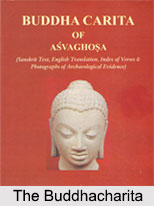
Indian epic poetry have originated in the circle of such bards (Homer is the most famous such bard in the western world). It is highly imperative to understand that what one conceives of presently as the "Ramayana" and the "Mahabharata", they are not just unified poems or compilations. They are indeed accumulations of a variety of poems, which throughout centuries have undergone a series of modifications and interpolation and additions. The "Mahabharata", especially, is a web of beast fables, mythological narratives and didactic tales and including among other things, the "Bhagavad Gita".
Languages of Indian Epic Poetry
The language of Indian Epic Poetry texts, termed as "Epic Sanskrit", constitutes the earliest chapter of Classical Sanskrit, following the latest stage of Vedic Sanskrit found in the "Shrauta Sutras". Originally it was composed in Sanskrit and translated thereafter into Kannada, Tamil and Hindi languages, it incorporates some of the oldest epic poetry ever created and some works form the basis of Hindu scripture.
Popular Indian Epic Poetry
A large number of great Indian epics were created throughout the first millennium BC. The most important epics of India are as follows:
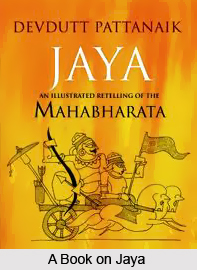
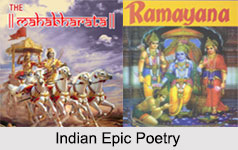
The Mahabharata: The Mahabharata is considered as the lengthiest epic of the world. It is a Sanskrit epic and is believed to be written by Sage Ved Vyas. It has more than 1,00,000 "slokas" (couplets) in 18 (Parvas) sections. The great work portrays the struggle for power between two groups of cousins, the Kauravas and the Pandavas in Greater India.
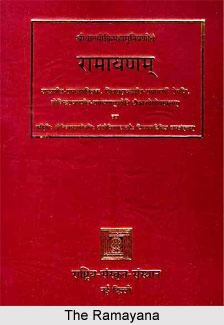
The Ramayana: The Ramayana is the most basic epic of India. Ramayana was written in 6th century BC by Valmiki. It narrates the story of Lord Rama who was a living form of Lord Vishnu in human form. Rama was the "Maryada purushottam" (the most moral man on earth) and so he had to experience many trials and sufferings.
The Raghuvamsa: Raghuvamsa is a Sanskrit epic written by Kalidasa. It describes the mythical stories of the rulers of Solar reign mentioned in the ancient Indian chronicles. It has 19 cantos.
The Buddhacharita: Buddhacharita, one of the best Sanskrit epic, was written by Asvogosha. Buddhacharita is a great epic which describes the life of Buddha - from his birth to Nirvana. This epic consists of 28 cantos.
The Shishupala Vadha: Shishupala Vadha is a Sanskrit epic dealing with the life of Shishupala, a king of a prehistoric Indian region, and his death by Pandavas. The story is taken from Mahabharata.
 The Kiratarjuniya: Kiratarjuniya is a Sanskrit epic in which Lord Shiva tests the power of Arjuna, one of the Pandavas in the Mahabharata. It explains the fundamental of Indian religious thought that every human being is a part of the supreme.
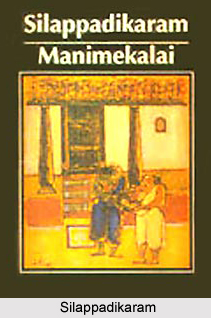
The Manimekalai: Manimekalai is an Indian epic poem written in Tamil by Seethalai Saathanar, a Buddhist poet. Manimekalai was the daughter of Kovalan, the hero of Silappadikaram. The epic describes her conversion to Buddhism.
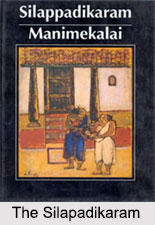
The Silapadikaram: Silapadikaram is an Indian epic in Tamil Language written by Ilango Adigal. It deals with the myth of Kannagi, a normal housewife turned Goddess. The epic states the three ancient Tamil kingdoms and the life and time of that period very clearly.
The Kumarasambava: Kumarasambava has been regarded as the finest among the later Sanskrit epic poems. It is a great epic poem written by Kalidasa in Sanskrit. It deals with the birth of Kumara Karthikeya as the son of Lord Shiva and Parvati.
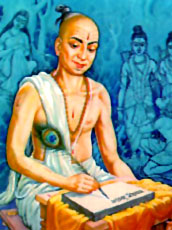
Shri Ramcharitmanas: Ramcharitmanas by the poet Tulsi Das is a retelling of the story of Ramayana, the story of Lord Rama, with very strong devotion. Shri Ramcharitmanas was written by Tulsi Das in Awadhi, an initial form of Hindi, in 5th century AD.
The Shakuntala: Kalidasa found the story of Shakuntala in the first book of the huge epic poem Mahabharata. It is an epic legend of love and departure between Shakuntala and King Dushyanta and how they reunited in the conclusion.
The Kamayani: Kamayani by Jaishankar Prasad has attained the status of an epic poetry in current Indian scenario. The narrative of Kamayani is founded on a popular mythological story, first cited in Satapatha Brahmana.
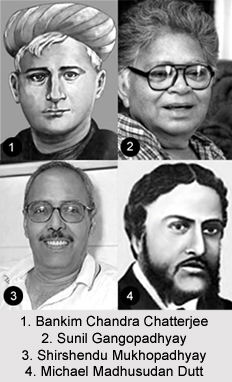
In the creative Bengali literature too, there also remains magnificent instances of epic poetry in ancient Indian silhouette. Michael Madhusudan Dutt"s "Meghnadbadh Kavya" is considered to be an epic status, even though it has for its subject, a fragment of the Ramayana. However, the extent and wideness of its vision and its many digressions and allusions have led to it being termed as an "epic". In Bengal again, Hemchandra Sen`s "Britra Sanghar" and Nabinchandra Sen`s "Palashir Judho" (in three parts) are illustrations of heroic Indian epic poetry.