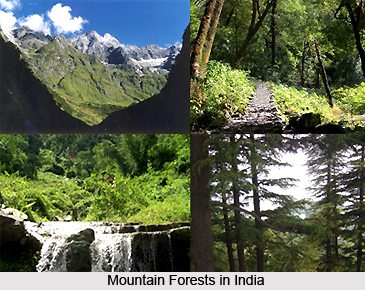
 Mountain Forests in India are an integral part of the country`s natural vegetation. These forests are mainly located at a high altitude in the mountains and usually vary to a great extent along the slopes of mountain. The Himalayas are the main place where these mountain forests can be found in India. The forests can be found up to a height of 1500 meters, on the foothills of the Himalayas. At this altitude, the evergreen trees like Sal, Teak, Bamboo and Cane grow abundantly and dominate the natural vegetation in mountain forests. The temperate conifer trees like Pine, Fir, Oak, Maple, Deodar, Laurel Spruce, Ceder etc. grow in plenty on higher slope between 1,500 meters to 3,500 meters. The plant species like Rhododendrons and Junipers are found at the higher altitude of the Himalayas. The alpine grasslands appear up to snowfield, beyond all these vegetation belts.
Major Mountain Forest in India
The Sino-Himalayan mountain forests region forms a big portion of the mountain forests in India. The region is made up of the mid- and high-elevation forests, scrub and grasslands. It covers the southern slopes of the Himalayas and the mountains of south-west China and northern Indochina.
States under Mountain Forest in India
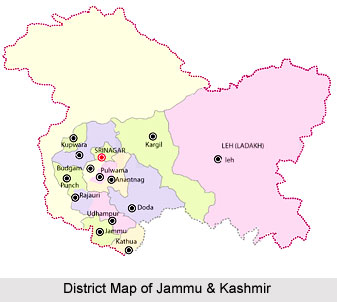
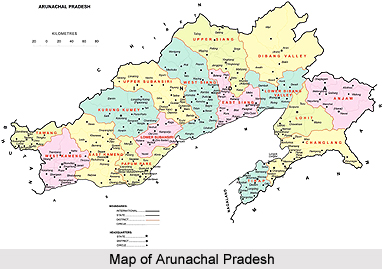
The key habitats in these forests include the montane temperate, subtropical and sub-alpine forest, and associated grassland and scrub. The forests lie at an altitude range of 350-4,500 m. They cover the states of Jammu and Kashmir, Himachal Pradesh, Uttarakhand, West Bengal, Sikkim, Arunachal Pradesh, Assam, Meghalaya, Nagaland, Manipur and Mizoram in India and also some portions of the other countries like China, Pakistan, Nepal; Bhutan, Myanmar, Thailand, Laos, Vietnam etc.
Climate of Mountain Forests in India
The climate in the mountain forests in India is greatly influenced by the Himalayas. The huge mountain range also exerts a major influence on monsoon and rainfall patterns in the forests. The climate conditions vary depending on elevation and location, even within the Himalayas. The average summer temperature is about 30 degree C and average winter temperature is about 18 degree C. The forests in the Middle Himalayan valleys have warm temperate conditions with average summer temperature of about 25 degree C and cooler winters. The forests in the higher parts of the Middle Himalayas has cool temperate conditions, where average summer temperatures are 15 to 18 degree C and winters are below freezing point. The summers are cool and winters are severe in the forests to a cold alpine climate at even higher elevations. The climate is too cold with below freezing temperatures at elevations above 4880 m and the area is permanently covered with snow and ice. The forests located in the eastern part of the Himalayas, usually receive heavy rainfall, while the western part is drier.
Flora of Mountain Forests in India
The natural vegetation in the mountain forests in India is highly influenced by climate and elevation. In the Middle Himalayas at elevations between 1520 m and 3660 m, the natural vegetation consists of several species of Pine, Oak, Rhododendron, Poplar, Walnut and Larch. The forests located below the timber line contain valuable species like Spruce, Fir, Cypress, Juniper and Birch. On the other hand, Alpine vegetation occupies the higher parts of the Great Himalayas, just below the snow line, and this includes the Shrubs, Rhododendrons, Mosses, Lichens and Wildflowers like Blue Poppies and Edelweiss.
Fauna of Mountain Forests in India
The mountain forests in India are home to a rich variety of flora and fauna and a total of 28 threatened species are confined (as breeding birds) to this region. Out of these, six species are relatively widespread in distribution. The rest of 22 inhabit one of the region`s six Endemic Bird Areas like the Western Himalayas, Eastern Himalayas, Shanxi Mountains, Central Sichuan Mountains, West Sichuan Mountains and Yunnan Mountains. All these 28 species are considered vulnerable and the species named White-Browed Nuthatch is considered as endangered. Apart from these, the Himalayan Quail that has not been seen for over a century and may be extinct is considered as critically endangered.
Mountain Forests as Abode of Animal Species
The mountain forests in India once used to provide natural habitat to a large number of animal species like Tigers, Leopards, Rhinoceroses, and many varieties of Deer. However, most of these species are extinct to this region mainly because of deforestation. These important animal species have been restricted to special protected areas like the Jaldapara and Kaziranga sanctuaries in India, at present. The forests located in the Middle Himalayas provide habitat to only a few animal species, as most of the species have been destroyed for deforestation. In the forests located in Great Himalayas, the animal species like Musk Deer, Wild Goats, Sheep, Wolves, and Indian Snow Leopards are most commonly found. All the mountain forests in India are playing an important role in the fresh water cycle of the country.