Indian Manuscripts are the richest collection of written documents, texts and scripts. These written documents provide information on the existence of different civilisations and emphasise the importance of their survival. India possesses over five million manuscripts and is considered to own probably the largest collection in the world. The manuscripts are vital sources of History of India.
A manuscript is a handwritten composition on paper, bark, cloth, metal, palm leaf or any other material. They reflect the magnificence of the Indian civilisation including languages, philosophy, art and architecture.
Background of Indian Manuscripts
Indian literature dates back to the courts of royals over 5000 years ago. Classical Indian languages were the stores of ancient knowledge that were stocked by folklore thoughts. The literature of ancient India was based on the investigation of life, death and nature. Even mathematics, astronomy, cosmology and science were wholeheartedly examined. The seventh century Chinese explorer Hiuen Tsang took back hundreds of manuscripts from India. Later in the late eighteenth century, the Nawab of Awadh gifted a wonderful illuminated manuscript of the "Padshahnama" to King George III of England. Today, it is considered as one of the supreme pieces in Royal Collection.

When the East India Company first came to India, they acknowledged the sub-continent as the holder of a great and rich civilization that abounded in intellectual and artistic attempt. Great scholars took a devoted interest in a lot of faces of the culture of the sub-continent of handwritten manuscripts on a mixture of materials including palm leaf, paper, cloth and even gold and silver.
Sanskrit has no indigenous script because it was spoken in an entirely verbal society. Also, many original Sanskrit texts were translated into many different Indian languages as this tradition of texting the existing oral tradition was considered necessary to propagating information and language.
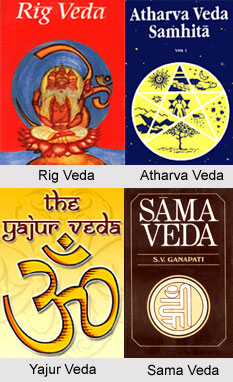
One of the oldest bodies of text in the world are the Vedas that was created between 1500 – 500 BC. During that time, the language of the street was called Vedic. The Vedas were written in Classical Sanskrit, a compound form of "Vedic". Around the 4th century a grammarian known as Panini wrote a book called "Panniyam", which contained 3,959 linguistic rules. This transformed Classical Sanskrit into what is called contemporary Sanskrit.
Manuscripts of India
India is believed to have the largest collection of manuscripts in the world. Indian manuscripts were written in a mixture of languages and scripts have survived till today. These are in the "Grantha", "Devanagiri", "Nandinagiri", and Telugu scripts and multiple languages. The manuscripts are available in different types. They comprise various themes, textures and aesthetics, scripts, languages, calligraphies, illuminations and illustrations. Indian Manuscripts were written in various languages and the scripts from the historical records. The major manuscripts are written in Sanskrit language. The Sanskrit Collection of the Sarasvati Mahal is largest manuscripts of India containing the major works of Sanskrit literature beginning with the Vedas. These manuscripts are available in palm leaf and paper form.
 The Marathi Paper Manuscripts existed during the reign of Marathas of Thanjavur from 1676 to 1855 A.D. These scripts include the works of the saint poets of Ramadasi and Dattatreya Mutts. On the other hand Marathi Manuscripts from Pandits and Scholars are also available. The total number of Marathi Manuscripts is 3076 Marathi Paper and they are written in palm leaf. These manuscripts deal with Marathi musical dance dramas. There are several manuscripts found throughout India which are considered as "Vijnananidhi", the Treasures of India. Few of them can be mentioned as "Kalachakravatara", "Shaivagamatantra", "Maiteryavyakaranam" , "Astasahasrikaprajnaparamita", "Kubjikamata", "Samputatika", "Mahabhashya", "Upmitibhavaprapanchakatha", "Kurbararattamala", "Chikitsasarasangraha", "Basavapurana", "Shunya Sampadane", "Natyashastra", "Dhul wa", "Sarvarogaharanagunagambhirata", "Gitagovinda", "Arsharamayana", "Ramayana", "Arthashastra", "Kalila-wa-Dimna", "Al-Quran-al-Majid", "Tuzuk-i-Jahangiri", "Gilgit Manuscripts", "Baburnama", "Tarikh-i-Khandan-i-Timuria", "Ratnamalavyakarana", "Kitab al-Tasrif", "Chitra Bhagavat", "Aryabhadra-kalapika-nama-mahayana-sutra", "Tuzuk-i-Jahangiri", "Aryamanjushreemulakalpam" and many others.
The ancient manuscript from the Mughal era, named "Ain-i-Akbari", which means Institutes of Akbar, scripted by Abul-Fazl ibn Mubarak, is also a rather precious manuscript. This is the third volume in the "Akbarnama" which contains several administrative and statistical reports and information related to the reign of Akbar.
The Indian Manuscripts found in India are in various types including Palm Leaf Manuscripts and the Paper Manuscripts. In ancient India the Palm leaves were commonly used as writing material and were known as "Tada Patra", "Tala Patra" or "Panna". The leaves of the palm tree were used after being dried out and were used by tying the leaves together. Paper came to India during the period of Ekoji I. It was made by hand from cellulose vegetable material and "Masi" or "Mela" was the ink used for writing. These inks were available in red, black, Gold and silver. The manuscripts also existed in the form of epigraphs on rocks, Firmans, and revenue records; these in turn provide direct information on events or processes in history.
In the 7th century, Hiuen Tsang, Chinese pilgrim, carried back numerous manuscripts from India. Indian Manuscripts have an affluent history too; these scripts have always been a source of admiration for the rest of the world.