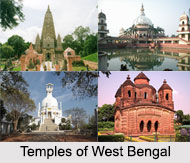
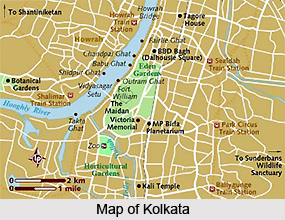
 Kolkata, also popularly known as the `City of Joy` is the capital of the eastern- Indian state of West Bengal and situated on the eastern banks of Hooghly River. This city was renowned for being the nerve centre of all major commercial activities as well as a significant centre of culture in the entire nation, way back in the 19th and the earlier part of the 20th century. Kolkata has produced several literary geniuses in various spheres of arts, literature, drama, theatre, films and music who have won national and international recognition, and was once the abode of Bengal Renaissance. This continues to be one of the major factors for Kolkata being termed as the `cultural capital of the country`. The Port of Kolkata is India`s oldest functional port which has been existent since many centuries.
History of Kolkata
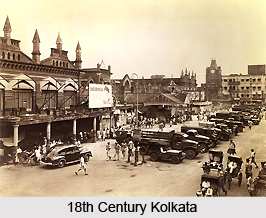
The term Kolkata has been obtained from `Kolikata`, a Bengali word, which implies a name of one of the three Indian villages which existed prior to the arrival of the British Raj in the country. Govindapur and Sutanuti were the two other villages, and the present city of Kolkata is situated exactly where they were located. Archaeological evidence discovered at Chandraketugarh which is present at the northern portion of Kolkata has revealed that this region has been inhabited for above two millennia. Official historical records claim that the history of this cosmopolitan city dates back to 1690, during the advent of English East India Company to Bengal for establishing trade. Job Charnock, an officer of this organisation was believed to have founded Kolkata, though Kolkata High Court has opposed this view. It has stated that Kolkata represents an ancient site near the Kali Temple at Kalighat. Kolkata High Court has added that this beautiful city has been the perfect instance of civilisation much before the arrival of the Europeans. This Indian city became a hotspot for the Indian freedom movement as it spearheaded all forms of rebellions against the British Raj.
 Geography of Kolkata
Initially, a major portion of the city of Kolkata was a wetland and its elevation measures about 5 to 30 feet. However, currently, Kolkata is home to a vast amount of population as many of the wetlands have been reclaimed. Regional inhabitants of this vibrant city experience a tropical went and dry climate, characterised by hot and humid summers, temperate winters and cool monsoons. Summers continue from March till June wherein temperatures might exceed 40 ° Celsius particularly during May and June. December and January are the months which experience winter during which temperatures hover around 9 ° Celsius to 11 ° Celsius. Violent thunderstorms known as `Kalbaisakhi` or `Norwesters` accompanied by heavy rainfall, strikes Kolkata during the period from April to June, which is a pleasant relief to the local residents of the city.
Demography of Kolkata
As per the 2011 census, the total population of Kolkata amounts to 4,486,679 while the sex ratio measures about 899 females per 1000 males. The literacy rate as asserted by this census is 87.14%.
Culture of Kolkata
Kolkata has often been termed as the `City of Furious, Creative Energy`, thanks to the innumerable intellectuals belonging to this city who involve poets, writers, playwrights, singer and musicians, dancers, movie directors, movie and theatre actors and talented individuals in every other field who have received national and global acclaim. The city is known for its `para culture`, which demonstrates a strong sense of amiability and harmony amongst the local inhabitants, in the form of its colourful `adda` sessions. Famous film directors like Satyajit Ray, Ritwik Ghatak, Rituparno Ghosh, Aparna Sen, etc. are some of the brilliant masterpieces born in this city. During the 19th and 20th centuries, Bengali literature was enriched by the contribution of Ishwar Chandra Vidyasagar, Rabindranath Tagore, Michael Madhusudan Dutt, Kazi Nazrul Islam, Sarat Chandra Chattopadhyay and many others. Other significant figures belonging to Kolkara are Swami Vivekananda, Raja Rammohan Roy and others.
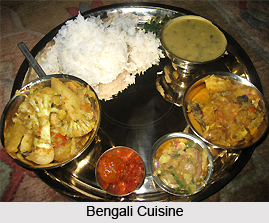
Kolkata is admired for its cultural beauty, manifested through the notable form of arts like `Rabindrasangeet` (songs composed by Rabindranath Tagore), Indian classical music, baul folk songs, `kirtans` and its newly emerged Bengali bands called `Jibonmukhi gaan`. `Mishti Doi`, `Roshogolla` and snacks like `phuchka` and `beguni` are important portions of the culture of Kolkata. The traditional costume of Bengali women is the `saree` and `salwar kameez`, though presently, a considerable number of regional residents of this city are clad in contemporary attires, influenced by the Western style of clothing, while `Dhoti - kurta` is the traditional dress for men. People of Kolkata celebrate various festivals like Durga Puja, `Poila Baishak`, `Ratha Yatra`, Saraswati Puja, Eid, Holi, Jagadhatri Puja and Dover Lane Music Festival, Nandikar`s National Theatre and others.
Education in Kolkata
Schools in Kolkata are operated by private organisations as well as the State Government and English and Bengali are the main languages of instruction used. However, Hindi and Urdu languages are also employed as a medium in Central Kolkata. Some schools are affiliated to the West Bengal Council of Higher Secondary Education, while others are under ICSE and CBSE. Presidency College, University of Calcutta, Bengal Engineering and Science University, Jadavpur University, Indian Institute of Management Calcutta, West Bengal National University of Juridical Sciences are some of the renowned academic institutes of the city.
Administration of Kolkata
Some governmental agencies have been entrusted the responsibility of supervising the administration of the city. The civic infrastructure of Kolkata is taken care of by the Kolkata Municipal Corporation or KMC. KMC conducts its activities through the mayor-in-council which comprises a mayor, deputy mayor and ten elected members belonging to KMC.
 Solid waste management, street lighting, sewerage, sanitation and water supply are some of the important functions of this regulatory body. The river port of Kolkata is managed by the Kolkata Port Trust. This marvellous city acts as the seat of the Government of West Bengal and houses the West Bengal Legislative Assembly, the State Secretariat which is located in the Writers` Building, Calcutta High Court, City Civil Court and Court of Small Cases. The West Bengal Ministry of Home Affairs oversees the Kolkata Police, which is headed by a police commissioner.
Economy of Kolkata
The city of Kolkata is said to be the main commercial hub of the eastern part of the country and boasts of the Calcutta Stock Exchange. Kolkata is said to be a significant military and commercial port and is the only Indian city located in the eastern portion of the country which boasts of an international airport. Several industrial units are existent in this city, some of which are public sector organisations while others are private sector corporations. Textiles, jute, heavy engineering, steel, minerals, electronics, mining, agriculture, food processing, pharmaceuticals and cement industries include the important industrial sectors of the city of Kolkata.
Tourism of Kolkata
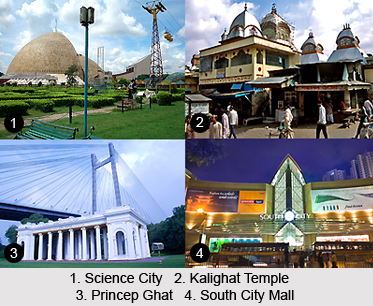
The presence of innumerable palatial residences within the city of Kolkata has nicknamed this city, as the `City of Palaces`. Kolkata is a dream destination for the culturally inclined, nature lovers, historians, adventure seekers and even an ordinary traveller, owing to the vast quantity of historical monuments, museums, amusement parks, pilgrimage spots, libraries, lovers` spots, bridges and numerable other exciting institutions of historical, cultural and aesthetic interest. Tourists can visit the Victoria Memorial, Marble Palace, the Indian Museum, Gurusaday Museum, Science City, Sabarna Sangharashala, Academy of Fine Arts, Nandan, Jorasanko Thakur Bari and various other renowned tourism centres based here. The breathtaking view of Vidyasagar Setu overlooking Ganga River, near Princep Ghat is an immensely popular tourist attraction which appeals to national and international visitors. Discover local businesses including manufacturers, suppliers, and dealers across industries in Kolkata Yellowpages.