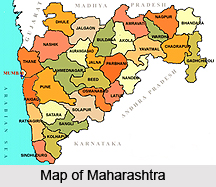
 Maharashtra is located in West India. It the most important centre of trade and commerce, besides art and culture. The name Maharashtra derived from "rathi" or "chariot driver". It is the second most populous state as well as the richest state in India. It is bordered by the Arabian Sea to the west, Gujarat and the Union territory of Dadra and Nagar Haveli to the northwest, Madhya Pradesh to the northeast, Chhattisgarh to the east, Karnataka to the south, Andhra Pradesh to the southeast and Goa to the southwest.
History of Maharashtra
In the ancient period, Maharashtra was ruled by several dynasties like Mauryas, Satavahanas, Vakatakas, Kalachuris, Chalukyas and Yadavas. In the middle ages certain Muslim kingdoms dominated the land. The Khilji and Tughlaq dynasties extended their authority over Maharashtra. Later on Bahamani Dynasty came into power. The political scene was dominated by the Marathas from the 17th century till 19th century. Shivaji was a notable administrator introducing several modern concepts. The British rule began in the 17th century.
Geography of Maharashtra
Covering an area of 308,000 sq. km, Maharashtra, the third largest state in India, is remarkable for its extraordinary physical homogeneity. Sahyadris Mountain range is the physical backbone of the state. With an average range of 1000 meter it gradually plunges into the Konkan Coast, coastal lowland barely 50 km wide, with steep cliffs. The notable rivers in Maharashtra are Godavari and Krishna rivers.
 Demography of Maharashtra
According to the 2011 census, Maharashtra is the second most populous state. It holds about 11, 23, 72,972 inhabitants with a density of 365 people per sq metre. The people of northwest speak Ahirani, a dialect of Konkani called Malvani is spoken in the Konkan coast mainly. In Vidarbha, Vardahi is spoken by most of the people.
Culture of Maharashtra
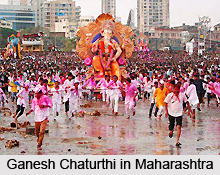
In Maharashtra approximately 60% people are Hindu. There are significant Muslim, Christian and Buddhist minorities as well. The major festivals of Maharashtra are Gudi Padwa, Dussehra, Navaratri and Ganesh Chaturthi. Holi and Diwali are also significant. Maharashtrian folk music like Lavani, Gondhal, Bharud, Powada enchant the people of Maharashtra. Costumes of this Indian state comprise saree for women and Dhoti-shirt for men folk as traditional dress. The Maharashtra cuisine is also very delicious. The usage of peanut oil is prominent in Maharashtrian dishes. Puran poli is a special dessert item of this state.
Education of Maharashtra
Maharashtra has 301 engineering or diploma colleges, 616 industrial training institutes and more than 24 universities with a turnout of 160,000 technocrats every year. The literacy rate of Maharashtra according to 2011 census is 82.91%. The female percentage is 75.48 and the male literacy rate is 89.82%.
 Administration of Maharashtra
Maharashtra has separate state government with bicameral legislature and Governor at its apex. In the post independence era, Indian National Congress has mostly dominated the political history of Maharashtra. Congress enjoyed uncontested dominance over the state until the Shiv Sena - BJP coalition swept them away in 1995 election. Presently Prithviraj Chavan is the Chief Minister and Ajit Pawar is the Deputy Chief Minister.
Economy of Maharashtra
Industry is the backbone of Maharashtra`s economy. The state alone accounts for 40% of country`s revenue. Mumbai, the capital is the hub of the country`s textile mills. Other notable centres of weaving are Malegaon and Bhewandi.
Tourism in Maharashtra
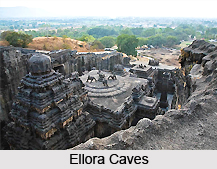
Maharashtra is a popular tourist spot as it several caves, beaches, hills and pilgrimage places. Shirdi temple, Ajanta caves and Ellora caves, Juhu beach, Western Ghats mountain range are very attractive tourist spots. Maharashtra with its scenic beauty, its education system, unique traditional culture rapturously attracts the heart of every Indian. The major tourist centres of Maharashtra are Mumbai, Pune:, Nashik , Nagpur , Aurangabad, Kolhapur (famous for the ancient temples) and Amravati District.