 Auspicious Signs and Symbols in Vastu Shastra make the house free from defects by almighty power. It minimises negative energy to the great extent, gives positive energy to prevail there for prolong period. There are certain signs and symbols in Vastu Shastra that are considered auspicious. Symbols that are passed on to several people or down through the generations are viewed as powerful devices. This is because each person using it for the same purpose will enhance the energy it attracts and its effectiveness. The spiritual energy or power of these auspicious signs can be measured in units. The machine which can measure is known as "Bovimeter".
Various Auspicious Signs and Symbols in Vastu Shastra
There are several signs that are thought to be auspicious in every religion in India. Such as, cross in Christian religion, crescent moon and a star in Islam, Arihant in Jainism and others. Swastika in the Hindu religion as well in Vastu Shastra is an auspicious symbol. Some of the auspicious signs and symbols in Vastu Shastra are as follows:
Swastika is considered to have great power and is recommended to use at the entrance or in the main hall of the house or office.
Om induces energy and strength of the family members. Hence the symbol too is used in household.
A welcome sign at the doorstep of a retail showroom or office carries a lot of positive energy
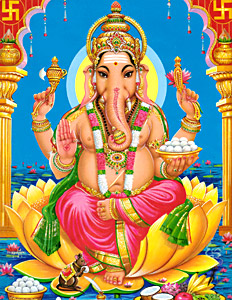
A main door with an image of Lord Ganesha in an office or factory is believed to increase wealth.
A sitting posture of Lord Ganesha carved or painted on the main door of a house is very auspicious.
A statue of Goddess Lakshmi or Goddess Saraswati on the main door is believed to bring positive energy and strength to a building.
Always enter an office or house with the right foot first.
Kalasha, a pot of water covered with mango leaves, flowers and coconut is recommended in a Puja room or a place to worship, preferably in the North-east corner.
An idol of Goddess Lakshmi should be placed in the drawing room. It is believed to usher in prosperity, success and happiness.
The combination of two triangles forming a six sided star is one of the holy signs in Vastu Shastra.
It is always suggested that one should use these symbols in proper ways, as far as their placement is concerned. The presence of auspicious signs and symbols in a household, results in the overall increase of the auspicious energy in the house as well as the family.