 Vaishnava Sahajiya is tradition of tantric Vaishnavism, which was centered in Bengal during 16th century. Sahaja means enlightenment in the Indian and Tibetan Buddhist spirituality. Sahaja practices first arose in Bengal during the 8th century among the Buddhist yogis called Sahajiya siddhas. Vaishnava Sahajiya tradition is based on experiencing the religion through five senses. It is basically considered as a "left-hand path" and an apostate from the core Vedic conception. There are right-handed (Dakshinachara) and left-handed (Vamachara) Vaishnava Sahajiyas. The Dakshinacharya practice the Panchamakara symbolically and the Vamacharyas practice it literally. Though it was formed in 16th century, it became popular in Bengal during 17th century. Several manuscripts of small texts associated with the Sahajiya are restored in the libraries of West Bengal.
Poets of Vaishnava Sahajiya School
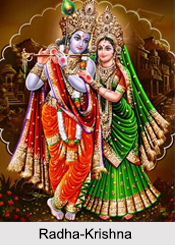
Chandidas, Jayadeva and Vidyapati were the prime poets of the Vaishnava Sahajiya school who celebrated the divine relationship between Radha and Krishna through their poems. They first introduced the concept of "rasas" or the flavours of love. Almost 1250 poems of Chandidas based on the love of Radha and Krishna have been found with his sobriqets like "Ba?u", "Dvija" and "Dina" and sometimes without any sobriquets.
Theology of Vaishnava Sahajiya
According to the Vaishnava Sahajiya theology, all men and women are the physical manifestations of Radha and Krishna. The sexual relationship of a human couple is transmuted into the divine relationship between Radha and Krishna, which leads to highest spiritual realization- the state of union or "Yugala". According to this tradition, element of love is based on the element of Yoga in the form of physical and psychological discipline.
Secrecy in Vaishnava Sahajiya
Vaishnava Sahajiya is a mixture of different traditions; for being based on the sexual tantric practices, it was often perceived with prejudices by other religions. As a result of which it was insisted to operate in secrecy. Due to this privacy, not much is known about their practices. This privacy is also manifested in their literature as it is written in quite an enigmatic style. Even the founder of this tradition, Baru Chandidas in 14th century, has often been mentioned in the literature by cryptic language.
Concept of Vaishnava Sahajiya
Vaishnava Sahajiya metaphorically manifested the "union with God" by the romance between Radha and Krishna. It says that to understand the concept of union of humanity one should first understand the aspects of sexual intercourse and experience it as a divine act. Members of this tradition performed "Ganachakra" or circle dance, which is now known as the "Rasa-Lila" of Krishna.