
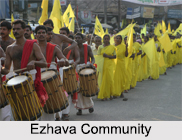
 Ezhava Communities belong to a backward community and form 30 percent of the population of Kerala. They have gained a position of strength in the social and political life of Kerala too. Ezhavas form the largest group among Hindu communities in Kerala. They are also one of the major progressive communities of the state. The Ezhavas have a penchant for reform and revolution and some of the outstanding leaders of religious, cultural and social changes have sprung from them.
Ezhava Community
Ezhava Community is settled in Kerala and has slowly gained political and social power.
Introduction
Ezhava Communities belong to a backward community and form 30 percent of the population of Kerala. They have gained a position of strength in the social and political life of Kerala too. Ezhavas form the largest group among Hindu communities in Kerala. They are also one of the major progressive communities of the state. The Ezhavas have a penchant for reform and revolution and some of the outstanding leaders of religious, cultural and social changes have sprung from them.Origin of Ezhava Community
The name `Ezhava` is said to apply to those who inhabit Quilon and the southern parts of Kerala, those who live between Quilon and Cochin are known as Chovans, the Thiyyas being spread over the north of Cochin, especially in Malabar. They are considered to be descendants of Villavar the founders of ancient Dravidian Chera Dynasty who once ruled parts of southern India. Villavar were a warrior caste among the Dravidians who ruled most of India.
History of Ezhava Community
There are various theories, which suggest that they might have had a foreign origin but there are no concrete proofs for this theory. Another theory is that an ancient ruler of Kerela, Cheraman Perumal, invited a section of people, called Chekons, to his kingdom from Ezhathu Nadu (Sri Lanka) - hence the name Ezhava. Still another assumption states that their name, Thiyyas, is derived from Theevy, a corruption of the Sanskrit dwipa (island).
The word `Ezhava` was probably mentioned for the first time in the 9th century. It appears in the Tariaspally inscription of the Emperor Sthanu Ravi and later in the Tanjavur inscription of Rajaraja Chola. In the latter it was used as the name of a community. The Sangam classics, like the Silappadhikaram and Manimekalai, do not contain any such term but they mention `Uzhavars` (cultivators) and the phonetic closeness between the two words (Ezhava and Uzhava) is obvious. A possible inference is that the castes of South India had already come into existence a couple of centuries before these inscriptions as a result of the influx during the pre-Christian era of Aryan Brahmins. But their impact then was not as great as Buddhism was the predominant religion. Kerela was first ruled by the Chera dynasty and the Cheras were Villavas or Ezhavas. When, eventually, the Brahmins got the upper hand the social structure changed but the Ezhavas refused to submit to them and paid for it dearly.
The word `Ezhava` was probably mentioned for the first time in the 9th century. It appears in the Tariaspally inscription of the Emperor Sthanu Ravi and later in the Tanjavur inscription of Rajaraja Chola. In the latter it was used as the name of a community. The Sangam classics, like the Silappadhikaram and Manimekalai, do not contain any such term but they mention `Uzhavars` (cultivators) and the phonetic closeness between the two words (Ezhava and Uzhava) is obvious. A possible inference is that the castes of South India had already come into existence a couple of centuries before these inscriptions as a result of the influx during the pre-Christian era of Aryan Brahmins. But their impact then was not as great as Buddhism was the predominant religion. Kerela was first ruled by the Chera dynasty and the Cheras were Villavas or Ezhavas. When, eventually, the Brahmins got the upper hand the social structure changed but the Ezhavas refused to submit to them and paid for it dearly.
Religion of Ezhava Community
Though traditionally outcastes among the Hindus of Kerala, they enjoyed the respect and regard of royalty. Their religious practices have been influenced by Buddhism and widespread adherence to Shaivite and Tantric rituals. Though they are usually known as a community of farmers and toddy-rappers, they have also a tradition of scholarship in Sanskrit subjects.
Since their origins go back to the dim past, the customs and beliefs of the Ezhavas and Thiyyas are primitive. The old Tamil background gave them the God Subrahmania and the Goddess Kali and Buddhism introduced Chathan, Chithan and Arathan - all Sanskrit synonyms for the Lord Buddha.
Since their origins go back to the dim past, the customs and beliefs of the Ezhavas and Thiyyas are primitive. The old Tamil background gave them the God Subrahmania and the Goddess Kali and Buddhism introduced Chathan, Chithan and Arathan - all Sanskrit synonyms for the Lord Buddha.
Society of Ezhava Community
The Ezhava community has been suppressed by the Brahmins and the Nayars for centuries. They have also suffered the pangs of untouchability. They were considered outsiders to the fourfold structure of the caste system. Having suffered so much discrimination they have removed themselves from the stigma of untouchability by their own efforts.
The martial character of the Ezhavas might have been an inheritance from the Villors (archers) of ancient Tamilakam. The first mention of this is in the legends of the Chekavans or Chakors celebrated in the heroic songs of Malabar.
The reputation of the Ezhavas in the fields of medicine and astrology rests on the fact that they were Buddhists. The Ashtanga-Hridaya is the most popular Ayurvedic treatise in Kerela. It was penned down by Vaghbhata, a Buddhist who spent some years in the Southwest of India. The Ezhava physician, Achuthan helped the Dutch governor-general in India (Henri Van Reid) in the compilation of the encyclopedic Materia Medico, in Latin. Yogamrutam, an Ayurvedic work held as a classic by Malayali physicians was written by Uppottu Kannan in the last century. Thayyil Krishnan Vaidyan of Ajleppey published a unique medical dictionary, the Aushadha Nighantu, in 1906.
An art form, especially obtaining in the Cannanore District among the Thiyyas, is known as poorakkali which is associated with the celebration of the Pooram festival (held during March-April) when sophisticated dances are presented and recitations of Puranic stories and scholarly disputations on ancient sastras like Vyakarna, Tarka (logic) and Vedanta are held.
Among Ezhavas marriage takes place after the girl attains puberty and the proto-Austroloid custom of taking the uncle`s daughter as bride is often followed. Polygamy was also practised. Marriage customs vary from region to region.
The martial character of the Ezhavas might have been an inheritance from the Villors (archers) of ancient Tamilakam. The first mention of this is in the legends of the Chekavans or Chakors celebrated in the heroic songs of Malabar.
The reputation of the Ezhavas in the fields of medicine and astrology rests on the fact that they were Buddhists. The Ashtanga-Hridaya is the most popular Ayurvedic treatise in Kerela. It was penned down by Vaghbhata, a Buddhist who spent some years in the Southwest of India. The Ezhava physician, Achuthan helped the Dutch governor-general in India (Henri Van Reid) in the compilation of the encyclopedic Materia Medico, in Latin. Yogamrutam, an Ayurvedic work held as a classic by Malayali physicians was written by Uppottu Kannan in the last century. Thayyil Krishnan Vaidyan of Ajleppey published a unique medical dictionary, the Aushadha Nighantu, in 1906.
An art form, especially obtaining in the Cannanore District among the Thiyyas, is known as poorakkali which is associated with the celebration of the Pooram festival (held during March-April) when sophisticated dances are presented and recitations of Puranic stories and scholarly disputations on ancient sastras like Vyakarna, Tarka (logic) and Vedanta are held.
Among Ezhavas marriage takes place after the girl attains puberty and the proto-Austroloid custom of taking the uncle`s daughter as bride is often followed. Polygamy was also practised. Marriage customs vary from region to region.
Profession of Ezhava Community
Originally their occupation was toddy-tapping but now poets, philosophers, Ayurvedic physicians and astrologers are also to be included within this community. There were also renowned Kalaripayattu experts among them. The circus holds a special attraction among community members in north Kerala and many of the famous acrobats of India come from this community.
Recently updated articles in Religion in India
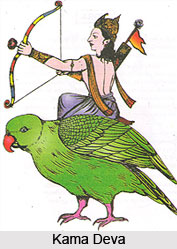
Kusumayudha
Kusumayudha is a name of Kamadeva, the Hindu God of Love. Depicted with a sugarcane bow and flower-tipped arrows, he represents attraction and longing...
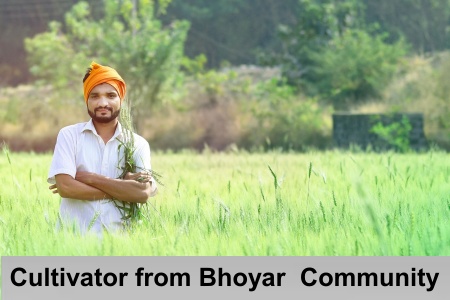
Bhoyar Caste
Bhoyar Caste is largely found in the Central Provinces of the country. Traditional occupation of Bhoyars is agriculture. They are good cultivators and...
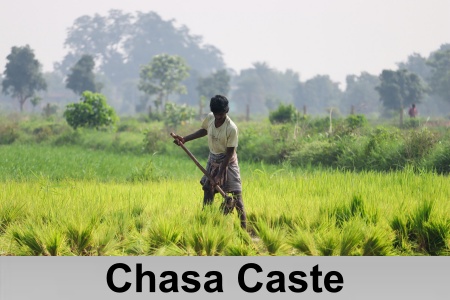
Chasa Caste
Chasa caste is a prominent agrarian community native to Odisha. Traditionally associated with cultivation and farming, Chasas have historically played...
Vigneswara, A Form of Lord Ganesha
Lord Vigneswara is another form of Lord Ganesha or Vinayaka, prominently worshipped as the God of intelligence and good luck in the Indian subcontinen...
Maheswara
Maheswara, meaning “the Great Lord,” is a revered name of Lord Shiva in Hindu tradition. It represents Shiva’s supreme authority over creation, preser...
Related articles in Religion in India
Religion in Indus Valley Civilization
Religion in Indus Valley Civilisation included Hinduism, Buddhism and Jainism. Details about the religion in Indus Valley Civilization have been gathe...
Iyer Brahmin
Iyer Brahmins are originally from Tamil Nadu of South India. They are known for their adherence to Advaita philosophy and Smarta traditions. Tradition...
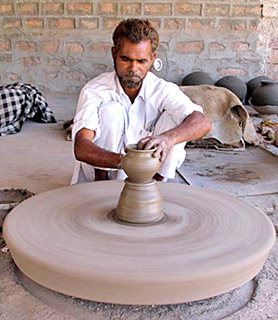
Kumbhakar / Kumhar Caste
Kumbhakar or Kumhar caste is a traditional artisan community in India known for pottery making. Derived from Sanskrit word Kumbhakar, meaning potter,...

Gujjars in Mughal Era
Gujjars in the Mughal era enjoyed great power. Further their power increased with the decline of Aurangzeb, Mughal emperor.
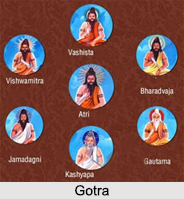
Gotra in Hinduism
In Hinduism, gotra refers to a lineage system tracing descent from ancient sages, primarily through the paternal line. Originating from Vedic traditio...