Sanskrit Secular Poetry is one genre of Sanskrit poetry that has been influenced by Pali and Prakrit Literature. Poetic art was steadily developing in refinement from the earlier stage which is preserved in the Rig Veda itself and in the Atharva Veda and in Pali texts. Several secular poems have been ascribed to Kalidasa of which the ƒ,ªrngdratilaka is considered worth honouring. Its twenty-three stanzas picturizes love. The poet condemns while praising his beloved. The note of bitterness and pain has been the most influencing.
Ghatakarpara is a poem of the category written in twenty-two stanzas that describes the situation of a young wife. This poem is indebted for its title to the fact that the author offers to carry water in a broken jar for any one who can surpass him in Yamakas and thereby evolved the poet Ghatakarpara. This work is earlier than Kalidasa. Ghatakarpara clearly was ranked higher by Indian taste and he was also made one of the nine jewels of Vikramaditya`s court as a contemporary of poet Kalidasa.
Mayura was a poet who flourished in the court of Harshavardhana in the seventh century and was the father-in-law of Banabhatta. Matafiga Divakara was more famous compared to both of them.
Govardhana was a poet whose aim was to raise the Yamuna River in the air in the shape of elevating love songs extant in Prakrit to the level of Sanskrit language. His medium was the Arya verse. He also composed in this metre which was borrowed by Sanskrit from Prakrit. The poetry lacks the popular flavour. The Prakrit model has been imitated that is carried to the extent of styling the sections Vrajyas. His brothers Udayana and Balabhadra brought out the corrected version of his work.
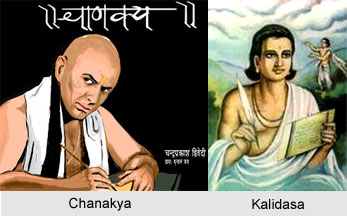 Gnomic verses was first composed or espoused by writers of the fable literature. Before writing it was passed from mouth to mouth till efforts were made by compilers to collect. One need not doubt that the collector became normally an inventor at the same time. Such verses were visible in collections such as Rajanitisanmacaya, Chanakyaniti, Vrddha Chanakja, Laghu-Chanakya. There are seventeen recensions. Each manuscript shows distinct variations; the compilers were diverse, they had many sources open therefore it is impossible to determine the original shape of the collection. There is an absurd assumption that it was composed by Chanakya, the minister of Chandragupta Maurya. It is clear that this composition was passed off under his name as he was famous.
It is not even known whether the first stanza is a treatise on Rajaniti, the conduct of princes. Another composition of Bhojaraja has been preserved in a manuscript that has 576 verses divided into eight chapters. It deals with general rules for the ways of life, general indications on richness and poverty, on fate and human attempt and on variety of ethical and spiritual topics.
The stanzas are not connected by line of thought though there are exceptions. Verses are meant to be adversative. In a group of seven verses different kinds of Brahmin are illustrated. The ordinary character of the topics is improved by the use of metaphors and similes nature. Cloka is the prevalent metre though there are stanzas that are in other metres. They are Indra Vajra, Vancastha, Vasant Tilaka, and Cardulavikridita.
Minor collections of gnomic stanzas are credited to Vararuci, to Ghatakarpara and to Vetala Bhatta. The styles used are Nitiratna, Nitisdra and Nitipradipa. Nitigataka of Bhartrihari is a noticeable work. Under Sankara Varman (883-902) of Kashmir Bhallata, wrote several verses. His Cataka is elaborated and in varied metres. He has employed a simple style.
Another Kashmirian poet Bilhana is also known or his gnomic verses. He has been inspired from Bhartrihari. His verses lack originality. His matter is very interesting than his manner. His date is uncertain, but before the Sadukti-karndmrta (1205), in which he is cited.
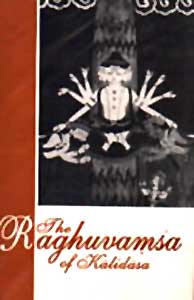 Classical poetry in Sanskrit literature can absolutely and blindly be referred to as the most prolific, most scholarly, most erudite and the most exhaustively-researched work ever to have been accomplished in ancient India. The amount of effort and exertion put in by authors like Kalidasa or Sriharsha, bear eminent proof in the invention of the verse metres or other poetic specifications still being espoused. Every line emoted a profound sense of pathos, of exaltation or even satire to their most bitter extent; umpteen commentaries on the classical form of poetry have been published ever since, that perhaps can only be envisaged by the limit of Sanskrit literature and attempts at its revival.
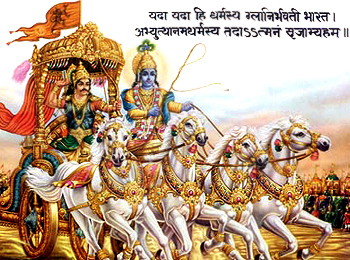 Sanskrit Gnomic Poetry had its beginnings in the
 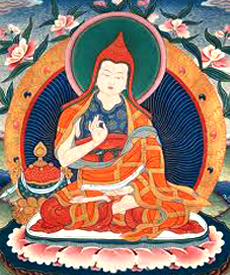 Sanskrit Didactic poetry can be dated back to the eighth century. There is less evidence of the early didactic poetry. Shantideva`s Bodhicharyavatara is one of the most distinguished efforts known in this regard. Some of the poems are ascribed to Shankara. The Catacloki which has 101 verses sets out with rich imagery the principles of the Vedanta. The Mohamudgara with its elaborate rhyming makes it more lyrical than didactic.