
Amaru`s compositions were within the emaciated social and cultural spectrum of Sanskrit poetry. Amaru roughly belonged to the eighth or ninth century. His stanzas are presented to us in a different condition in the manuscripts. Some of the stanzas in the Sataka are attributed by the anthologies to other writers and some are also ascribed to Amaru.
Amaru likes high-spirited love. His poem ends in similes. The poet hardly contemplates the disappearance of love. His stanzas show adequate elegance and precision. His avoidance of long or difficult compounds is visible. The metre used by him is the Sardulavikridita. However, the Harini, Vasantatilaka, Qikharini and Sragdhara occur at times, while the ‡loka, Drutavilambita, Malinl and Mandakranta are intermittently used.
Amarusataka in Sanskrit means one hundred. It is basically a body of 101 to 136 verses written by Amaru. His poetry ranks among the best lyrical poetries in the history of Sanskrit literature. It analyses several aspects of erotic love. Numerous themes include love, fervour, estrangement, longing, understanding, joy and sorrow. He possesses a gracious style, compulsive, extremely passionate and once in a while powerful. He is well known in intellectual part of Indian history though he is less popular. These evidences are available from Amaru`s collection as a group of poems that have been grouped into anthologies by medieval historians. Amarusataka is a group of poems that deal with the social elements of courting, treason, feminine indignity and man`s self-pity.
This type of stanza poetry, where each poem stands separately from each other makes a merit of abbreviation. It persuades the reader to figure out the significance and suggestion in order to implement a meaning. Amaru is indirect and immensely uses temporal disjunctions by frequently deploying verbal nouns. He also displays a development in the usage of meter. He effectively uses a method of restrained disjunction among syntactical and metrical units. His poems can be classified as poems about men in love, women in love, man-woman love and women-woman love.
His poems belong to the class of classic love poems written in Sanskrit Language. He demonstrates the heterosexual and homosexual love. "I am saying that I know how to bring happiness to you. I talked those very old words which put a lady`s fears to sleep. Now your tears smile at me just like a baby smiles at a dream.
Amaru
Amaru was a Sanskrit poet who has authored Amarusataka which is a compendium of poems approximately in the seventh or eighth century.
Recently updated articles in Indian Literature
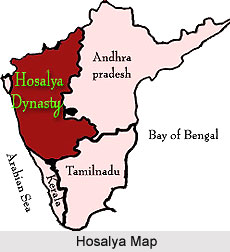
Gadyakarnamrita
Gadyakarnamrita is a 13th-century Sanskrit literary work written mainly in prose. It describes the ninety-day battle at Srirangam between the Hoysala...
Women Writers in Malayalam Literature
Women writers in Malayalam literature have worked incessantly to make a place for their literary works. In the earlier periods, they were completely o...
Comrade Kirillov, Novel by Raja Rao
Comrade Kirillov, a distinctive creation of Raja Rao, is presented as a brief yet incisive novelette that offers an ironic portrayal of the self-contr...
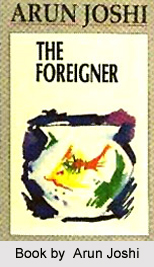
The Foreigner, Novel by Arun Joshi
“The Foreigner” is a book authored by Arun Joshi and published by Vision. It is an illustrious creation in the entire career of Arun Joshi, the famous...
Short Story in Telugu Literature
Short Story in twentieth century Telugu Literature was extremely popular and growing in and developing in a major way. Their popularity was greatly fa...
Related articles in Indian Literature
Mythological Themes in Indian Literature
Mythological themes in Indian literature have been integral to every ancient and contemporary writer and their path to f
Literature During Gupta Age
It is during the Gupta Age literature in the form of poetry, epos and drama gained a colossal importance.
Literature of Aravidu Dynasty
Sanskrit and Telugu were the popular literary medium of communication during Aravidu dynasty.
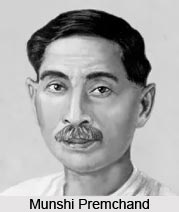
Munshi Premchand
Munshi Premchand was a legendary Indian writer notable for his modern Hindustani literature. A writer of a very high caliber, Premchand`s writings hav...
Sanskrit Poets
The names of some of the Sanskrit Poets are Bharavi, Devarshi Ramanath Shastri, Jayadeva and Srinivas Rath.