
Bilhana is known for the eulogy Vikramanadevacharita. His love poem was orally transmitted throughout India. According to a legend Bilhana fell in love with the daughter of King Madanabhirama, Princess Yaminipurnatilaka and had a mysterious love affair. This was revealed and Bilhana was imprisoned. He wrote Chaura-panchasika while the judgement was pending. It is a fifty stanza poem on love. There are several versions to it but the Kashmiri version does not specify about the ultimate result.
He had served as a Vidyapati or the master of the sciences in the court of Vikramaditya VI, Chalukya king of Kalyana (1076-1127). His immediate ancestors were Muktikala‡a, Rajakala‡a and Jyesthakala‡a, his father. They were Brahmins and the students of Veda, who performed the Vedic Agnihotra sacrifice. His mother was Nagadevi; his brothers were Istarama and Ananda.
Bilhana penned a eulogy of the Western Chalukyan king Vikramaditya VI titled Vikramankadevacharita. The Vikramanadevacharita is an application of the normal method for making an epic to a historical theme. It begins with the usual application to create a hero for the world`s safety. This imaginary origin for the family is followed by a long break in the tradition that is passed to Tailapa whose victory over the Rashtrakutas is recorded. The last canto is interesting as it gives an account of Bilhana`s own family and his life as a nomadic Pandit.
Bilhana writes in the Vidarbha style and avoids long compounds. He uses a simple and clear language and avoids overdo alliterations or pun. The manner in which he has described the death of Ahavamalla in Canto iv shows his masterpiece. It is a fine example of simple pathos and the decorum and bravery of the dying king are effectively portrayed.
Bilhana`s diction is accurate though there are occasional lapses. He is metrically simple. The six cantos are of Indra Vajra type, three of Van‡astha, two of €loka and Rathoddhata; one in Mandakranta, one in Puspitagra, and one in Svagata. The svagata is used freely by him. €ardulavikrldita and Vasantatilaka; Malini is occasional, and Aupacchandasika, Prithvi, €ikharini, Sragdhara and Harini are used, while Vaitaliya dominates the fifteenth canto.
Bilhana
Bilhana was a Kashmiri poet of the eleventh century who is known for his love poem, the Chaura-panchasika.
Recently updated articles in Indian Literature
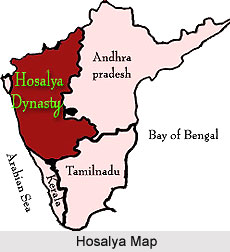
Gadyakarnamrita
Gadyakarnamrita is a 13th-century Sanskrit literary work written mainly in prose. It describes the ninety-day battle at Srirangam between the Hoysala...
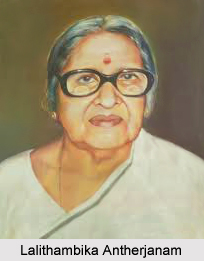
Women Writers in Malayalam Literature
Women writers in Malayalam literature have worked incessantly to make a place for their literary works. In the earlier periods, they were completely o...
Comrade Kirillov, Novel by Raja Rao
Comrade Kirillov, a distinctive creation of Raja Rao, is presented as a brief yet incisive novelette that offers an ironic portrayal of the self-contr...
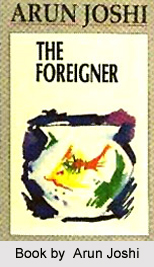
The Foreigner, Novel by Arun Joshi
“The Foreigner” is a book authored by Arun Joshi and published by Vision. It is an illustrious creation in the entire career of Arun Joshi, the famous...
Short Story in Telugu Literature
Short Story in twentieth century Telugu Literature was extremely popular and growing in and developing in a major way. Their popularity was greatly fa...
Related articles in Indian Literature
Mythological Themes in Indian Literature
Mythological themes in Indian literature have been integral to every ancient and contemporary writer and their path to f
Literature During Gupta Age
It is during the Gupta Age literature in the form of poetry, epos and drama gained a colossal importance.
Literature of Aravidu Dynasty
Sanskrit and Telugu were the popular literary medium of communication during Aravidu dynasty.
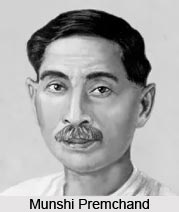
Munshi Premchand
Munshi Premchand was a legendary Indian writer notable for his modern Hindustani literature. A writer of a very high caliber, Premchand`s writings hav...
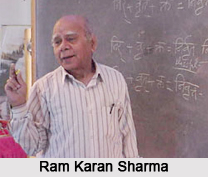
Sanskrit Poets
The names of some of the Sanskrit Poets are Bharavi, Devarshi Ramanath Shastri, Jayadeva and Srinivas Rath.