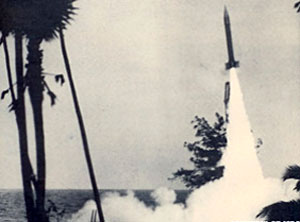
 Rohini -75, India`s first space rocket was one of the biggest inventions which invoked a lot of excitement among the scientists of India. This was the first experiment which was laid on the lines of French Centura and other foreign based rockets which has been earlier launched from Thumba Equatorial Rocket Launching Station before Rohini-75. On 20 November 1967, India`s first rocket pierced into the sky of Kerala. Its diameter was only 75mm which is often regarded as one of the `Toy Rocket`. The launching of Rohini -75 was mainly aimed at verifying the know-how regarding the manufacturing the rockets. The successful launching of Rohini 75 helped the Indian scientists to accept the fact that the size of the rocket was not significant rather it was more important to verify and recheck the procedure and the science of Rocket launching.
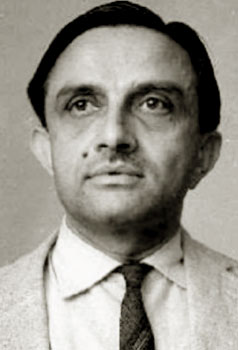
Rohini -75, India`s first space rocket gave a lot of encouragement to the Indian scientists who were depending on their initial step to launch a small rocket first and then carry on with the same technology to launch the other bigger rockets. With the successful launching of Rohini 75 Vikram Sarabhai aimed at collaborating with the French and other nations to develop more accurate knowledge along with technical training in rocket manufacturing procedure. The agreement signed with the French also helped the Indian scientists to develop second stage rockets. This was followed by the successful launching of the Indian Centuara which was followed by the manufacturing of Indian Propallants.
 Rohini -75, India`s first space rocket paved the way for more excellence in manufacturing the rockets whose diameters now increased from 75mm to even larger ranges. Rohini- 100 and Rohini 125 were on the launch pads which struck the beginning of a new range of rockets. However these mainly aimed at verifying the technical knowledge of manufacturing the rockets. Their performance gave valuable data on vehicle designing, electronics and impact of aerodynamic forces. This was successfully tested during the manufacturing of Menaka I which was a meteorological rocket carrying a dart payload of copper shaft with 650mm long with a diameter of 40mm; launched somewhere 55km high in the sky. Another rocket RH 125 was useful in testing and perfecting various techniques like staging, destruct system, separation devices and clustering. RH-125 was launched to provide as a booster to the weather forecasting rocket. As such it was named as Menaka II which worked along with Menaka I.
Rohini -75, India`s first space rocket was then followed by other rockets of Rohini family. Soon Rohini 300 was fired. This was much similar to Centuara II but with different propellants. This further included MK-1-S carrying a payload of 40 kg with a height of 90Km; followed by MK-2-S with a height of 140 km. Overall Thumba Equatorial Rocket Launching Station was able to launch RH-75, RH-100, RH-125, RH-300, Rh-560, Menaka I and II, Indian Centuara I and II as well as multi-staged rockets.
Rohini -75, India`s first space rocket and the following rockets marked another innovation in the field of rocket manufacturing. Indian scientists then developed a new technology known as clustering technology in which three RH-125 will cluster together to serve the bigger booster while another RH- 125 is placed on the top which shall serve as the sustainers. Another technology which was developed was the process of bonding. In order to provide larger source of power for solid propellant blocks the technique suggested that two to three blocks can be bonded together and fused so that it provides the required energy. Along with this the Rohini family also helped the Indian scientists to grow some new technology which could help in easy combustion. This brought in the Liquid Propellant Rockets also known as liquid Rockets.
Thus Rohini 75 India`s first space rocket marked the beginning of India`s race in space technology which helped India to compete with the rest of the world.