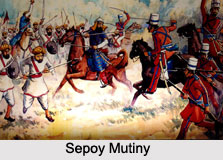
 The Sepoy Mutiny of 1857 was against British rule in India, when many Indian states were attacked to remove Britishers from the respective territories. But the Britishers proved to be to a strong opponent. They planned attacks and gathered resources to regain control over different parts of India and weaken the rebels. Given below is the Restoration of two Indian States (Lucknow and Kanpur) during Sepoy Mutiny by the Britishers.
Restoration of Lucknow Residency
During Sepoy Mutiny, Sir Henry Lawrence drew his forces within the Residency of Lakhnao (presently Lucknow). The garrison of the Residency had to deal with relentless attacks of an enemy immensely superior to it in number and strength of position. Lawrence passed away and shell firing and mortal diseases later, accounted for the loss of several other officers. A time came when the rebels had almost turned out to be victorious in setting fire to the Residency house, utilizing carcasses. However, the incursion party succeeded in removing the enemy from a position they held commanding the defenses. The rebels commenced the attacks at half-past eight in the morning, which was sustained strongly for several hours. They were finally beaten back at four o`clock. Several officers and men were filled with glory. The garrison here comprised of twelve men of the 32nd foot, twelve of the 13th N. I. and some clerks. They had pushed back an opposition significantly ahead in number. The result of events that took place on that day immensely motivated the garrison. The loss which the contest had inflicted upon them was smaller than that of the rebels.
Restoration of Kanpur
Colonel Neill, a capable English soldier was given important responsibilities during the Sepoy Mutiny. Being credited with the restoration of Benaras with full intelligence and farsightedness, he had to look after the conditions prevailing in Kanpur and Allahabad. Neill had a plan to march to the relief of Kanhpur (presently Kanpur). On the 18th of June, his force summed up to 360 English soldiers. On that very day, 150 more arrived. He had placed the Commissariat and Transport departments on a serviceable footing. These had obtained carts and camel and more were to be added. His executive officers namely, Captain Russell in the Ordnance department, Captain Davidson of the Commissariat and Captain Brown of the artillery were working with extreme passion. To help the Britishers, the natives too started working untiringly. A person known as Henry Havelock turned out to be victorious at Kanhpur. Unfortunately, to hold on to Kanhpur with enemies in the surrounding and determined to attack, was difficult. But Havelock was determined to storm the position of the rebel chieftain.