 Pitt`s India Act of 1784 was introduced by the British Parliament to bring the administration of East India Company under the control of British Government. It was passed on the failure of Regulating Act of 1773 (also known as East India Company Act). Pitt`s India Act of 1784 provided for a joint government of British India by the Company and the Crown.
Formation of Pitt`s India Act of 1784
By 1773 East India Company was facing an acute problem of financial crisis and asked for monetary assistance from the British Government. British Rulers found that the Company was running in loss due to nepotism and corruption of the company officials. Then the British Government enacted the Regulating Act of 1773 to control the activity of the Company and Warren Hastings was elected the first Governor General. But the law failed to be effective in order to prevent corruption and Hastings himself was charged for corruption. Then British Government decided to take a more active role and interfere with the affairs of the Company. So it was the second important step undertaken by the British Parliament to set up a Board of Control under Pitt`s India Bill of 1784.
Members of Council of Pitt`s India Act
A Board was established with six members; two of who were the members of British Cabinet and four were of Privy Council. The President of the Board soon became the Minister for the affairs of the East India Company. The Board had all the powers to control the civil, military and revenue related affairs of the company.
After sometime, the Council was reduced to three members and the Governor - General was given the power to rule the majority. The independent power of the Governors of Bombay and Madras were cut down whereas the governor of Bengal was given more power in cases of war, revenue and diplomacy. Thus Calcutta automatically turned into the capital for the company activities.
Appointment of Governor General
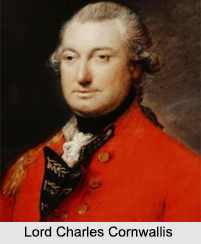
A supplementary Bill was passed in 1786 and Lord Cornwallis was appointed as the Governor General. Thus Cornwallis became the first effective ruler of British India under the authority of Board of Control and the Court of Directors. The general constitution established by Pitt`s India Act did not change much from the Company`s rule in India.
The Charter Act of 1813 closed all the business activities of the Company and then the Company became purely an administrative body under the authority of the Crown. After this, Governor General and Council had power to pass the laws and regulations for the British and native people of India.
Features of Pitt"s India Act of 1784
A Board of Control was established that contained maximum six parliamentarians. The Board was headed by the senior Cabinet member who was the Director and Superintendent to control the affairs of the company related to territorial possessions in the East Indies.
There should be a Secret Committee established by the Court of Directors, which would act as a link between the Board and the Court.
There should be three members in the Council for Governor General. One of the members should be Commander-in-chief of the King`s Army in India. If in any case the members of the council present in a meeting equally divided into three, then Governor General had the authority to take decision by two votes, one his own and the other was the casting vote.
The Government should stop experimenting with revenue matters and should set up `Permanent settlement` with Zamindars at moderate rate of revenue demand. The Government should establish permanent administrative and judicial system for governing the new kingdom.
All civilians and military officials must provide a full inventory of their property in India and Britain to the Court of Directors within two months of their joining.
If the civilian or military officials are caught guilty of corruption they would be inflicted with severe punishment including seize of property, dismissal and jail.
Military or civilian officers receiving gifts in kinds or cash from kings, zamindars or other Indian subjects would be alleged with charge of corruption.
Lord Charles Cornwallis was appointed by Parliament to implement the Pitt`s Act. He joined at 1786 and he was given the responsibility of reformatory work. Lord Cornwallis introduced Permanent Settlement, announced a judicial code and established an administrative and police system. His mission was completed in 1793.