
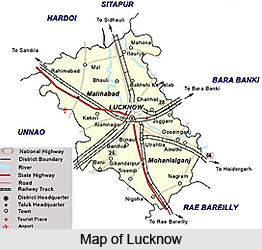
 Lucknow District is an administrative district of Uttar Pradesh with its headquarters located at Lucknow. This district forms a part of Lucknow Division. Lucknow is situated at around 123 metres above the sea level. It lies at 26 degree 30 minutes and 27 degree 10 minutes north latitude and 80 degree 30 minutes and 81 degree 13 minutes east longitude. Lucknow covers an area of 2528 sq kms. Lucknow District is surrounded on the eastern side by Barabanki District, on the western side by Unnao District, on the southern side by Rae Bareli District and on the northern side by Sitapur District and Hardoi District.
Lucknow District
Lucknow District of Uttar Pradesh is known for its rich traditions and culture. For centuries Lucknow has been famous for its various handicraft works.
Introduction
Lucknow District is an administrative district of Uttar Pradesh with its headquarters located at Lucknow. This district forms a part of Lucknow Division. Lucknow is situated at around 123 metres above the sea level. It lies at 26 degree 30 minutes and 27 degree 10 minutes north latitude and 80 degree 30 minutes and 81 degree 13 minutes east longitude. Lucknow covers an area of 2528 sq kms. Lucknow District is surrounded on the eastern side by Barabanki District, on the western side by Unnao District, on the southern side by Rae Bareli District and on the northern side by Sitapur District and Hardoi District.History of Lucknow District
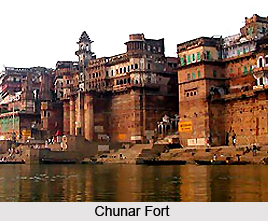
According to popular legend, Lord Rama gifted the territory of Lucknow to his devoted brother Lakshmana after he had conquered Sri Lanka and completed his term of exile in the jungle. Therefore, people say that the original name of Lucknow was Lakshmanpur, popularly known as Lakhanpur or Lachmanpur. Avadh is claimed to be among the most ancient of Hindu states. However, there is no record of when and how Ayodhya came to be deserted or allowed to decay. After the conquest of Kannauj by the Afghans at the end of the 12th century, Avadh came under the rule of Sultan of Ghazni, and so became part of the empire of Delhi. As the Mughal power declined the region grew stronger and more independent. It was then ruled by the Nawabs. The Nawabs surrendered their independence little by little over many years during the British rule. To pay for the protection of British forces and assistance in war, Avadh gave up first the fort of Chunar, then the districts of Banaras and Ghazipur, then the fort at Allahabad. Asaf -ud-Daula, son of Shuja-ud- Daula, moved the capital from Faizabad to Lucknow in 1775 and made it one of the most prosperous and glittering cities in the country.
Geography of Lucknow District
Lucknow District has uniformed tropical climate. The temperature varies from 45 degree Celsius in summer to 5 degree Celsius in winter season. Average annual rainfall is 100 cm per annum. Gomti River flows through the city. Some of the tributaries of this river are Kukrail, Loni, Beta, etc. Sai River flows from its southern border.
 The forest area is negligible in the district. Shisham, Dhak, Mahua, Babul, Neem tree, Peepul tree, Ashok, Khajur, Mango and Gular trees are grown here. In fact different varieties of mangoes are grown in the district and exported to other countries too. The main crops are wheat, paddy, sugarcane, mustard, potatoes and vegetables are grown here. Apart from these many medicinal and herbal plants are also grown here.
The forest area is negligible in the district. Shisham, Dhak, Mahua, Babul, Neem tree, Peepul tree, Ashok, Khajur, Mango and Gular trees are grown here. In fact different varieties of mangoes are grown in the district and exported to other countries too. The main crops are wheat, paddy, sugarcane, mustard, potatoes and vegetables are grown here. Apart from these many medicinal and herbal plants are also grown here.Culture of Lucknow District
Lucknow District is known for its rich culture. Lucknow, the district headquarters, is considered as the golden city of the east. It retains an old charm that fascinates one and all. Regarded as one of the finest cities of India, Lucknow emanates a culture that combines emotional warmth, a high degree of sophistication, courtesy and a love for gracious living. This sublime cultural richness famous as `Lucknowi Tehzeeb` blends the cultures of two communities living side by side for centuries, sharing similar interests, speaking a common language that is Urdu language. Many of the cultural traits and customs of Lucknow have become living legends today. The credit for this goes to the Nawabs of Awadh, who took keen interest in every walk of life and encouraged them to attain a rare degree of perfection. The Nawabs of Awadh were great patrons of fine arts of which the most well known is the exquisite `Chikan work`. Chikan is a unique craft involving delicate and artistic hand embroidery. Various cultural ingredients have contributed to the richness of this unique city. Lucknow became the focal point of a cultural renaissance with the shifting of capital from Faizabad to Lucknow in 1776. No account of the culture of Lucknow is complete without a mention of the famous `Chowk` of Lucknow. `Chowk` has played a vital role in the development of its culture. It is the pivotal point around which the traders, engravers, painters, artisans, weavers, singers and dancers flourished and grew. Like various other art forms the culinary art of Lucknow was also raised to a fine art under royal patronage.
Education in Lucknow District
There are several popular educational institutions in Lucknow District. Lucknow District has Lucknow University and Ambedkar University. Further, there are several degree colleges, engineering and medical institutes, management, fashion technology, research and polytechnic institutes in this district. Moreover, Lucknow District also has various popular secondary schools.
Lucknow is easily accessible from every part of the country through Airways, Railways and Roadways. It is directly connected with Delhi, Patna, Kolkata, Mumbai, Varanasi and other major cities by Amausi International Airport. Similarly city is linked to north, east, south and west through rail and road links.
Lucknow is easily accessible from every part of the country through Airways, Railways and Roadways. It is directly connected with Delhi, Patna, Kolkata, Mumbai, Varanasi and other major cities by Amausi International Airport. Similarly city is linked to north, east, south and west through rail and road links.
Monuments of Lucknow
 Lucknow, the capital city of the state of Uttar Pradesh, is the administrative centre of Lucknow District and Lucknow Division. This city is popular for its multicultural identity. Beautiful gardens, courtly manners, music, poetry, and exotic cuisine of Lucknow are well known throughout the country and abroad. This city is also regarded as the `The City of Nawabs`, `Golden City of the East` and `The Constantinople of India`. This vibrant city has witnessed a tremendous economic boom over the years and is rated among the top ten developing metro cities of the country. This lavish city is renowned for its depth in the field of Urdu and Hindi literature. Lucknow also has several historical monuments and sites that attract the people from various regions of the world.
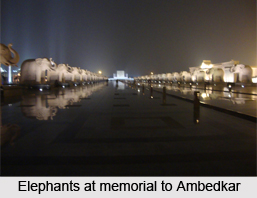
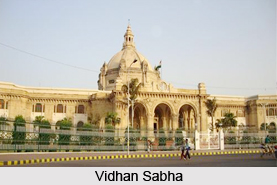
At Lucknow, for instance, Asafi Imambara, which is also known as known as Bara Imambara, Chhota Imambara, Shah Najaf, etc. are the popular monuments of architectural importance. Some other interesting places of exploration at this city are Chattar Manzil, Dilkusha, Picture Gallery, State Museum, Shaheed Smarak, Ambedkar Memorial, Planetarium, and more. Some of the monuments with architectural importance built in the British era in Lucknow comprise the `Vidhan Sabha` (State Legislative Assembly), the Charbagh Railway Station, with its unique domes, pillars and arches, St Joseph`s Cathedral and Clock Tower.
The `Dilkusha` or Heart`s Delight was built by Saadat Ali Khan in between 1798 to 1814 as a hunting-box in the centre of a large wooded park. It was constructed in a classical European style with square corner towers. But, it is now a ruin set among flower gardens. In the south-west of Dilkusha lies the `Bibiapur Kothi`, which is a two-storey building designed by architect Claude Martin. It is presently a Government Dairy Farm. To the north-west of Dilkusha stands `La Martiniere Boys` School`, formerly Constantia, one of the most fascinating buildings in the city. It was designed as a palace-tomb by Major-General Claude Martin (1735-1800). Constantia is a huge building with the most peculiar hybrid design. It is situated on a massive platform and it comprises a symmetrical block with curved semicircular wings added in the year 1840. The first storey has corner pavilions and statuary in full silhouette on the skyline. Another popular monument is Christ Church (1860) was designed by General Hutchinson as a memorial to the Mutiny dead and was enlarged and improved in the year 1904. It consists of many fascinating memorial tablets and brasses.
Bara Imambara is considered as the largest domed hall of the world. This monument significantly tells about the glory of the past. It was designed by Kifayat-ullah for Asaf-ud-Daula in the year 1784 as a famine-relief measure. It is one of the most impressive buildings in India, dominating the north-west corner of the city. An imambara is the general term for a building in which the festival of Muhar-ram is celebrated, and sometimes, as here, used for a mausoleum. It is approached through a square gateway crowned by an octagonal pavilion, from which two courtyards raise one above the other and linked by wide flights of steps. A lofty mosque with two minarets surrounds the west side. Over the main chamber a staircase leads to a series of rooms and passages designed as a maze, above which is a flat roof from which magnificent views of the city can be obtained. Outside the Great Imambara and straddling the road is the Turkish Gate or Rumi Darwaza that is a 60 feet high doorway. It is another very beautiful monument of Lucknow. It was constructed by Asaf-ud-Duala in between 1784 to 1786. It harmonizes with the adjoining Great Imambara to produce a wonderful complex of Oriental forms.
The Khurshid Manzil or House of the Sun, presently La Martiniere Girls` School, was constructed in between 1800 and 1810 by Saadat Ali Khan. It was ultimately completed by his son. This building was designed in a hybrid European style; it has six irregular towers and four entrances. `Shah Najaf`, tomb of Ghazi-ud-Din Haidar (1814-27) is an impressive building crowned by a white dome and glittering gold pinnacle. Its interior is richly decorated with crystal chandeliers and portraits, and contains the silver tomb of the Nawab flanked by two of his wives. This monument is beautifully illuminated during Muharram and on the anniversary of the death of his favourite wife.
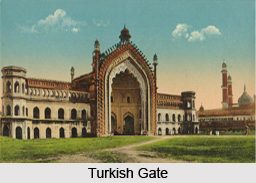
At the north-west of `Shah Najaf` is the Moti Mahal or the Pearl Palace. It is so called because of its resemblance of its original dome, which is now destroyed, to the shape of a pearl. It is a two-storey building. Originally, it comprised three distinct buildings: the Moti Mahal on the north side, built by Saadat Ali Khan, and the Mubarak Manzil and Shah Manzil, built by his son on the river frontage. The Italian wrought-iron entrance gates of this monument were installed in the year 1923. The Chattar Manzil or Umbrella Palaces are other impressive monuments of Lucknow. They were named so for their distinctive triple umbrella pavilions, which ornament the domes. They are highly impressive. Nearby is the Post and Telegraph Office, which was designed by Henry Lanchester. To the north lies the `Sher Darwaza` or Tiger Gateway, another historical site of this city. Beyond lies the British Residency, one of the best known historical monuments of Lucknow. It was built in 1800 by Saadat Ali Khan. Beneath and is well known for its distinct architectural styles. The Residency stands on the north-east side of the enclosure with its famous battered tower. The ground floor houses a small museum, which has a model showing the entire position in 1857.
North-west of the British Residency is the Iron Bridge (1798), designed by Sir John Rennie. Its design was based on the design of a similar bridge over the Witham at Boston in Lincolnshire. To the north-west again are King George`s and Queen Mary`s Medical Hospital and College (1912), built by Sir Samuel Swinton Jacob in a complete Indo-Saracenic style. Nearby is the Hardinge Bridge (1914), which replaced an earlier structure, which was erected in 1780 by Asaf-ud-Daula, and also the Mosque of Aurangzeb.
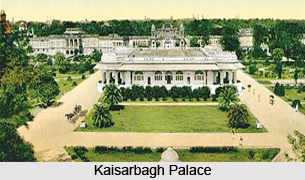 Just beyond the Rumi Darwaza are a number of neglected British tombs adjoining Victoria Park (1890). There is the Husainabad Clock-tower (1881) carrying the largest clock in India. The `Husainabad Imambara` or Palace of Lights (1837) has a magnificent appearance when illuminated. It stands in a large quadrangle and is well-detailed from each and every aspect. It was built by Muhammad Ali Shah (1837-1842). Another delightful monument of Lucknow is Juma Masjid, which was erected by Muhammed Ali Shah. This monument is also known as picture gallery as it contains the pictures and portraits of former Nawabs and Kings. Kaisarbagh Palace (1848-50) was founded by Wajid Ali Shah. It is also considered as a well renowned monument of this city. Outside the west gateway of the palace is the Roshan-ud-Daula Kothi. To the north-east of Kaisarbagh Palace is the Maqbara of Saadat AH Khan (1814). There are two virtually identical tombs with fine silhouettes, the larger being the king`s, the smaller that of his wife, Khursid Zadi.
There are several popular Dargahs or shrines in Lucknow. For instance, the Dargah of Hazrat Abbas is surrounded by pillared doorway. The Tomb of Ibrahim Chishti is another very popular monument of this city of Nawabs. St Mungo`s Church of Scotland (1909), All Saints` Church (1913) and the Railway Church (1915) are some of the churches of the British era.
The popular monuments of Lucknow symbolize the rich past and depth of the city. These monuments give a wonderful way to explore the history of the state.
Recently updated articles in States of India
History of Thissur District
Early History of Thissur District explains flourishing of the port cities. Now these port cities are transformed into archaeological sites.
Tippi Orchid Research Centre, Arunachal Pradesh
Tippi Orchid Research Centre in Arunachal Pradesh is renowned for its rich collection of exotic and endangered orchids. Surrounded by lush rainforest...
Tourism in Nashik District
Pilgrimage tourism in Nashik district involves visiting the various places of Hindu and Jain worship located here. Some of the holiest sites for Hind...
Mangadu, Kerala
Mangadu in Kerala’s Kollam district is a significant megalithic site known for its urn burials, cist burials, menhirs, and stone circles. Excavations...
Devaswom
History of Devaswom is not very ancient and can be dated back to late seventeenth century.
Related articles in States of India
East Indian States
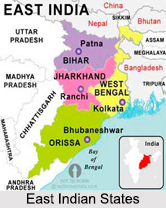
East Indian States comprises of Bihar, Jharkhand, West Bengal, Odisha and also the Union Territory of Andaman and Nicobar Islands. It defines the cult...
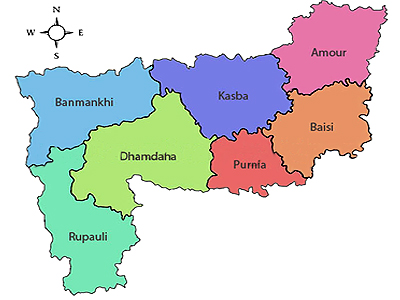
Purnia District in Bihar
Purnia District is located in Bihar and extends from River Ganga to Nepal. The district has a rich Hindu history and glorious past.
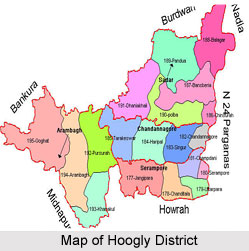
Hooghly district
Hooghly District along the bank of the river Hooghly is one of the principal trading ports of West Bengal.
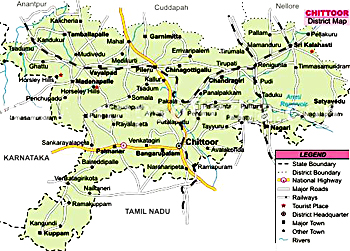
Geography Of Chittoor District
Geography of Chittoor district is spread along the topography of the land which is divided into two natural divisions; Chittoor has a dry and healthy...
Districts of West Bihar
Districts of West Bihar is comprised of medieval monuments that were built by the different governors of Mughal era.