
Archaeological sites of Kanwari or `Kumari`, located in Hansi Tehsil, Hisar District in Haryana include ancient historical sites which have been existent since the Indus Valley Civilization. Located about 24 kms away from Hisar on Tosham Road, Kanwari village has witnessed the regime of the Indus Valley Civilization, Marathas, the Tomara Dynasty, Muslim invaders of Delhi the Mughals, Jat Sikh leaders, officers of the British Raj and eventually the governance of India by leaders of independent India since the year 1947. The archaeological mounds of Kanwari, Bua Kanwari temple and an ancient Shiva temple called `Baba Siri Gir` are a few of the archaeological attractions of Kanwari village. Kanwari was declared as a part of the state of Punjab following Indian independence.
Archaeological Mounds at Kanwari
There exist two distinctive archaeological mounds at Kanwari, which date back to the Indus Valley Civilization. The triangular shaped mound is surrounded by the Bua Rani Kanwari Dham on the eastern side, `johad` or the main village pond stretching from the south to the west and the village road to the north. Several old objects and grey-ware have been excavated from Kanwari. However, the mounds are on the blink of destruction due to constant threats of the local villagers who dig out the mound for purposes of construction and others.
Bua Rani Kanwari Dham
Kanwari is home to the Bua Rani Kanwari Dham which is dedicated to the `Virgin Deity` or `Bua Kumari`, which implies Bua Kunwari` or `Kanwari; as per the Haryanvi dialect of the Hindi language. Numerable stone idols of Hindu deities have been discovered from this temple, whose age have not yet been determined by skilled archaeologists, and presently, they are preserved at the temple basement. During the period from 2001 till 2003, certain alterations have been carried out in the Bua Kanwari Temple. Newly married couples approach the temple to seek the divine blessings of Kanwari Bua, for blissfully wedded lives. The temple contains a single statue made of black stone, of the lower torso of a virgin deity named after Bua Kunwari, who is believed to have been transformed into stone, downwards from her waist. A Lord Shiva statue has also been unearthed from this spot.
Baba Sirigir Dham
Baba Sirigir Dham is an ancient Shiva complex, whose presiding deity is Lord Shiva and also Lord Hanuman, though the regional village Goddess is considered to be Bua Kanwari. Stone statues of different Hindu deities and Lord Hanuman and the Shiva Lingam are existent inside the temple premises. The temple also consists of an `Akhada`, which is a sacred place meant for the hermits or `Sadhus` who perform their rituals art `dhuni` or holy hearth and smoke `ganja`. A high platform composed of concrete and brick, plastered is also present and is known as `cabutra`, utilized for feeding grains and water to birds.
Kanwari
Archaeological sites of Kanwari, Haryana belong to the Indus Valley Civilization and comprise the Baba Siri Sir Shiva Temple, Bua Kanwari Temple, alongside the archaeological mounds. Several dtatues of Hindu Gods have been retrieved from Kanwari.
Recently updated articles in History of India
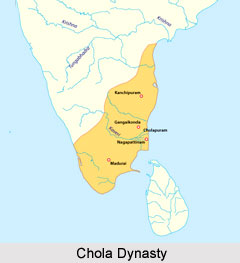
Chola Dynasty
Chola Dynasty is a Tamil dynasty and had longest duration of ruling in parts of South India. Chola dynasty had ruled South India successfully for a ex...

Suhungmung
Suhungmung was the fourteenth ruler of the Ahom dynasty who ruled from the period 1497 to 1539 AD. His reign was significant in terms of expansion of...

Princely State of Dadhalia
Princely State of Dadhalia was located in the present state of Gujarat. The state covered a total area of 28 sq miles and comprised of 15 villages. Th...

Princely State of Rupal
Princely State of Rupal was a part of the Baroda Agency, a sub division of Western India States Agency. It was under the administrative control of the...

Archaeological Sites of West Bengal
Archaeological sites of West Bengal reveal several aspects of ancient India. Excavations by the Archaeological Survey of India have furnished artefact...
Related articles in History of India

Mughal Architecture during Babur
Mughal architecture during Babur marked the foundation of a new architectural era in India, blending Timurid, Persian, and local influences. His reign...

Architecture during Sayyid and Lodi Dynasty
Architectures during the Sayyid and Lodi dynasty were mainly the tombs and monuments for the dead rulers. It were carefully designed and meticulously...

Brahmanical Sources of Ancient History
Brahmanical Sources of ancient history are contained in the Vedas and they constitute one of the most important literary sources of information about...

Coins of Chola Empire
Coins of Chola Empire were issued in gold, silver and copper and carried the Chola emblem.

Coins of Khilji Dynasty
Coins of Khilji Dynasty had an influential feature that was followed by the other dynasties.