
The Instrument of Accession was an officially authorized document which was created in the year 1947. The objective of the legal document was to facilitate each of the Indian princes, who reigned over the princely states of India under the indirect rule of the British government of India, to unite with one of the new dominions of India or Pakistan that were formed after the Partition of India during Indian independence from the British. During the era of the British rule in India, numerous princely states existed in the country, which were indirectly controlled by the British administration. These states were not directly included in the British India proper and were not considered to be under the become possession of the British Crown. The Princely States of India, which were ruled by independent rulers, were tied to the British Empire in India through a system of subsidiary alliances.
History of Instrument of Accession
In the year 1947, the British Government made final plans of leaving the nation for various political reasons and the future condition of these princely states proved to be a challenge for them. As the hundreds of Indian princely states were not under direct British rule, they were omitted from being partitioned by the British government of India into the newly formed self-governing nations of India and Pakistan. According to the Indian Independence Act 1947, the suzerainty of the British Crown over the Indian princely states would simply be terminated with effect from 15th August 1947. This would render the various princely states as totally independent and autonomous, even though most of such states were much dependent on the Government of India for finance, defence and other infrastructural services.
After the independence of India from the British dominion, it was then a matter for each of the Indian Prince of a princely state to decide whether to accede to India, to accede to Pakistan or to remain outside both.
Accession of Princely States
The legal document of the Instrument of Accession was designed to bring about accession, wherever it was decided upon. The process of accession was executed by the Government of India as well as the individual princes of each of the princely states. On 26 October 1947, The Instrument of Accession of Jammu and Kashmir was executed by Hari Singh, Maharaja of the princely state of Jammu and Kashmir. This gave the control of Jammu and Kashmir to the Indian government. Lord Mountbatten, Governor General of India accepted the accession of Jammu and Kashmir on 27th October 1947.
Instrument of Accession
Instrument of Accession was the legal document which was created in 1947 to facilitate the Indian princes of princely states to unite with one of the new dominions of India.
Recently updated articles in History of India
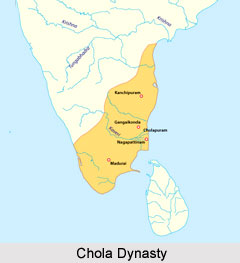
Chola Dynasty
Chola Dynasty is a Tamil dynasty and had longest duration of ruling in parts of South India. Chola dynasty had ruled South India successfully for a ex...
Suhungmung
Suhungmung was the fourteenth ruler of the Ahom dynasty who ruled from the period 1497 to 1539 AD. His reign was significant in terms of expansion of...
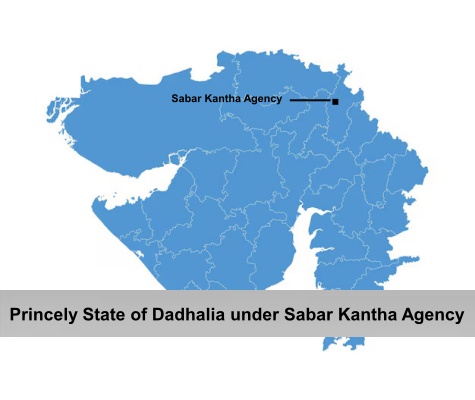
Princely State of Dadhalia
Princely State of Dadhalia was located in the present state of Gujarat. The state covered a total area of 28 sq miles and comprised of 15 villages. Th...
Princely State of Rupal
Princely State of Rupal was a part of the Baroda Agency, a sub division of Western India States Agency. It was under the administrative control of the...
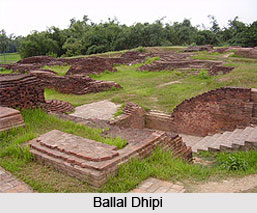
Archaeological Sites of West Bengal
Archaeological sites of West Bengal reveal several aspects of ancient India. Excavations by the Archaeological Survey of India have furnished artefact...
Related articles in History of India

Mughal Architecture during Babur
Mughal architecture during Babur marked the foundation of a new architectural era in India, blending Timurid, Persian, and local influences. His reign...

Architecture during Sayyid and Lodi Dynasty
Architectures during the Sayyid and Lodi dynasty were mainly the tombs and monuments for the dead rulers. It were carefully designed and meticulously...

Brahmanical Sources of Ancient History
Brahmanical Sources of ancient history are contained in the Vedas and they constitute one of the most important literary sources of information about...

Coins of Chola Empire
Coins of Chola Empire were issued in gold, silver and copper and carried the Chola emblem.

Coins of Khilji Dynasty
Coins of Khilji Dynasty had an influential feature that was followed by the other dynasties.