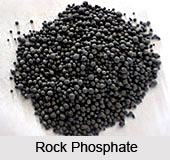
 Phosphorite is a nonmetallic chemical element, its chemical symbol is P and atomic number is 15. It is a rock with a high concentration of phosphates in nodular or compact masses. The phosphates may be derived from a variety of sources, including marine invertebrates that secrete shells of calcium phosphate, and the bones and excrement of vertebrates. The thickest deposits of phosphorite are formed in areas characterized by carbonaceous shale and chert. Many sedimentary rocks contain phosphate in the form of scattered bones composed of the mineral apatite, but rocks composed predominantly of phosphate are rare.
Nevertheless, three principal types exist:
•Regionally extensive, crystalline nodular, and bedded phosphorites,
•Localized concentrations of phosphate-rich clastic deposits and
•Guano deposits.
Phosphates can be grouped as:
•Primary phosphates that have crystallized from a liquid;
•Secondary phosphates formed by the alteration of primary phosphates; and
•Fine-grained rock phosphates formed at low temperatures from phosphorus-bearing organic material, primarily underwater.
Economically, Uttar Pradesh is one of the most underdeveloped states in the country. It is largely an agrarian state, and more than three-fourths of the working population is engaged in agricultural pursuits. The state lacks the mineral and energy resources important for industrialization. Silica, limestone, and coal are the only minerals that are found in considerable quantities in Uttar Pradesh; there are small reserves of gypsum, magnetite, phosphorite, and bauxite.
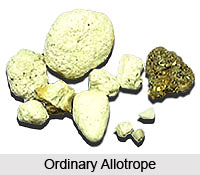 The ordinary allotrope, called white phosphorus, is a poisonous, colourless, semitransparent, soft, waxy solid that glows in the dark phosphorescence and combusts spontaneously in air, producing dense white fumes of the oxide P4O10; it is used as a rodenticide and a military smokescreen. Heat or sunlight converts it to the red phosphorus allotrope, a violet-red powder that does not phosphoresce or ignite spontaneously. Much less reactive and soluble than white phosphorus, it is used in manufacturing other phosphorus compounds and in semiconductors, fertilizers, safety matches, and fireworks.
 Black phosphorus, made by heating the white form under pressure, is flaky like graphite. Phosphorus seldom occurs uncombined in nature. As the phosphate ion, it is plentiful and widely distributed, in apatite, phosphorite, and many other minerals. Phosphorus has valence 3 or 5 in compounds, which have many uses in industry. Phosphine (PH3) is a chemical raw material and a doping agent for solid-state electronics components. Organic phosphorus compounds are used as plasticizers, gasoline additives, insecticides, and nerve gases. In living organisms the role of phosphorus is essential; it is a component of DNA and RNA, ATP and bone.