
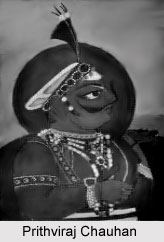
 Prithviraj Chauhan was a king of the Rajput Chauhan (Chahanama) dynasty, who ruled a kingdom in northern India during the latter half of the 12th Century. Prithviraj Chauhan was the second last Hindu king to sit upon the throne of Delhi. He succeeded to the throne in 1179 AD at the age of eleven, and ruled from the twin capitals of Ajmer and Delhi. He became the sovereign power of much of Rajasthan and Haryana, and unified the Rajputs against Muslim invasions. However the reign of Prithviraj Chauhan constituted an important era in the history of ancient India.
Prithviraj Chauhan
Prithviraj Chauhan was the last Hindu ruler on the throne of Delhi, who defended the Turkish invasion in India. He is known in the history of India for his valour in the battles of Tarain.
Introduction
Prithviraj Chauhan was a king of the Rajput Chauhan (Chahanama) dynasty, who ruled a kingdom in northern India during the latter half of the 12th Century. Prithviraj Chauhan was the second last Hindu king to sit upon the throne of Delhi. He succeeded to the throne in 1179 AD at the age of eleven, and ruled from the twin capitals of Ajmer and Delhi. He became the sovereign power of much of Rajasthan and Haryana, and unified the Rajputs against Muslim invasions. However the reign of Prithviraj Chauhan constituted an important era in the history of ancient India.Political Career of Prithviraj Chauhan
Prithviraj Chauhan ascended to the throne of Delhi at an early age of eleven. Prithviraj at his early age proved himself as a competent administrator and a military expert. From the beginning of his political career, Prithviraj III was engaged in the hereditary rivalry with the Chalukya king of Gujarat. But at that very moment he was confronted with the Turkish invasion from Punjab. The Chauhana kingdom during the reign of Vigraharaja IV was extended up to the confines of the Turkish kingdom of the Ghoris of the Northwest. This resulted in the hereditary struggle of the Turks with the Chauhans. This made the conflict between them inevitable.
Prithviraj was confronted with a great dilemma when Muhammed Ghori marched against the Chalukyas of Gujarat. At that time Muhammed of Ghori sought the alliance of Prithviraj Chauhan against the Chalukya adversary. Prithviraj adopted a policy of shrewd diplomacy in order to crush both the enemies. Thus Prithviraj adopted a policy of hostile neutrality and discarded the alliance with the Ghori. Ultimately Mulraj, the Chalukya king of Gujarat had routed the Turks in the Battle of Mount Abu.
Prithviraj was confronted with a great dilemma when Muhammed Ghori marched against the Chalukyas of Gujarat. At that time Muhammed of Ghori sought the alliance of Prithviraj Chauhan against the Chalukya adversary. Prithviraj adopted a policy of shrewd diplomacy in order to crush both the enemies. Thus Prithviraj adopted a policy of hostile neutrality and discarded the alliance with the Ghori. Ultimately Mulraj, the Chalukya king of Gujarat had routed the Turks in the Battle of Mount Abu.
Treaty of Bhim II between Chalukyas and Prithviraj
The defeat of Mohammed Ghori opened to Prithviraj to execute his policy of conquest. Prithviraj conquered the Rewari district and a part of Alwar state in 1182 AD. The same year he defeated the Chandella king Paramardi and annexed a part of his dominion. But the Chandellas soon recovered their territory from him. Prithviraj in due course also led a campaign against his old adversary but he failed to attain any considerable success. However the hostility between the Chauhans and the Chalukyas came to an end with the alliance treaty of Bhim II with Prithviraj Chauhan.
Battles of Tarain
First Battle of Tarain
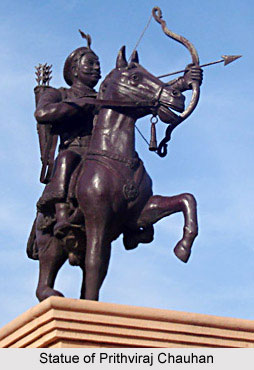 The greatest event of Prithviraj`s career is his struggle with Muhammed Ghori. The struggle of Prithviraj Chauhan with the Turkish power Muhammed of Ghori constituted a significant event in the history of ancient India. Since the annexation of Western Punjab by Muhammed of Ghori, the Chauhana territory of the eastern Punjab was threatened. Muhammed attempted to conquer Hindustan in 1190. Initially as strategic step, he devastated the fortress of Tabarhind, which was within the territory of Prithviraj Chauhan. At the same time the feudatories of Prithviraj also suffered the same reverses. This made the struggle between the Turks and Prithviraj Chauhan inevitable. Thus Prithviraj set out for the campaign against Muhammed Ghori. In the First Battle of Tarain Prithviraj routed the Muhammed of Ghori. Ghori fled from the battlefield being highly injured. Prithviraj followed up his success by taking the possession of the fortress of Tabarhind from the Turkish invaders.
Second Battle of Tarain
The defeat of the Turks in the First Battle of Tarain in 1191 AD could diminish the Turkish power. Ghori reappeared in the 1192 AD with a huge army in Punjab resulting in the Second Battle of Tarain. This time Muhammed of Ghori planned his strategy from the very beginning. Muhammed recaptured Tabarhind and reached the field of Tarain without meeting any serious opposition in the way. Meanwhile Prithviraj entered in a confederacy with several Hindu kings. Prithviraj, being an expert statesman could understand that Ghori had come with enormous preparations to conquer Hindustan. Therefore he wanted to strengthen his confederacy with the Hindu kings. But the Gahadavala king of Kanauj, Jayachandra stayed aloof from the anti-Turkish confederacy organized by Prithviraj Chauhan. Thus Jayachandra continued the hereditary rivalry with the Chauhans.
However Prithviraj Chauhan blocked the passage of Muhammed Ghori in the field of Tarain. During this battle Prithviraj did not even get the support of his competent general Skanda. Muhammed Ghori by his superior generalship and tactics completely routed the Hindu army. In the Second Battle of Tarain, thus the Hindu supremacy was dashed by the Turkish army. Prithviraj was imprisoned and executed. His brother was also slain. The crushing defeat of the Hindu supremacy in the Second Battle of Tarain determined the Muslim supremacy in India. The subsequent attack of the Hindu kings against the Turks proved utterly futile. The Second Battle of Tarain is regarded by the historians as the turning point of Indian History. After this battle the Muslim power was strongly founded in Northern India.
The greatest event of Prithviraj`s career is his struggle with Muhammed Ghori. The struggle of Prithviraj Chauhan with the Turkish power Muhammed of Ghori constituted a significant event in the history of ancient India. Since the annexation of Western Punjab by Muhammed of Ghori, the Chauhana territory of the eastern Punjab was threatened. Muhammed attempted to conquer Hindustan in 1190. Initially as strategic step, he devastated the fortress of Tabarhind, which was within the territory of Prithviraj Chauhan. At the same time the feudatories of Prithviraj also suffered the same reverses. This made the struggle between the Turks and Prithviraj Chauhan inevitable. Thus Prithviraj set out for the campaign against Muhammed Ghori. In the First Battle of Tarain Prithviraj routed the Muhammed of Ghori. Ghori fled from the battlefield being highly injured. Prithviraj followed up his success by taking the possession of the fortress of Tabarhind from the Turkish invaders.
Second Battle of Tarain
The defeat of the Turks in the First Battle of Tarain in 1191 AD could diminish the Turkish power. Ghori reappeared in the 1192 AD with a huge army in Punjab resulting in the Second Battle of Tarain. This time Muhammed of Ghori planned his strategy from the very beginning. Muhammed recaptured Tabarhind and reached the field of Tarain without meeting any serious opposition in the way. Meanwhile Prithviraj entered in a confederacy with several Hindu kings. Prithviraj, being an expert statesman could understand that Ghori had come with enormous preparations to conquer Hindustan. Therefore he wanted to strengthen his confederacy with the Hindu kings. But the Gahadavala king of Kanauj, Jayachandra stayed aloof from the anti-Turkish confederacy organized by Prithviraj Chauhan. Thus Jayachandra continued the hereditary rivalry with the Chauhans.
However Prithviraj Chauhan blocked the passage of Muhammed Ghori in the field of Tarain. During this battle Prithviraj did not even get the support of his competent general Skanda. Muhammed Ghori by his superior generalship and tactics completely routed the Hindu army. In the Second Battle of Tarain, thus the Hindu supremacy was dashed by the Turkish army. Prithviraj was imprisoned and executed. His brother was also slain. The crushing defeat of the Hindu supremacy in the Second Battle of Tarain determined the Muslim supremacy in India. The subsequent attack of the Hindu kings against the Turks proved utterly futile. The Second Battle of Tarain is regarded by the historians as the turning point of Indian History. After this battle the Muslim power was strongly founded in Northern India.
Conquest of Prithviraj Chauhan
Conquest of Prithviraj Chauhan can be characterised as aggressive and implementation of shrewd tactics occasionally. Prithviraj Chauhan was a king of the Chauhan dynasty, who controlled the kingdom of Delhi and Ajmer in northern India during the second half of the twelfth century. He belonged to the Agnikula clan of Rajputs. Delhi had witnessed Prithviraj Chauhan as the last Hindu King. He ruled to a large extent current Rajasthan and Haryana, and unified the Rajputs against Muslim invasions.
Battle against Bhimdev Solanki of Gujarat
Prithviraj Chauhan had killed many of Bhimdev`s generals before getting into a war with him. Bhimdev was a ruler of the Solanki dynasty in Gujarat. A general had betrayed Prithviraj and had joined Bhimdev in this battle. He had given all the inside information to Bhimdev and had poisoned Prithviraj Chauhan`s army. Bhimdev was sending his army men accordingly. All his plans failed and on the final day of the battle, Bhimdev himself clashed with Prithviraj Chauhan and was crushed to defeat.
Battle against Mahoba
Some Chauhan dynasty soldiers from Delhi decided to stop at the Mahoba royal gardens as they were injured. The Mahoba soldiers told the Delhi soldiers that they had insulted the Mohaba king Parmar by stepping into his garden and were attacked. Prithviraj Chauhan came to know about this and declared war on Mahoba. The Mahoban army was divided into three different sections during this battle. One part was led by the Prince of Mahoba, whilst the other two were led by the brothers Alha and Udal. Prithviraj Chauhan defeated the section controlled by Udal and Prince of Mahoba. Udal had injured Pundir a friend and general of Prithviraj Chauhan in combat. Udal was then killed by Prithviraj who was injured badly. Prithviraj and his friend Sanjham Rai, who was also injured, fell down a nearby hill and were left to be eaten by crows. Sanjham Rai, in order to save his friend allowed the crows to feed on him and not on Prithviraj and died a slow death. Alha`s section was still in battle with Prithviraj`s army. He was stopped from killing Prithviraj Chauhan by his guru. When Chand Bardai, had arrived Prithviraj became unconscious. He recovered later and was grieved at his friend`s death.
Prithviraj Chauhan continued his conquests winning one territory after another.
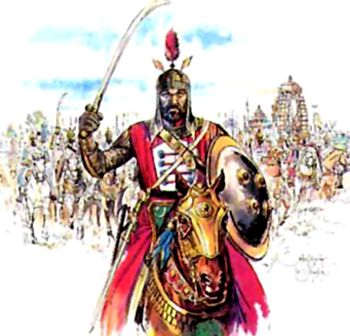 One of Prithviraj`s small battles was in opposition to King Raichand. King Raichand and some of the other neighbouring kings took advantage of Prithviraj`s injury. They attacked at that time knowing his inability to fight .The generals and close friends of Prithviraj Chauhan guarded the king of Delhi. Some villagers also came in handy to get rid of King Raichand and he was finally killed.
Prithviraj Chauhan took over the Kukada kingdom. He continued expanding his area of control by extending his region in all four directions. His army continued a rather bloody victory march for over four years. They won the battle against King of Dariyagargh. Soon after this conquest he had to witness the destruction of a major portion of his state. This was Muhammad Ghori`s first attack on Prithviraj`s province.
Although Prithviraj Chauhan could not conquer many territories like the other Indian rulers, yet he proved himself as an able soldier in the first battle of Tarain. Conquests of Prithviraj Chauhan proved him to be a great soldier but lacking political insight of a diplomatic administrator. With his victory at Tarain, Muslim rule ushered in North India and decline of Hindu supremacy begun.
Battle against Bhimdev Solanki of Gujarat
Prithviraj Chauhan had killed many of Bhimdev`s generals before getting into a war with him. Bhimdev was a ruler of the Solanki dynasty in Gujarat. A general had betrayed Prithviraj and had joined Bhimdev in this battle. He had given all the inside information to Bhimdev and had poisoned Prithviraj Chauhan`s army. Bhimdev was sending his army men accordingly. All his plans failed and on the final day of the battle, Bhimdev himself clashed with Prithviraj Chauhan and was crushed to defeat.
Battle against Mahoba
Some Chauhan dynasty soldiers from Delhi decided to stop at the Mahoba royal gardens as they were injured. The Mahoba soldiers told the Delhi soldiers that they had insulted the Mohaba king Parmar by stepping into his garden and were attacked. Prithviraj Chauhan came to know about this and declared war on Mahoba. The Mahoban army was divided into three different sections during this battle. One part was led by the Prince of Mahoba, whilst the other two were led by the brothers Alha and Udal. Prithviraj Chauhan defeated the section controlled by Udal and Prince of Mahoba. Udal had injured Pundir a friend and general of Prithviraj Chauhan in combat. Udal was then killed by Prithviraj who was injured badly. Prithviraj and his friend Sanjham Rai, who was also injured, fell down a nearby hill and were left to be eaten by crows. Sanjham Rai, in order to save his friend allowed the crows to feed on him and not on Prithviraj and died a slow death. Alha`s section was still in battle with Prithviraj`s army. He was stopped from killing Prithviraj Chauhan by his guru. When Chand Bardai, had arrived Prithviraj became unconscious. He recovered later and was grieved at his friend`s death.
Prithviraj Chauhan continued his conquests winning one territory after another.
One of Prithviraj`s small battles was in opposition to King Raichand. King Raichand and some of the other neighbouring kings took advantage of Prithviraj`s injury. They attacked at that time knowing his inability to fight .The generals and close friends of Prithviraj Chauhan guarded the king of Delhi. Some villagers also came in handy to get rid of King Raichand and he was finally killed.
Prithviraj Chauhan took over the Kukada kingdom. He continued expanding his area of control by extending his region in all four directions. His army continued a rather bloody victory march for over four years. They won the battle against King of Dariyagargh. Soon after this conquest he had to witness the destruction of a major portion of his state. This was Muhammad Ghori`s first attack on Prithviraj`s province.
Although Prithviraj Chauhan could not conquer many territories like the other Indian rulers, yet he proved himself as an able soldier in the first battle of Tarain. Conquests of Prithviraj Chauhan proved him to be a great soldier but lacking political insight of a diplomatic administrator. With his victory at Tarain, Muslim rule ushered in North India and decline of Hindu supremacy begun.
Indian Army under Prithviraj Chauhan
Indian Army under Prithviraj Chauhan is known for giving a tough fight to the Muslim invaders. While the 11th century had witnessed the passing of Punjab into the hands of the Muslim invaders and the establishment of their strongholds in that area, the next century saw the expansion of their power further east. With their capital at Ajmer the Chauhans had already expanded their dominions particularly in the north towards Punjab. In 1167 Bathinda Fort was captured from the Muslims. Old forts were repaired and new ones built. These were all strongly garrisoned with troops and provisions stocked. Important towns were also fortified.
Some commanders have figured prominently, more than once against each other but often have they crossed swords on the same battle field and settled the outstanding score in such a decisive manner as was done at Tarain. The contestants for power were Prithviraj representing the flower of Rajput chivalry, then extending his influence in north India and Muhammad Ghori on the other bent upon building an empire in the country. The two battles stand poles apart in the employment of tactics. While in the first one Prithviraj routed the highly mobile cavalry of Muhammad Ghori by sheer weight of numbers employed on the flanks, in the latter battle these were reversed with decisive effect. Highly trained and organised forces, with the employment of concentrated firepower and mobile reserves once again established themselves in battle against superior numbers. Bathinda, with its strong fortress formed the northern-most outpost of the Chauhan ruler. From here he could watch the incursions of the invaders from the north-west. In 1189 Muhammad surprised the Bathinda garrison and occupied the town. Prithviraj Chauhan, who was then campaigning in the south, took immediate measures to meet the threat. He collected around two lakh cavalry and 3,000 elephants and marched north to give battle.
Muhammad Ghori divided his army into three divisions and extended them on his front. He himself commanded the centre. Taking advantage of his superior numbers and mobile forces the army under Prithviraj Chauhan opened the attack and continued to keep up a concentrated fire. Simultaneous thrusts were made from both the flanks also and so much pressure was brought to bear upon the enemy that they were forced to give way and soon Muhammad`s front became an inverted circle. Continued onslaughts of the Rajputs on this front soon made his position very precarious. After this the Muslim army quickly dispersed and Prithviraj won a decisive victory. This was Muhammad`s second defeat in India. The Rajputs then besieged Bathinda. Thus, from this incident, it becomes clear that Indian Army under Prithviraj Chauhan was very well organised as he was a brilliant general.
Some commanders have figured prominently, more than once against each other but often have they crossed swords on the same battle field and settled the outstanding score in such a decisive manner as was done at Tarain. The contestants for power were Prithviraj representing the flower of Rajput chivalry, then extending his influence in north India and Muhammad Ghori on the other bent upon building an empire in the country. The two battles stand poles apart in the employment of tactics. While in the first one Prithviraj routed the highly mobile cavalry of Muhammad Ghori by sheer weight of numbers employed on the flanks, in the latter battle these were reversed with decisive effect. Highly trained and organised forces, with the employment of concentrated firepower and mobile reserves once again established themselves in battle against superior numbers. Bathinda, with its strong fortress formed the northern-most outpost of the Chauhan ruler. From here he could watch the incursions of the invaders from the north-west. In 1189 Muhammad surprised the Bathinda garrison and occupied the town. Prithviraj Chauhan, who was then campaigning in the south, took immediate measures to meet the threat. He collected around two lakh cavalry and 3,000 elephants and marched north to give battle.
Muhammad Ghori divided his army into three divisions and extended them on his front. He himself commanded the centre. Taking advantage of his superior numbers and mobile forces the army under Prithviraj Chauhan opened the attack and continued to keep up a concentrated fire. Simultaneous thrusts were made from both the flanks also and so much pressure was brought to bear upon the enemy that they were forced to give way and soon Muhammad`s front became an inverted circle. Continued onslaughts of the Rajputs on this front soon made his position very precarious. After this the Muslim army quickly dispersed and Prithviraj won a decisive victory. This was Muhammad`s second defeat in India. The Rajputs then besieged Bathinda. Thus, from this incident, it becomes clear that Indian Army under Prithviraj Chauhan was very well organised as he was a brilliant general.
Critics on the Marriage of Prithviraj Chauhan
Prithviraj Chauhan was a great soldier but he actually lacked the political insight of a diplomatic administrator. Although he could not conquer many territories like the other Indian rulers, yet he proved himself as an able soldier in the first battle of Tarain. He could not understand the true nature of the Muslim invasion until the blow came upon him. Moreover he chose to be defensive towards his enemy. He did not pursue the Turks after his victory in the First Battle of Tarain. He neglected to fortify his Empire after his initial victory against the Turks and he failed to execute his strategy properly. However the sudden invasion by Muhammed Ghori in the 1192 AD, determined his decline as well as the Hindu Supremacy in India.
Recently updated articles in History of India
Chola Dynasty
Chola Dynasty is a Tamil dynasty and had longest duration of ruling in parts of South India. Chola dynasty had ruled South India successfully for a ex...
Suhungmung
Suhungmung was the fourteenth ruler of the Ahom dynasty who ruled from the period 1497 to 1539 AD. His reign was significant in terms of expansion of...
Princely State of Dadhalia
Princely State of Dadhalia was located in the present state of Gujarat. The state covered a total area of 28 sq miles and comprised of 15 villages. Th...
Princely State of Rupal
Princely State of Rupal was a part of the Baroda Agency, a sub division of Western India States Agency. It was under the administrative control of the...
Archaeological Sites of West Bengal
Archaeological sites of West Bengal reveal several aspects of ancient India. Excavations by the Archaeological Survey of India have furnished artefact...
Related articles in History of India

Mughal Architecture during Babur
Mughal architecture during Babur marked the foundation of a new architectural era in India, blending Timurid, Persian, and local influences. His reign...

Architecture during Sayyid and Lodi Dynasty
Architectures during the Sayyid and Lodi dynasty were mainly the tombs and monuments for the dead rulers. It were carefully designed and meticulously...

Brahmanical Sources of Ancient History
Brahmanical Sources of ancient history are contained in the Vedas and they constitute one of the most important literary sources of information about...

Coins of Chola Empire
Coins of Chola Empire were issued in gold, silver and copper and carried the Chola emblem.

Coins of Khilji Dynasty
Coins of Khilji Dynasty had an influential feature that was followed by the other dynasties.