
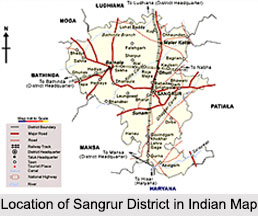
 Sangrur District is one of the southern districts of Punjab. It lies between 29 degree 4 minutes and 30 degree 42 minutes north latitude and 75 degree 18 minutes and 76 degree 13 minutes east longitude. Sangrur District is bounded by Ludhiana District and Ferozepur District in the north, by Bathinda District in the west, by Patiala District in the east and by Jind District of Haryana in the south. The district in general is rural region in the southern part of the State. Sangrur District does not have any place of tourist interest, although there are a few places of some historical or religious importance.
Sangrur District
Sangrur District is one of the four districts in Patiala Division of Punjab. Situated at the west of Patiala, it is virtually isolated from urban centre of the state.
Introduction
Sangrur District is one of the southern districts of Punjab. It lies between 29 degree 4 minutes and 30 degree 42 minutes north latitude and 75 degree 18 minutes and 76 degree 13 minutes east longitude. Sangrur District is bounded by Ludhiana District and Ferozepur District in the north, by Bathinda District in the west, by Patiala District in the east and by Jind District of Haryana in the south. The district in general is rural region in the southern part of the State. Sangrur District does not have any place of tourist interest, although there are a few places of some historical or religious importance.History of Sangrur District
 Sangrur District was formed in the year 1948. The district got its name from its headquarters town Sangrur. It is interesting to note that Sangrur itself was earlier a part of Nabha state. History of Sangrur District is, therefore, complicated, although it is traceable through its various components. It is characterized into ancient, medieval and modern periods. The excavations carried out at various places of tehsil Malerkotla of Sangrur District, give sufficient proof that the district is quite rich in ancient history that have existed from the pre-Harappan period.
The earliest settlement at the site is believed to have begun around 2,300 BC. Attracted by the fertile soil and availability of water, people from Sind and Baluchistan started moving and following the path of Sutlej River or Ghaggar River settled at Rohira. Further, Mahabharata contains profuse and useful information on various aspects of the political and socio-culture life of the land. The area of present Sangrur District along with adjoining areas came under the Maurya Dynasty in 322 BC. This area was also under the rule of Gupta administration.
According to the medieval period of the history of Sangrur District, during the last quarter of 10th century, Raja Jaipal ruled over Punjab including the present area of Sangrur District. His capital was at Bathinda close to the district. Sunam was an important province during the Sultanate period. Sher Khan was in charge of the governorship of Sunam. During his reign, Mangols invaded the country in 1292, reached Sunam, but were defeated. Ala-ud-din Khilji was the most famous Sultan of this dynasty who enforced very strong administration. During the times of Muhammad-bin-Tughlaq, a rebellion took place in Sunam and the adjoining areas. The root cause of the rebellion was the refusal of the peasants to pay the land tax.
During the Sultanate period, Sunam had strategic position and it was on the main route to Delhi. Under the Mughals, Punjab formed important province of their empire with successive governors as heads of administration. Sunam and Sirhind were the important provinces during the Mughal rule and the most of the area of the modern Sangrur District were under them. After the death of Aurangzeb, Mughal Empire became weaker throughout India. By this time, Sikhism had become a militant power in Punjab.
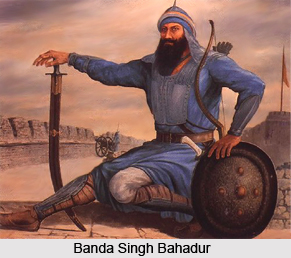
Banda Singh Bahadur, disciple of the Guru Gobind Singh shook the very foundation of Mughal Empire in Punjab. The Sikhs from Doab and Majha came in large numbers under the banner of Banda Bahadur, to take revenge on Wazir Khan, the Faujdar of Sirhind who was mainly responsible for the endless sufferings to the Guru Gobind Singh and his sons. During the Fourth and Fifth Afghan invasion, the Sikhs were able to plunder the retreating Afghan forces and were able mostly to relieve them of their spoils. Since the present Sangrur District contains areas of erstwhile Phulkian states of Patiala, Nabha and Jind, and Mohammedan State of Malerkotla, its history is linked with the history of the above States. However, its main link is with the Phulkian States. Sangrur proper was once the headquarters of the Phulkian State of Jind.
British period of history of Sangrur District states that the active British influence in the erstwhile state of Jind was visible during the rule of Raja Bhag Singh. He along with other Phulkian Sardars approached the British Government for seeking protection against the rising power of Maharaja Ranjit Singh. After the death of Raja Bhag Singh in 1819, Fateh Singh became the next ruler of Jind State. His reign was very short and quite uneventful. The installation of Sangat Singh took place on 30 July 1822, at Jind in the presence of all the Phulkian chiefs.
The mismanagement of Jind continued to increase. Raja deserted his capital altogether. Further, the detention of British subjects in confinement without just cause by the Jind authorities was in 1834, reported to Government by the Governor General`s agent. The Raja was reprimanded by the British for his lapses. After the death of Raja Sangat Singh there were many claimants to his throne. Raja Sarup Singh was formally installed in the presence of all the Phulkian Chiefs and the British Agent in April 1837. However, he was deprived of much of his territory, and Basia, Ludhiana and Morinda were taken away by the British. After the annexation of Punjab, the Raja of Jind was one of the few chiefs permitted to retain independent powers. In recognition of his service in recapturing Delhi for the British, the confiscated house of the rebel Shahzada Mirza Abu Bakr, situated in Delhi, was bestowed on the Raja (Sarup Singh).
In 1882, during Egyptian attack, the Raja of Jind offered to help the British with troops and ammunition but his offer was declined. Raja Ranbir Singh ruled the Jind State till independence in 1947.
Climate of Sangrur District
The climate of the district is basically dry and is characterized by a short monsoon, a hot summer and a bracing cold winter. The year may be divided into four seasons. The cold season from November to March is followed by the hot season lasting up to the end of June. The period from July to mid-September constitutes the rainy season, of south-west monsoon, the second half of September and October may be termed as the post-monsoon or transition period. During the south-west monsoon season the relative humidity is high. It is comparatively drier during the rest of the year. On an average, there are 27 rainy days in a year in Sangrur District. Winds are generally light but do gain some strength during the late summer and early part of the monsoon season. However, Sangrur District is scarcely affected by monsoon depressions.
Demography of Sangrur District
 Total population of Sangrur District as per 2001 Census is 2000173. The sex ratio according to census 2001 is 874 females per thousand male in district. 69.95 percent population is literate whereas the rate of male and female literacy is 75.63 percent and 63.55 percent respectively. Sangrur District occupies an area of 502417 hectares. In terms of area the district ranks third in the state after Ferozepur and Faridkot Districts.
Administration of Sangrur District
From Administrative point of view Sangrur District is divided into five tehsils namely Sangrur, Sunam, Malerkotla, Barnala and Moonak. These tehsils have been further divided into 13 blocks - Malerkotla-I, Malerkotla-II, Dhuri, Sherpur, Mehal Kalan, Sehna, Barnala, Sangrur, Bhawanigarh, Sunam, Lehra, Andana and Moonak. Total number of villages in Sangrur District is 697, out of which, number of inhabited villages is 693 and number of un-inhabited villages is 4. Administration of Sangrur District is headed by Deputy Commissioner with the aid of his assistant officers.
Festivals of Sangrur District
 Festivals of Sangrur District serve as index to the cultural, social and domestic life of the people. Many among them are based on legends and aim at propitiating deities and persons believed to be blessed with supernatural powers, and invoking them for the grant of desires and for warding off troubles and curing aliments. Festivals of Sangrur District also provide an atmosphere of devotion and enjoyment. Some festivals mark the seasonal changes and some are local in character and are associated with some place or saint. The fairs and festivals of Sangrur District attract large number of people from all parts of the state.
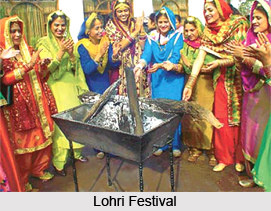
Some religious festivals are celebrated with great enthusiasm in the district. Gurpurbs are the largest religious festivals of the Sikhs which are celebrated with great devotion here. Huge celebrations are held on the birth anniversaries of Guru Nanak and Guru Gobind Singh and on the martyrdom days of Guru Arjan Dev and Guru Tegh Bahadur. Religious festivals like Shivaratri, Holi, Janmashtami, Dussehra, Diwali, Ramnavami, etc. The seasonal festivals of Lohri and Baisakhi are also celebrated with great fanfare and enthusiasm.
Janmashtami of Sangrur deserves special mention. Virtually, the whole population of Sangrur, belonging to different religions and castes, participates in its celebrations. Dussehra is celebrated almost in all towns of the district with great pump and show. In Sangrur District, Muharram, Ramzan, Id Ul Fitr and Id Ul Zuha are also celebrated. Mahavir Jayanti is celebrated by taking out a procession of pictures of Lord Mahavira.
Besides the above fairs and festivals, there are certain local fairs which are celebrated by the people in the district. To commemorate martyrdom of sixty-six Namdharis, `Kukas Martyrdom Day` or `Kuka Fair` is held at Malerkotla on January 17th and 18th every year. Vasant Panchami fair is held at Malerkotla at the Samadhi of Baba Roda. Another local religious fair `Mela Hazrat Sheikh Sadr-ud-Din` is also hold at Malerkotla in the memory of Sheikh Sadr-un-Din who founded Malerkotla state during the time of Bahlol Lodi. The festival of Nirjala Ekadashi is also celebrated with much enthusiasm. It is celebrated at the Samadhi of Bawa Atma Ram.
The `Gugga Mari` fair attracts a large number of people. It is held in the month of August-September for a period of four days. A big fair known as `Mela Gurudwara Bhai Mani Singh` is held at Longowal in the month of November-December for three continuous days to commemorate the martyrdom of Bhai Mani Singh. Wrestling and other games are the characteristic features of this fair. Another fair known as `Mela Pir Banoi` is held in the month of March-April for a period of three days. Further, Udham Singh Memorial Tournament is held for a period of four days, from 23 January to 26 January at Sunam.
In Barnala Tehsil, a national fair known as `Shaheedi Dihara Sardar Sewa Singh` is celebrated in between January and February for three days. Recital of Guru Granth Sahib, poetic symposium, lectures on the life of Sardar Sewa Singh and competitions in wrestling, horse riding, and singing are the special features of this fair. People from adjacent districts come in large number from distant places. In the predominantly agricultural district of Sangrur, cattle shows and fairs are not uncommon. Big cattle fairs are held at every part of the district.
Tourism near Shangrur District
Popular tourist attractions in Shangrur District are Sheesh Mahal, Banasar Garden, Gurdwara Janam Asthan, Gurdwara Nanak Jhira Sahib and Gurdwara Akoi Sahib. Some of these places have been discussed in brief below:
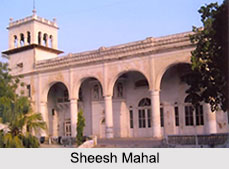
Sheesh Mahal: Sheesh Mahal or the Palace of Mirrors is 58 km away from the Sangrur city. The palace got its name from the beautiful mirror works in it. The palace is surrounded by gardens, terraces, fountains and artificial lake. It was built by Maharaja Narinder Singh in the year 1845 and later it was served as the residence of the Nawab of Malerkotla.
Gurdwara Nanak Jhira Sahib: It is located around 18 km away from Sangrur in Kanjla village.
Gurdwara Akoi Sahib: This gurdwara is located at a distance of 5 km north of Sangrur city. It was visited by the first, sixth and ninth Sikh gurus.
Sheesh Mahal: Sheesh Mahal or the Palace of Mirrors is 58 km away from the Sangrur city. The palace got its name from the beautiful mirror works in it. The palace is surrounded by gardens, terraces, fountains and artificial lake. It was built by Maharaja Narinder Singh in the year 1845 and later it was served as the residence of the Nawab of Malerkotla.
Gurdwara Nanak Jhira Sahib: It is located around 18 km away from Sangrur in Kanjla village.
Gurdwara Akoi Sahib: This gurdwara is located at a distance of 5 km north of Sangrur city. It was visited by the first, sixth and ninth Sikh gurus.
Recently updated articles in States of India
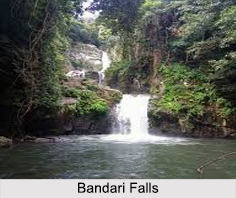
Bandare Waterfalls, Meghalaya
Bandare Waterfalls in South Garo Hills, Meghalaya, is a secluded natural attraction surrounded by dense subtropical forests and rugged mountain terrai...
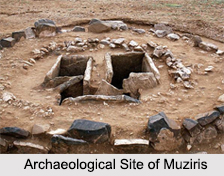
History of Thissur District
Early History of Thissur District explains flourishing of the port cities. Now these port cities are transformed into archaeological sites.
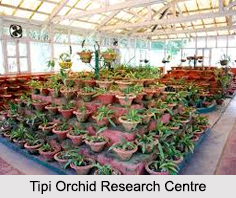
Tippi Orchid Research Centre, Arunachal Pradesh
Tippi Orchid Research Centre in Arunachal Pradesh is renowned for its rich collection of exotic and endangered orchids. Surrounded by lush rainforest...
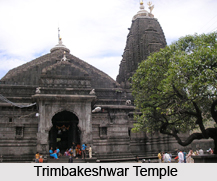
Tourism in Nashik District
Pilgrimage tourism in Nashik district involves visiting the various places of Hindu and Jain worship located here. Some of the holiest sites for Hind...
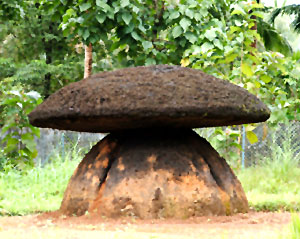
Mangadu, Kerala
Mangadu in Kerala’s Kollam district is a significant megalithic site known for its urn burials, cist burials, menhirs, and stone circles. Excavations...
Related articles in States of India
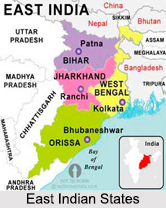
East Indian States
East Indian States comprises of Bihar, Jharkhand, West Bengal, Odisha and also the Union Territory of Andaman and Nicobar Islands. It defines the cult...
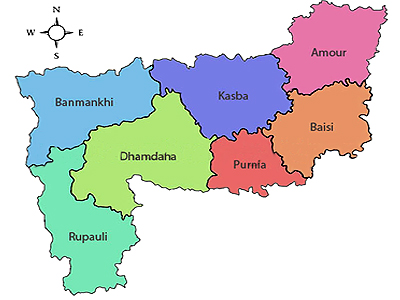
Purnia District in Bihar
Purnia District is located in Bihar and extends from River Ganga to Nepal. The district has a rich Hindu history and glorious past.
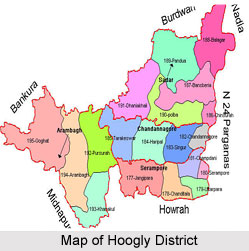
Hooghly district
Hooghly District along the bank of the river Hooghly is one of the principal trading ports of West Bengal.
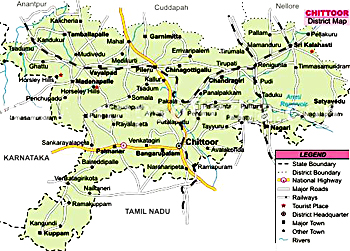
Geography Of Chittoor District
Geography of Chittoor district is spread along the topography of the land which is divided into two natural divisions; Chittoor has a dry and healthy...

Districts of West Bihar
Districts of West Bihar is comprised of medieval monuments that were built by the different governors of Mughal era.