
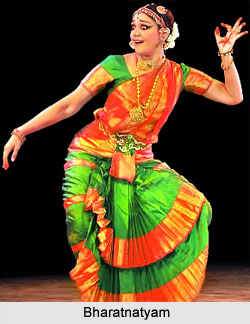
 History of Indian Classical Dance has witnessed throughout a series of changes. In India, dance developed as a classical art and served as a medium between external world and internal teachings. Ancient India finds indication of the kings, queens and princesses being enthusiast of dance. In the ancient Indian kingdom, the kings used to accompany in flute or veena to the dancers. Thus dance in India developed on the basis of Bhakti or devotion, Nyaya or justice, Satya or truth, Ghanate or dignity and Soundarya or beauty. History of Indian dances adores classical dance forms. Classical dance has a history of 2000 long years. It has been observed that the classical style of dancing was developed in the 2nd and 3rd centuries. Indian classical dance forms subsist in six different form including Bharatnatyam, Kathak, Kathakali, Kuchipudi, Manipuri, Mohiniattam, and Odissi.
History of Indian Classical Dance
History of Indian Classical Dance has its own story about its evolution. The elements of Natyashastra have been religiously followed in almost all the classical dances of India.
Introduction
History of Indian Classical Dance has witnessed throughout a series of changes. In India, dance developed as a classical art and served as a medium between external world and internal teachings. Ancient India finds indication of the kings, queens and princesses being enthusiast of dance. In the ancient Indian kingdom, the kings used to accompany in flute or veena to the dancers. Thus dance in India developed on the basis of Bhakti or devotion, Nyaya or justice, Satya or truth, Ghanate or dignity and Soundarya or beauty. History of Indian dances adores classical dance forms. Classical dance has a history of 2000 long years. It has been observed that the classical style of dancing was developed in the 2nd and 3rd centuries. Indian classical dance forms subsist in six different form including Bharatnatyam, Kathak, Kathakali, Kuchipudi, Manipuri, Mohiniattam, and Odissi.Origin of Indian Classical Dance
History of Indian classical dance considers Natyashastra as its main source. It was on Lord Indra`s request that Brahma wrote the fifth Veda called Natyashastra. Lord Indra was worried of people deviating away from the right path. Thereafter he did consult with Lord Brahma to overcome his worries. Indra insisted on having a fifth Veda, which would be constructive and entertaining. Lord Brahma made out a fifth Veda called the Natyashastra. He used speech from the Rig Veda, expression from the Yajur Veda, Rasa portrayal from the Atharva Veda and music from the Sama Veda. He taught Natyashastra to Sage Bharata.
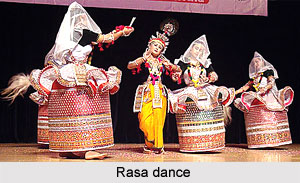 The presiding deity of Dance is Lord Shiva. Bharatnatyam, Kuchipudi, Odissi, Manipuri, Kathakali and Kathak are the main classical dance forms of India. Through facial expressions nine emotional moods can be depicted. They are Raudra, Bhayanaka, Sringara, Veera, Hasya, Karuna, Adbhuta, Bibhatsa and Shanta. Use of mudras is one of the striking features of Indian classical dances.
Two facts have been deduced from the History of Indian dances. The first is that despite regional variations, the basic principles of Natyashastra tradition has been followed by all schools. Dance continued to be divided into Natya and Nritta on the one hand and into Tandava and Lasya on the other. The second fact is that many distinctive regional styles developed and each region also developed a native vocabulary. This led to the formulation of different classical styles in India based on regions. The contemporary classical dances like Bharatanatyam, Kathakali, Manipuri, Odissi and Kathak can be traced back to the medieval period dating from 1300 A.D. to 1800 A.D. The different styles of Indian classical dance were practiced during periods of political upheaval and lack of social patronage also. Family traditions namely the sampradayas grew within these styles. The masters were the storehouse of an oral tradition who preserved and nurtured it. In spite of the lack of basic education and unfamiliarity with the Sanskrit language the masters contributed to the growth of dance as an art form.
The presiding deity of Dance is Lord Shiva. Bharatnatyam, Kuchipudi, Odissi, Manipuri, Kathakali and Kathak are the main classical dance forms of India. Through facial expressions nine emotional moods can be depicted. They are Raudra, Bhayanaka, Sringara, Veera, Hasya, Karuna, Adbhuta, Bibhatsa and Shanta. Use of mudras is one of the striking features of Indian classical dances.
Two facts have been deduced from the History of Indian dances. The first is that despite regional variations, the basic principles of Natyashastra tradition has been followed by all schools. Dance continued to be divided into Natya and Nritta on the one hand and into Tandava and Lasya on the other. The second fact is that many distinctive regional styles developed and each region also developed a native vocabulary. This led to the formulation of different classical styles in India based on regions. The contemporary classical dances like Bharatanatyam, Kathakali, Manipuri, Odissi and Kathak can be traced back to the medieval period dating from 1300 A.D. to 1800 A.D. The different styles of Indian classical dance were practiced during periods of political upheaval and lack of social patronage also. Family traditions namely the sampradayas grew within these styles. The masters were the storehouse of an oral tradition who preserved and nurtured it. In spite of the lack of basic education and unfamiliarity with the Sanskrit language the masters contributed to the growth of dance as an art form.
Influence of Temple Dancers
Through centuries the dances in India are considered a medium of worship and expression of emotions. History of Indian dances glorifies the temple dancers or the Devadasis. The Devadasis have led ascetic lives in order to perform holy dances to please Gods and Goddesses. The Indian classical dance form is said to be influenced by the Devadasi dance style. Various Indian kingdoms also provide proof about brilliant temple dancers. There were dancing halls where young female dancers were given intensive training. The training hall was decorated with various paintings which represented different dancing poses. These paintings were helpful for the dancers so that they could correct their steps.
Religious Influence on Indian Classical Dances
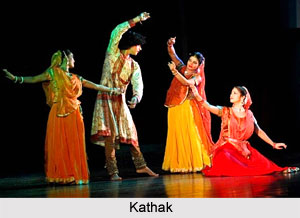 Religious element always played a vital role in dancing. In ancient India, Shaivite tradition of dance originated on the belief and worship of Lord Shiva, the lord of dance. `Lasya` and `Tandava` were the very genesis of Lord Shiva`s dancing style. Lasya is the dance of aesthetic delight that reveals beauty, grace, love and all tender aspects of existence. Furthermore, it is believed that Shiva`s consort have performed dance in her manifestations as Kali and many other forms. Each of her dance form represents a particular bhava. Indian dances have implemented these forms and characteristics. History of Indian dances is also about the development of dance form based on Vaishnavite tradition. This is a particular dance style which is believed to have performed by Sri Krishna in Vrindavan. Gradually this tradition has developed as raslila, and is considered as a form of devotional dance.
The origin of Indian dance has been divine. In fact dance in India covers a broad range of dance and dance theatre forms, from the temple dance to folk and modern styles. Hindu deities like lord Shiva, goddess Kali and Lord Krishna, are invocated initially in most of the classical Indian dances as they represent dance as an art.
Religious Influence on Indian Classical Dances
Religious element always played a vital role in dancing. In ancient India, Shaivite tradition of dance originated on the belief and worship of Lord Shiva, the lord of dance. `Lasya` and `Tandava` were the very genesis of Lord Shiva`s dancing style. Lasya is the dance of aesthetic delight that reveals beauty, grace, love and all tender aspects of existence. Furthermore, it is believed that Shiva`s consort have performed dance in her manifestations as Kali and many other forms. Each of her dance form represents a particular bhava. Indian dances have implemented these forms and characteristics. History of Indian dances is also about the development of dance form based on Vaishnavite tradition. This is a particular dance style which is believed to have performed by Sri Krishna in Vrindavan. Gradually this tradition has developed as raslila, and is considered as a form of devotional dance.
The origin of Indian dance has been divine. In fact dance in India covers a broad range of dance and dance theatre forms, from the temple dance to folk and modern styles. Hindu deities like lord Shiva, goddess Kali and Lord Krishna, are invocated initially in most of the classical Indian dances as they represent dance as an art.
Mughal Influence on Indian Classical Dance
The approaching of the Mughal dynasty in India contributed a radical change in the Indian dance form. The Devadasi system prevailed in most parts of southern India. These institutions of dancing girls became an accepted part of Muslim society. However, Muslims of Agra illustrated various types of dancing girls. Although these dancing girls were different from the Devadasi and they were highly sophisticated courtesans and repositories of culture and refinement. In addition to that, the Kathak witnessed a change around the 15th century. As an influence to the Persian culture, Kathak saw a great change in the costumes too.
The Indian classical dance had witness an apparent downfall a century ago. It has revived and has gained immense popularity throughout the world since past few decades. Each classical dance is identified with different Indian states. The term classical was introduced by Sangeet Nataka Academy to signify the performing art styles of Natyashastra.
The Indian classical dance had witness an apparent downfall a century ago. It has revived and has gained immense popularity throughout the world since past few decades. Each classical dance is identified with different Indian states. The term classical was introduced by Sangeet Nataka Academy to signify the performing art styles of Natyashastra.
Legends of Indian Classical Dance
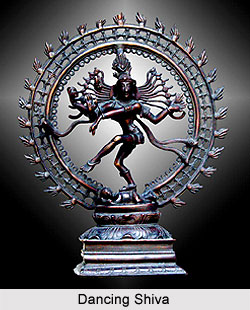 Legends of Indian classical dance form an intriguing part of Indian dance folklore. It is said that goddess and gods literally pleaded in front of Lord Brahma for creation of another Veda which would be easy for people to understand, and be more significant in Kali Yuga. Lord Brahma granted their wish and created the Fifth Veda named Panchamavada or NatyaVeda. This particular Veda is quintessence of four main Vedas. Lord Brahma took pathya (words) form the Rig Veda, abhinaya (communicative elements of the body movements, cf. mime) from the Yajur Veda, geeth (music and chant) from Samaveda, and rasa (vital sentiment and emotional element) from Atharva Veda to form the fifth Veda, Natya Veda. After creating this Veda, Lord Brahma handed it to sage Bharata and asked him to propagate it on earth. Obeying the order to Lord Brahma, Bharata wrote down Natyashastra. With time it became the most respected text on techniques of classical Indian dances, especially Bharatanatyam and Odissi.
Bharata performed natya, nrtta and nrtya, together with groups of the Gandharavas and Apsaras, before Shiva. Lord Shiva modified and improved upon the dance and also instructed the science of dance to Thandu Maharishi. This particular field of dance gained the name as Thandava (cosmic dance of Shiva). Shiva instructed Parvathi on Lasya Natya who passed it on to Banasura`s daughter, Goddess Usha. It was through Usha that this form of dance was passed on to the Gopis of Dwaraka, which in turn was passed on to the maidens of Sowrashtra.
Being great dancers themselves, the gods and goddesses have been passing on the art of heavenly dance through many of other human channels, whose understanding, attitude and personal eccentrics naturally varied from people to people, and helped create a number of styles ranging from Bharatanatyam to Odissi.
Devadasi Culture
Many centuries ago the Hindu temple in South India had Devadasis (dancers or priestess who would dance dasiattam. They would also sing and play various musical instruments. These women were well versed in Sanskrit as well as in other languages as well. To start with the devadasis lead very celibate and strict life and did not even have family or children. As the dance entered the royal courts, the dancers were called Rajanartakis, who performed in the royal courts and gradually became royal concubines. The Devadasi culture was completely corrupted under the British rule.
Recently updated articles in Indian Dances
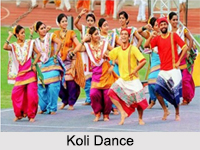
Koli Dance
A folk-dance form of Maharashtra, the Koli dance is mainly performance by the Koli community of the region. Known for their primary profession of fish...
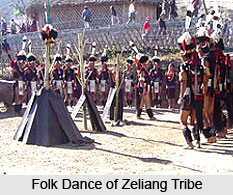
Folk Dances of Nagaland
Folk Dances of Nagaland reflects the naga tradition and culture of the local habitants. In most of the cases, naga dances are monopoly of men with som...
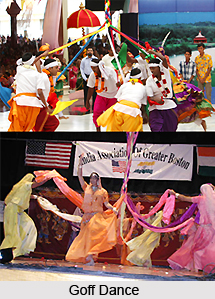
Goff Dance
Goff dance of Goa is performed during the Shigmo festival in the month of Phalgun in Hindu calendar. Goan peasants mainly practice this dance after th...
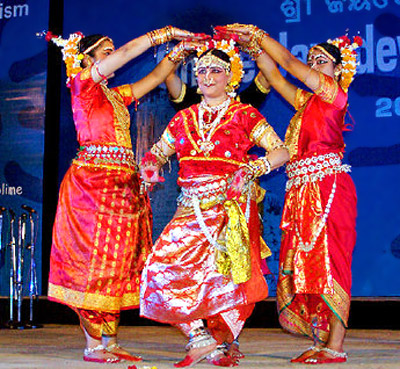
Abhinaya Chandrika
Abhinaya Chandrika is an ancient text on Odissi dance that explain every minute details of Odissi performance. The text explains about different mudra...
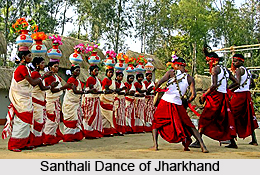
Santhali Dance
Santhali dance is a vibrant folk tradition of the Santhal tribe, reflecting the deep connection of the Santhal tribe with nature, community, and celeb...
Related articles in Indian Dances
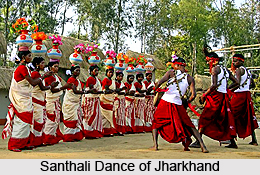
Santhali Dance
Santhali dance is a vibrant folk tradition of the Santhal tribe, reflecting the deep connection of the Santhal tribe with nature, community, and celeb...
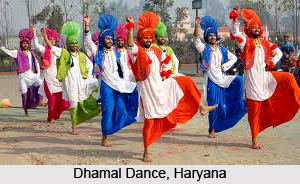
Dhamal Dance
A folk dance form of Haryana, the Dhamal Dance has its roots in the days of the Mahabharata. This dance form is primarily performed by men in the outd...
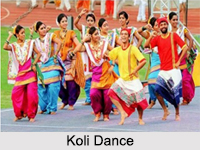
Koli Dance
A folk-dance form of Maharashtra, the Koli dance is mainly performance by the Koli community of the region. Known for their primary profession of fish...
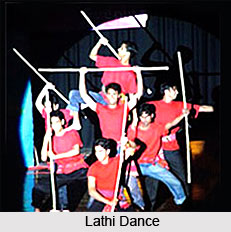
Lathi Dance
Lathi dance is a dance form of West Bengal performed on the occasion of Muharram.
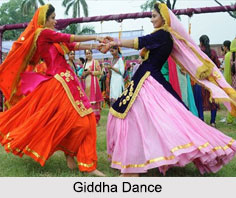
Giddha Dance
Giddha Dance of Punjab, performed only by the women, is a very popular folk art form in India. During Lohri, the Punjabi women reveal their joy throug...