Siwan District

Siwan District was initially a sub-division of Saran District and it is located in the western region of Bihar. In the year 1972, Siwan District came into existence.

Introduction

Siwan District, BiharSiwan District is situated in the western part of Bihar. It was originally a sub-division of Saran District, which in ancient days formed a part of Kosala Kingdom. Present Siwan District came into existence in the year 1972. Siwan town is the district headquarters. The geographical location of Siwan District is confined between 25 degree 53 minutes to 26 degree 23 minutes north latitudes and 84 degree 1 minute to 84 degree 47 minutes east longitude.

Deoria District of Uttar Pradesh bound it in the west, Gopalganj District in its north, Saran District in the east and Ghaghara River in the south, beyond which lies the district of Ballia (Uttar Pradesh).

History of Siwan District

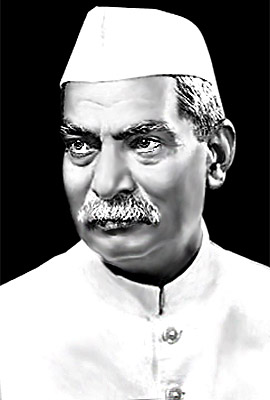
Dr. Rajendra Prasad who played an important role for the independence of IndiaSiwan derived its name from "Shiva Man", a Bandh Raja whose heirs ruled this district until the arrival of Babur Maharajganj, which is another subdivision of Siwan district, may have found its name from the seat of the Maharaja there. A statue of Lord Vishnu has also been found in Village Bherbania from underneath a tree that indicates that there were large numbers of followers of this god. According to legend Dronacharya of Mahabharata belonged to village `Don` in Darauli Block. Some believe Siwan to be the place where Lord Buddha died.

Siwan is also known as Aliganj Sawan after the name of Ali Bux. He was one of the ancestors of the feudal lords of the area. During the 8th century Siwan was a part of Banaras Kingdom. In the 13th century the Muslims came here. Siwan was ruled by Sikandar Lodi in the 15th century. Babur crossed Ghaghara River near Siwan during his return journey. At the end of the 17th century, the Dutch came followed by the English. After the Battle of Buxar in 1765 Siwan became a part of Bengal. It also played a significant role in the 1857 Independence Movement. It is famous for the sturdy `Bhojpuries`, who have been noted for their martial art and physical endurance. Even the sturdy and courageous army and police personnel were largely drawn from their community. Many of these Bhojpuries rendered services to Babu Kunwar Singh. The anti pardah movement in Bihar was started by Sri Braj Kishore Prasad who also belonged to Siwan. He began this movement in response to the Non Co-Operative movement in 1920. Under the leadership of Dr. Rajendra Prasad a meeting was also organized in Siwan District on the eve of the Kartik Purnima Mela. He had aborted all his lucrative practices as an advocate in the Patna High Court at the call of Mahatma Gandhi. In the wake of this movement Maulana Mazharul Haque, who came to stay with his maternal uncle Dr. Saiyyad Mahmood in Siwan, had constructed an ashram on the Patna-Danapur road which subsequently became Sadaquat Ashram.

The Civil Disobedience Movement of 1930 was also was fully implemented in Siwan. During the Satyagraha Movement Pt. Jawaharlal Nehru made a whirlwind tour of the different parts of Bihar. One of the famous meetings he addressed was at Maharajganj. A few people of present Siwan District who played an important role for the independence of India were Dr. Rajendra Prasad, Maulana Mazharul Haque, Shri Mahendra Prasad the elder brother of Dr. Rajendra Prasad, Dr. Sayyad Mohammad, Shri Braj Kishore Prasad and Shri Phulena Prasad. Uma Kant Singh of Narendrapur achieved martyrdom during the Quit India Movement. One of the most popular literary scholars of this country Pandit Rahul Sankritayayana began the Peasant Movement here during the period of 1937 to 1938. During his visit to Champaran, Mahatma Gandhi and Madan Mohan Malviya visited Siwan and Gandhiji even spent a night at Zeradei in the house of Dr. Rajendra Prasad. The chowki on which he slept then is still kept intact there.

Formation of Siwan District : Siwan was declared as a district in 1972 in which it was proposed to include 10 blocks of Gopalganj and 13 blocks of Siwan subdivisions. Two blocks Bhagwanpur and Basantpur of Siwan were declared to be added to the jurisdiction of proposed Marhaura subdivision. However, one year later in 1973 Gopalganj was made a separate district with 10 blocks included in Siwan earlier and thus Siwan constituted its original 15 blocks including Bhagwanpur and Basantpur blocks. The Trivedi Award was implemented on 10th June 1970. Thereby fourteen villages of Siwan having an area of 13092 acres were transferred to Uttar Pradesh and twelve villages of Uttar Pradesh with an area of 6679 acres were transferred to Siwan. The basis of this transfer was the position of Ghaghara River in 1885. After 1885 the course of the river changed from time to time that led to intermixing of the areas of U.P. with those of Siwan.

Presently four more blocks have been created namely Lakri Nabiganj, Nautan, Jiradei and Hasanpura block. Out of these newly created blocks Lakri Nabiganj is functional and rests of the three are not functional. Thus there are sixteen functional blocks in the district namely - Siwan, Mairwa, Darauli, Guthani, Hussainganj, Andar, Raghunathpur, Siswan, Barharia, Pachrukhi under Siwan subdivision and Maharajganj, Duraondha, Goreakothi, Basantpur, Bhagwanpur and Lakri Nabiganj under Maharajganj subdivision.

Geography of Siwan District

Geography of Siwan DistrictGeography of Siwan District is spanned over the western part of North Bihar alluvial plain`s segment of broader Indo-Gangetic Plain. Structurally, the district forms a part of the alluvium of the broader Indo-Gangetic Plain. The geological formation of the tract is of recent (Holocene) period. The contribution of the Himalayan Rivers to the formation of the tract is significant. It is estimated that the district covers the deposits of alluvium more than 5000 feet in depth. Geo-morphologically, it forms the part of Gandak, which is the outcome of the discharge and silt-charge of the Himalayan Rivers to the plain during the phase of deposition. The whole district bears a featureless terrain having general slope from northwest to southeast. However, the slope is almost invisible.
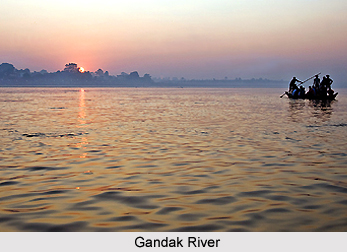
Rivers of Siwan District : Further, the district is drained by few small rivers like Jharahi River, Daha River, Gandaki River, Dhamati River (Dhamahi River), Siahi River, Nikari River and Sona River. The southern boundary of the district is formed by Ghaghara River, the main stream of the area. Among these, Ghaghara is the only perennial river because of its Himalayan source and rest of the rivers bears different origins. The rivers of the district get inundated almost every year. The area is characterized by certain typical geographical features like `Chaurs`, some of which give birth to short length streams locally known as `Nadi` or `Sota`. Rivers Jharahi and Daha are the tributaries of river Ghaghara, while Gandak and Dhamati are of river Gandak. The Siahi and Nikari streams drain to Jharahi, While Sona drains to river Daha. These streams play important role in carrying out excess water from the region during rainy season. Siwan, the district headquarters, is located on the eastern bank of river Daha.

The southern part of Siwan District along river Ghaghara is marked by `Draras`, which are typical formation of the sand heaping with thin layer of clay and silt over them.

Climate of Siwan District : The district gets its place in the transitional zone of drier climatic condition of Uttar Pradesh and moist climatic condition of West Bengal, but as it is closer to Uttar Pradesh geography of Siwan District is characterized with drier climatic condition. The area observes hot westerly winds, which start in March and last until May, but in April and May light, damp easterly winds blow intermittently and afternoon storms accompanied with rain occurs. The summer season experiences a temperature rise up to 38 degree Celsius. Since the district is in transitional zone monsoon rain starts late here and persists till September. This period provides maximum rain to the area. July and August are the oppressive months due to heat intermixed with high humidity. The winter season is normally pleasant with low temperature. The average annual rainfall of the district is 120 cm.

Demography of Siwan District

According to the Census 2011, the Siwan District had a population of 3,318,176. Out of which the male and female were 1,672,121 and 1,646,055 respectively. The Siwan population of District constituted 3.20 percent of total population of Bihar. The average literacy rate of Siwan in 2011 was 71.59 compared to 51.65 of 2001. If things are looked out at gender wise, male and female literacy were 82.77 and 60.35 respectively. The total literates in Siwan District were 1,994,056 of which male and female were 1,155,972 and 838,084 respectively.

Tourism in Siwan District

Siwan District has several popular tourist attractions. This district offers some sites of historical and religious importance. The travellers can visit Amarpur; a village situated 3 kms west of Darauli. In this village, ruins of mosque of red bricks on the bank of Ghaghara River are still available. This mosque was constructed during the reign of Shah Jahan, Mughal Emperor (1626-1658) under the supervision of the Naib Amar Singh but the work was left incomplete. Faridpur situated just near Andar is the birthplace of Maulana Mazharul Haque who played an important role during the freedom movement. Darauli is the block headquarters. Initially its name was Daras Ali, which later on was changed into Darauli. There is reminiscence of Mughal period ruins where a big mela is held every year on the Kartik Purnima. These places of interest are worth visiting.

Recently updated articles in States of India

History of Thissur District
History of Thissur District Thumbnail

History of Thissur District

Early History of Thissur District explains flourishing of the port cities. Now these port cities are transformed into archaeological sites.

Tippi Orchid Research Centre, Arunachal Pradesh
Tippi Orchid Research Centre, Arunachal Pradesh Thumbnail

Tippi Orchid Research Centre, Arunachal Pradesh

Tippi Orchid Research Centre in Arunachal Pradesh is renowned for its rich collection of exotic and endangered orchids. Surrounded by lush rainforest...

Tourism in Nashik District
Tourism in Nashik District Thumbnail

Tourism in Nashik District

Pilgrimage tourism in Nashik district involves visiting the various places of Hindu and Jain worship located here. Some of the holiest sites for Hind...

Mangadu, Kerala
Mangadu, Kerala Thumbnail

Mangadu, Kerala

Mangadu in Kerala’s Kollam district is a significant megalithic site known for its urn burials, cist burials, menhirs, and stone circles. Excavations...

Devaswom
Devaswom Thumbnail

Devaswom

History of Devaswom is not very ancient and can be dated back to late seventeenth century.