
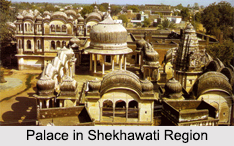
 Shekhawati Region has a large number of forts, palaces, havelis and gardens that were erected in medieval times and during the rule of British Empire in India. This region of Shekhawati was popular for the feudal rule of Shekhawati rulers in modern era.
Shekhawati Region
Shekhawati Region is a historical area in the north eastern part of Rajasthan. This area has many places and havelis that were built by Shekhawati rulers and Songara rulers.
Introduction
Shekhawati Region has a large number of forts, palaces, havelis and gardens that were erected in medieval times and during the rule of British Empire in India. This region of Shekhawati was popular for the feudal rule of Shekhawati rulers in modern era.Location of Shekhawati Region
Shekhawati Region lies in the North eastern part of Rajasthan. It lies at the easternmost extent of the Thar Desert, where small sand-blown towns nestle between dunes and sprawling expanses of parched land. This place is accessible from Delhi and Jaipur.
History of Shekhawati Region
The history of Shekhawati Region dates back from the rule of Matsya Dynasty. Rig Veda also refers this place as a royal state. This region in Rajasthan had witnessed the rule of Lord Rama (referring from Ramayana), Nanda Dynasty and the Mauryan Empire. In 14th Century, Mokal Singh, ruler of a small principality was blessed by a Fakir by the name of Sheikh Burhan. As a result a boy was born to the childless Mokal Singh. He named his son Shekha in honour of the Fakir. Shekhawati literally means "Garden of Shekha." Its history is dotted with several strives with the Mughal Dynasty when Aurangzeb was the Mughal Emperor. After his death the chieftains of Shekhawati Region established themselves as the rulers. After the rule of Shekhawatis, Songara ruled the entire region of Thar Desert and some districts of North Rajasthan till Independence of India in 1947.
Geography of Shekhawati Region
Now geographically, Shekhawati Region consists of the modern day districts of Rajasthan and the districts of Haryana like Jhunjhunu District, Mewat District and Amarsar District. It is bounded by Jangladesh region located in the northeast by Haryana, on the east by Mewat region of Rajasthan, on the southeast by Dhundhar region of Rajasthan, on the south by Ajmer District, and on the southwest by the Marwar region of Jodhpur.
Culture of Shekhawati Region
Shekhawati Region is rich in culture and the traditions. People living in this region are mostly Hindus. People here used to speak Shekhawati dialect which is a branch of Rajasthani language. It is considered as the important dialect in Churu District, Jhunjhunu District, and Sikar district of Rajasthan. The people of Shekhawati Region celebrate the festivals like Shekhawati Festival, Gangaur Festival, Dussehra, Teej Festival, Holi and Maha Shivaratri.
Places of Interest in Shekhawati
 There are several Places of Interest in Shekhawati region. It has numerous towns and cities located with its periphery. These places are well known historically, religiously or for the architectural grandeur. Local transportations are available for touring the region.
Sikar: Undoubtedly this was the largest Thikana (Feudal Principality) under Jaipur. It was founded in the 17th century and is famous for its magnificently frescoed Biyani Haveli and temples of Gopinath and Raghunath.
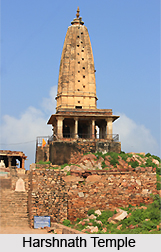
Harshnath Temple: Known for it architectural grandeur this shrine is located at a distance of 15 kilometers from Sikar. It has been built atop a 1500 m steep hill holds one`s attention for its carvings depicting mythological themes.
Besides these on the way to Sikar from Jaipur lies the famous pilgrimage centre of Khatu Shyamji which is about 16 kilometers away. Another shrine located around Sikar the famous temple, Salasar Balaji, dedicated to Lord Hanuman is located.
Nawalgarh: 31 km northeast of Sikar is Nawalgarh that was founded by Nawal Singh, the son of Thakur Sardul Singh. Shekhawati region is famous for its havelis and this place has some of the biggest and well-preserved havelis in the Shekhawati region. One of the mansions worth checking out is the Poddar Haveli. It dates back to 1920 and retains some of the finest of frescoes and courtyards. The Aath Haveli has frescoes influenced by European subjects. But the Murarka Haveli is more impressive. It is located at the back street having Rajasthani miniatures illustrating the Krishna legends and celebration of traditional festivals. Other than these Nawalgarh is also famous for profusion of fresco art includes Saraogi Haveli, Sheksaria Haveli and the Chaucharia Haveli with some interesting murals.
Mandawa: There is medieval fort here that dominates the town with a painted arched gateway. This place was founded in the 18th century. These havelis are decorated with resplendent painted murals that illuminate the arid landscape of Mandawa, a remote feudal principality. The city was founded by Rao Shekhaji. A fort was built in 1755 by the Rajput rulers of Mandawa, Thakur Nawal Singh to protect this outpost today is a family-run luxurious heritage hotel.
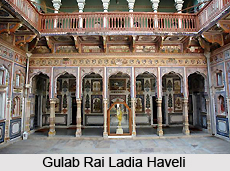
Other attractions in the region are the in Gulab Rai Ladia Haveli that depicts everyday life scenes to erotica. Apart from these there are other murals of Bansidhar Nevada. A Shiva temple with a rock crystal `lingam` is worth a visit here.
 Fatehpur: 21 km south-west of Mandawa lies Fatehpur, the mid 15th century capital town. It was founded by Nawab Fateh Khan but captured by Shekhawati Rajputs in 18th century. Its primary attraction is the Nand Lai Devra Haveli, which was restored by a French woman, Nadine le Prince. it has a rich legacy of painted frescoes in red and blue colour.
Ramgarh: This region was once settled by the Poddar clan. It is located at a distance of 13 kilometers from Fatehpur. This region is popular again for its havelis. The sprawling mansion has murals with themes of daily routine life scenes, trains and mechanical devices. The scenes from the legendary Dhola Maru are noteworthy too. There is a temple too that dates back to 19th century. It is dedicated to Saturn God, the Shani Temple. It features frescoes depicting scenes from life of Lord Krishna and the delightful gold painting lining the chamber before the sanctum. Marvelous cenotaphs of the Poddars have exquisitely painted ceilings done in red and indigo.
Bissau: 25 kilometers north-west of Mandawa lies the settlement of Bissau. It was founded in 1746 and has splendid cenotaphs of its Thakurs. As is usual with the towns and cites of Shekhawati Region this place too has finely painted havelis of Sigatia, Khemka, Tibriwal and Kedia.
Jhunjhunu: Kayamkhani Nawab Fateh Khan founded it in the mid 15th century but it was overtaken by Rajput ruler Sardul Singh in 1730 AD. This largest district town is known for its Khetri Mahal (the Wind Palace) built by Thakur Bhopal Singh of Khetri in 1770. The tourists can have a panoramic view of the adjoining region from the rooftop. The magnificently Haveli has pictures of train, soldiers, mounting horses, floral motifs, mythological scenes, British Monarchs and Indian Nawabs. It offers good views of the town and the surroundings from the rooftop. The nearby exquisitely painted Modi Haveli has pictures of train, soldiers, mounting horses, floral motifs, mythological scenes, British Monarchs and Indian Nawabs. The Kaniram Narsinghdas Tibrewala Haveli and the Mohanlal Ishwardas Modi Haveli both have a frieze of trains and human figures in colourful turbans with prominent moustaches. Also noteworthy is Bihariji ka Temple dedicated to Lord Krishna. The fresco work here is predominantly mythical and religious depicting the ras-lila of Lord Krishna and gopis.
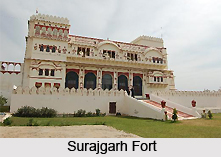
Surajgarh Fort: This fort is located in Surajgarh village that lies within the district of Jhunjhunu. it has been converted into a heritage hotel. It offers services like swimming pool, recreation, village haat, horse and camel ride, excursion, conference.
Alsisar: Foor art lovers this is the perfect place to be. This town is mainly known for Indra Vilas, an open art gallery. Besides this the building is also significant as an authentic heritage mansion. Replete with hospitality it is also part of the heritage stay in Shekhawati Region.
Churu: Back in the 16th century Churu was a Jat stronghold. The town has some interesting Oswal Jains havelis. The Kothari Haveli (1915) and Kanhaiya Lai Bagla Haveli (1880) display marvelous paintings with themes from Dhola-Maru and Sassi-Punnu etc. the primary loval attraction here is the outstanding Malji-ka-Kamra, known for its amazing interior scenes like those of women with wings and angels. The Surana Haveli is also worth checking out. Around Churu there is the Tal Chapar Wildlife Sanctuary covering 71 sq km of area with ponds and salt flats. Here the tourists can check out the herds of blackbuck antelope, chinkara, desert fox and desert cat. flocks of demoiselle and common cranes can be sighted at nearby wetlands along with patridge, sand grouse and desert courser. The best time to visit the park is between September March.
Recently updated articles in Cities of India
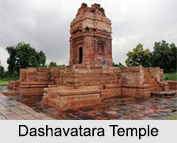
Places of Interest in Deogarh Uttar Pradesh
A place of historical and archaeological significance, Deogarh is a site with few popular places of interest.
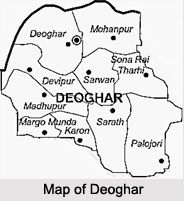
Deoghar in Jharkhand
Deoghar is the divisional headquarters of Santhal Parganas located in Jharkhand and is popular for the famous Baidyanath temple and Shiva Temples.
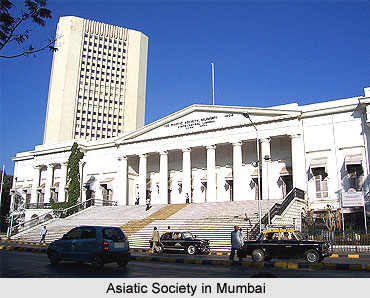
The Asiatic Society of Mumbai
Asiatic Society in Mumbai is the temple of Asian Studies from the time of British rule in India.
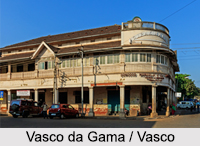
Vasco da Gama / Vasco City
Vasco da Gama / Vasco is the biggest city of Goa and is one of the most visited for its perfect amalgamation of business as well as leisure options.
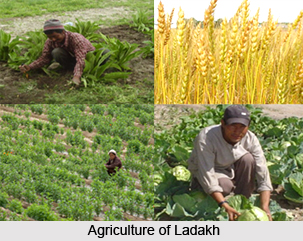
Agriculture of Ladakh
Agriculture in Ladakh is primarily practiced in the short summer season due to its cold desert climate. Farmers grow hardy crops like barley, wheat, p...
Related articles in Cities of India
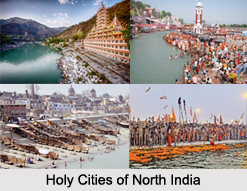
Holy Cities of North India
Holy Cities of North India are having the rich history of Hinduism and the entire civilization was grown up with the hands of beliefs, rituals and the...
Holy Cities of South India
Holy Cities of South India gives the detailed cultural formation of Dravidians from the early era, which later developed to the world by the Pallavas...
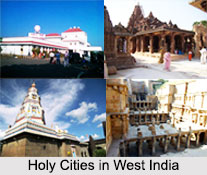
Holy Cities of West India
Holy Cities in West India were established by the rulers of Rajputs and the Satvahana Dynasty and the medieval rulers of Junagadh.
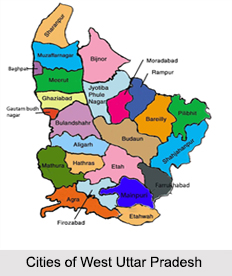
Cities of West Uttar Pradesh
Cities of West Uttar Pradesh include Meerut, Bulandshahr, Ghaziabad, Saharanpur, Muzaffarnagar, Bijnor, Bareilly, Rampur, Agra, Aligarh, Mathura and m...
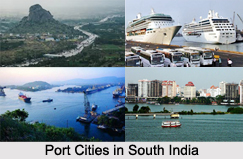
Port Cities of South India
Port Cities of South India are developed from the early phase of colonial era when the Portuguese and the French traders came to India