Introduction
 Gates of India are the example of exquisite art work and the introduction of the art and architecture of India. These gates are erected by the different kings to mark the victory or to mark royal events. The British East India Company and later the British Government in India also built the gates to salute the dead soldiers of British Empire.
North Indian Gates
 North Indian Gates defines the gateways that were erected by the rulers of Delhi Sultanate, Mughal Dynasty and later the British Government in India.
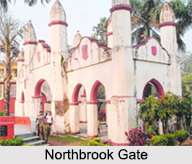
Northbrook Gate, Assam
Northbrook Gate was constructed to welcome British viceroy Lord Northbrook who visited Guwahati, Assam in 1874.
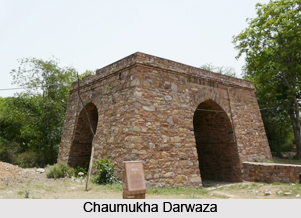
Chaumukha Darwaza, Delhi : Chaumukha Darwaza is inferred as the gate way of Lal Kot. It is near the Qutb Complex and has been categorized as Grade B in archaeological value.
Ranjit Gate, Delhi : Ranjit gate towards the north wall of Lal Kot is in ruins. It was once considered as a grand gate through which the Turks had entered the city.
Fateh Gate, Delhi : Fateh Gate is close to Fateh Burj and has convoluted features. It is about 24 m in diameter.
Hauz Rani and Budayuni Gates, Agra, Uttar Pradesh : Hauz Rani and Budayuni Gates, were reportedly once prominent gates, but are now traced in ruins.
Kashmiri Gate, Agra : 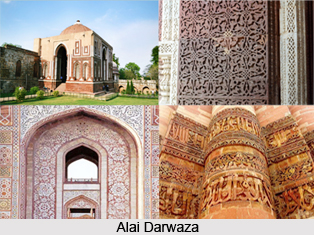 Kashmiri Gate is one of the original 14 gates built into the wall to the north of the city. It was built by the British in 1835 by Major Robert Smith.
Delhi Gate, Delhi : Delhi Gate is located in the southern part of Shahjahanabad. The gate links the New Delhi city with the old walled city of Delhi.
Ajmeri Gate, Delhi : Ajmeri Gate was built in 1644. It was built in the south-west of Shahjahanabad with a square plan that has high arched openings.
Turkman Gate, Delhi : Turkman Gate is located to the southern edge of Shahajahanabad. It is named after the Sufi Saint Hazrat Shah Turkman Bayabani.
Lahori Gate, Delhi : Lahori gate is now only a bazaar square with small remnants at one end. The road directly reached to Lahore.
Nigambodh Gate, Delhi : Nigambodh Gate was built on the north eastern side of the Shahajahanabad. It is located on the Ring Road near the Yamuna Bazaar. It derives its name Nigambodh Ghat from the burial ground here.
Khooni Darwaza, Delhi : The construction of Khooni Darwaza is credited to Sher Shah Suri`s reign from 1540-1545.
Alai Darwaza, Delhi : 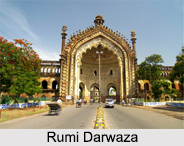 Alai Darwaza is the main gateway from southern side of the Quwwat-ul-Islam Mosque.
Delhi Gate, Red Fort, Delhi : Delhi Gate is an entrance to the Red Fort in Delhi and is on the Fort`s southern wall.
India Gate, Delhi : India Gate is a war memorial located in Delhi, built by the British Government in India.
Tripolia Gates, Delhi : Tripolia Gates are two historical gateways of similar form located at GT Karnal Road, Delhi.
Buland Darwaza, Delhi : Buland Darwaza was built in 1601 by Akbar to commemorate his victory over Gujarat.
Rumi Darwaza, Lucknow, Uttar Pradesh : Rumi Darwaza is an imposing gateway which was built under the patronage of Nawab Asaf-Ud-dowlah in 1784.
gates_india
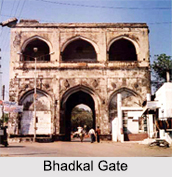 West Indian Gates are the medieval gates built by the Marathas, Mughals and the Rajputs. West Indian Gates are spotted in Maharashtra, Gujarat and Goa.
Bhadkal Gate, Maharashtra : Bhadkal Gate is a gateway in Aurangabad. This gate is the biggest gate of city of the ancient era Aurangabad. It was built by Murtaza Nizamshah`s Vazir Malik Ambar, the ruler of Ahmadnagar. It was built in memory of victory against Mughal Empire in 1612. It is also known as "Victory Gate". Bhadkal Gate has unique architectural style of Maratha art. It is India`s first column structural building.
Delhi Gate, Maharashtra : Delhi Gate is the largest gate in Maharashtra. It was built by the last independent Mughal Emperor Aurangzeb. It is situated to the north of the city facing Delhi. It is similar to Lahore gate of Red Fort which is located in Delhi.
Paithan Gate, Maharashtra : 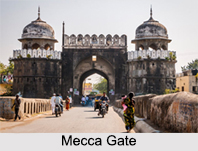 Paithan Gate is smaller in size and was royal gateway leading to Paithan town. This gate is smaller in size compared to other gates.
Mecca or Makai Gate, Maharashtra : Mecca or Makai Gate leads to Begumpura another walled quarter of the city, and is the only gate that has a canon installed on it. It faces the holy city of Islam-Mecca towards the west.
Khas or Jalna Gate, Maharashtra : Khas or Jalna Gate is simple in design but was disintegrating. It has been restored recently to foster tourism. It faces the Jalna city in the east.
Kaala Darwaza, Maharashtra : Kaala Darwaza leads to the palace fort of Qila-e-Ark. The palace had its own fortification walls. It has five gates. But all the gates are in ruins.
Roshan Gate, Maharashtra : Roshan Gate is located to the north of Jalna gate or Khas gate. It is bigger in size and stature as compared to Jalna gate. Roshan gate is said to have been named after Aurangezeb"s sister Roshanara to whom the emperor was much attached and she remained his favourite friend and advisor.
Gateway of India, Mumbai : Gateway of India is a monument built during the 20th century in Mumbai.
Gates of Bhadra Fort, Gujarat : 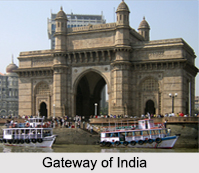 The gates of Bhadra Fort had eight gates: three large gates, two in the east and one in the south-west corner; three middle-sized, two in the north and one in the south; and two small, in the west.
Teen Darwaza, Ahmedabad : Teen Darwaza is a historical gateway on the east of Bhadra Fort. It was completed in 1415.
Viceroy`s Arch, Goa : Viceroy`s Arch was established in 1599 by Viceroy of Portuguese origin, Francisco da Gama. It was built during the time of Portuguese invasion in India. The Viceroy"s Arch is made up of laterite and green granite.
Gateway of Palace of Yusuf Adil Shah : The gateway of Palace of Yusuf Adil Shah is located close to the Mandovi River waterfront and was constructed by Yusuf Adil Shah the ruler of Adil Shahi Dynasty of Bijapur.
South Indian Gates
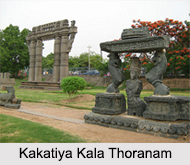 South Indian Gates are the gateways that were erected for the glory of the South Indian Empires. These South Indian Empires from the early era to the late medieval era made their architectural style in their own way. These gates are the gate of victory, the gate of glory of an empire or the gates having some religious significance that were built in front of the city or the temples.
Kakatiya Kala Thoranam, Warangal District, Telangana : Kakatiya Kala Thoranam is a gate in Warangal district of Telangana. Warangal Fort has four ornamental gates which originally formed the gates to the now defunct great Shiva temple which are known as Kakatiya Kala Thoranam. It is one of the master pieces of Kakatiya Dynasty.
Gate of Chowmahallatuu, Hyderabad, Telangana : The gate of Chowmahallatuu was built in medieval era. It is the gate way of Chowmahallatu. It is a palace of the Nizams of Hyderabad.
Gate of Daria Daulat Bagh, Mysore : The gate of Daria Daulat Bagh was built as the gate way of Daria Daulat Bagh Palace and the Garden. It is a palace situated in the city of Srirangapatna, near Mysore in southern part of India.
Gate of Bidar Fort, Karnataka : 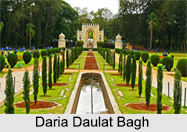 The gateway of Bidar Fort is situated in Bidar city of the northern plateau of Karnataka.
Gate of Vittala Temple, Hampi, Karnataka : The gate way of Vittala temple is situated near Vittala Temple Complex. The route to the Vijaya Vittala temple is scenic, though even stark in places.
Gate of Meenakshi Amman Temple, Tamil Nadu : The gate of Meenakshi Amman Temple is a historic gateway of Hindu temple- Meenakshi Amman Temple. It is located on the southern bank of the Vaigai River in the temple city of Madurai in the Indian state of Tamil Nadu.
Gate of Nageswaran Temple, Tamil Nadu : The gate of Nageswaran Temple has religious significances. Nageswaran Temple is a Hindu temple dedicated to Lord Shiva located in Kumbakonam, Tamil Nadu.
Gate of Neelakandeswarar Temple, Tamil Nadu : The gate of Neelakandeswarar Temple is located at Thiruneelakudi in the Thiruvidaimarudur taluk of Thanjavur district of Tamil Nadu. The temple is dedicated to Lord Shiva or Mahadeva.
Gate of Kondathu Kaliamman Temple, Tamil Nadu : The gate of Kondathu Kaliamman Temple was built in early medieval era. This temple is an Amman temple located at Pariyur near Gobichettipalayam in Tamil Nadu.