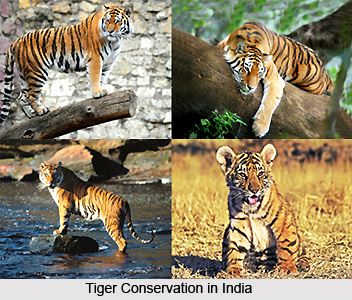
 Measures to conserve Indian Wildlife include Project Tiger, Jungle Lodges and Nature Camps. These are the measures taken towards the conservation of Indian wildlife. It also includes less cutting of trees, it is clear that when forests are cut down wildlife is naturally threatened. Some beautiful and interesting species have already become extinct. Further, measures for conservation of Indian wildlife have been taken for curbing secret poaching and shooting that can lead to the complete extinction of rhinoceros, the famous Royal Bengal tiger, and the elephant.
Under the measures of conservation of Indian wildlife, several protected sanctuaries and parks have been constructed. Project Tiger in India, one of the most prominent measures for Indian wildlife conservation was launched in 1973 – 74. Preserving India"s wildlife was integral to this nationalist project to save the Indian tiger. The first ever all-India count of any wild vertebrate, Project Tiger laid the ground for a more detailed proposal to conserve it in its natural state. The idea was to select a set of sites representative of the tiger"s varied habitats, each with a "core area" of at least 300 square kilometres free from any human removal of biomass. Under this project, few sites were identified as Tiger Reserves. The main objective of this conservation project was to save tigers in the country. At first around nine reserves were brought under Project Tiger and the number increased to 27 by 2003. Project Tiger played a key role in expansion of ecological perspectives.
Measures for conservation of Indian wildlife also included the rapid expansion of sanctuary system. Habitat creation was another important measure. Like for instance, various National Parks, zoological parks, botanical gardens, sanctuaries and Biosphere Reserves have been constructed that serve as protected areas for the wildlife. They help in conserving the wild life in their wild state. Breeding in captivity has also helped in the survival of many wild life species. Another most significant measure of conservation of Indian wildlife is mass awareness and education. Awareness about the endangered species and wildlife is considered essential for protecting them. People are educated and encouraged to participate in preservation processes of wildlife.