Introduction
Indian philosophy, with its origins tracing back to the
Vedic period, has played a pivotal role in shaping the historical, social, and
cultural fabric of the subcontinent. Encompassing diverse traditions like
Vedanta, Buddhism, Jainism, and Yoga, these philosophies offer comprehensive
perspectives on ethics, morality, and human nature. They address questions of
existence, knowledge, and the self, deeply influencing Indian society's values
and practices. The philosophical discourse in India has contributed to a rich
legacy of literature, science, and spiritual inquiry, leaving an enduring
impact on religious and cultural practices, as well as on the global
understanding of consciousness and metaphysical thought.

Indian Philosophy
Indian
Philosophy remains stationary and represents an endless process of
threshing old straw. Indian Philosophy finds its interests in the haunts of
men.
Origin of Philosophy in India
Origin of
Philosophy in India can be dated back to the ancient times. According to
many Historians the Vedas and the Upanishads are the earliest source of Indian
philosophies.
Schools of Indian Philosophy
Schools of Indian
Philosophy are divided into orthodox and heterodox schools of philosophy.
It is categorized on the basis of their beliefs and ideologies. All thoughts
have been related to the concept of Indian philosophy.
Samkhya Philosophy
Samkhya
Philosophy or the school of enumeration is also known as Sankhya, the
Sanskrit meaning of which is enumeration. It is one of the 6 schools of Indian
orthodox philosophy.
Yogic Philosophy
Indian Yogic
Philosophy on spirituality is intricately deeper and rich than anywhere
else. The strong roots have been preserved by the Indian culture and traditions
since thousands of years.
Vedanta Philosophy
Vedanta
Philosophy is one of the six orthodox systems. It consists of 555 Sutras
and its observation and explanations are based on Samkhya system.
Hindu Philosophy
Hindu
Philosophy is the root of Hinduism where the entire concept and the content
of Hinduism exist. The origins of philosophical speculation go back to the
Vedas.
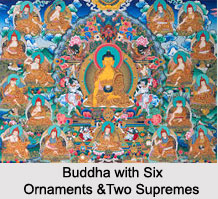
Buddhist Philosophy
Buddhist
Philosophy is based on the teachings of Gautama Buddha. According to some
scholars, early Buddhist Philosophy was not connected with metaphysical or
ontological speculation but experiences by sensory organs.
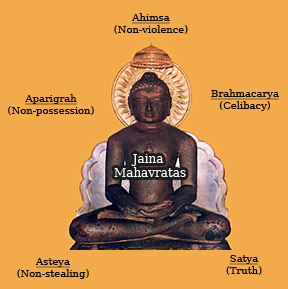
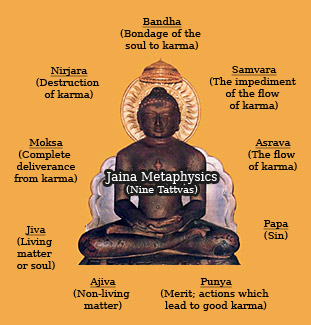
Jain Philosophy
Jain
Philosophy is a religion and philosophy originating in ancient India that
separates body from the soul completely. The concept of Jain philosophy has the
non-violence among the people.
Dvaita Philosophy
Dvaita Philosophy was advocated by Madhavacharya in the13th century. The philosophy strongly believed in expressing a rigorously monotheistic Vishnu cult.

Sikh Philosophy
Sikh
Philosophy focuses on a truthful life and dedication towards the Lord
through meditation. The Sikh gurus have also focused on the fact that Lord is
present everywhere in the world.
Islamic Philosophy
Islamic
Philosophy is mainly an attempt to secure a balance between reason and
faith. The philosophy in Islam is rather intricately inter-twined with the
religion.
Dvaitadvaita Philosophy
Dvaitadvaita
Philosophy of Nimbarka discusses three aspects of existence: Chit, achit
and Isvara. Chit and achit have Guna and Swabhaava which are different from
those of Isvara.
Shuddhadvaita Philosophy
Shuddhadvaita
Philosophy was expounded against Ramanuja`s Visistadvaita and Adi
Shankara`s Advaita Vedanta. His system of thought is also known by the name
Brahma Vada.
Classical Indian Philosophy
Classical
Indian Philosophy contains many analyses, rational principles and
explanations. The Vedas have been considered as the first and the oldest
scriptural texts of the Classical Indian Philosophy.
Ajivika Philosophy
Ajivika
is an anti-Brahminical philosophy, which translates to "following an
ascetic way of life". The followers of Ajivika Philosophy are generally
atheists, determinists, pacifists and vegetarians.
Pratyabhijna Philosophy
Pratyabhijna
is a Kashmiri school of philosophy connected with a monistic form of Shiva
worship. It was Somananda, the disciple of Vasugupta, who formulated the
Pratyabhijna theory, studying Shaiva Agamas.
Philosophy of Vaishnavism
Philosophy
of Vaishnavism is contained in the Philosophies and theories of the
Upanishads and the Vedanta Sutra. They provide the basis of the chief
theological beliefs of Vaishnavism.
Philosophy of Swami Sivananda
Philosophy of
Swami Sivananda is the theory of Humanism that connotes the union with God.
According to Swami Sivananda, the aim of philosophy is right living.
Philosophy in Indian Music
Philosophy in Indian Music is found embedded in the ancient Indian classical thought. From the earliest times, music is seen as being a manifestation of the divine.

Vaisheshika Philosophy
Vaisheshika
Philosophy states that all matter is made of finite reducible particles
known as atoms. Vaisheshika is among the six Astika School of Hindu
philosophies of India.
Sufi Philosophy
Sufism is the
philosophy that traces back to the Prophet Mohammad with a copious tradition.
Sufism entwined with its philosophy, doctrines, isms and mythos.
Purva Mimamsa Philosophy
Purva Mimamsa
Philosophy was the first major orthodox system which was developed. The
foundational text for the Mimamsa School is the Purva Mimamsa Sutras of
Jaimini.
Nyaya Philosophy
Nyaya
Philosophy has sixteen categories, dealing with the means to understand the
universe. The Nyaya School of philosophical speculation is based on texts known
as the Nyaya Sutras.
Charvaka Philosophy
Charvaka
Philosophy is an effort made to rid the age of the weight of the. It is a system
of Indian philosophy that adopted numerous forms of philosophical agnosticism
and religious impassivity.
Vijnanavada School of Philosophy
Vijnanavada
School of Philosophy introduced the doctrine of three aspects or
trisvabhava to describe the ways in which the alaya manifests itself.
Religion in Indian Philosophy
Religion in
Indian philosophy plays a vital role as philosophy is the theory aspect and
religion are the practical aspect. In India, religion is a way of life. It is
an essential part of the entire Indian tradition.
Spirituality in Indian Philosophy
Philosophy in India is essentially spiritual. It is indeed
the intense spirituality
of India and the history of Indian thought which has developed, structured
and finally silhouetted Indian philosophy to a great extent.
Guru Nanaka’s Religious Philosophy
Guru
Nanak’s religious philosophy still stand as the logo of brotherhood of man
and fatherhood of God. He wanted to demolish the wall that stood in the way of
conciliation of the Hindus and the Muslims.
Indian Religious Philosophy
Indian religious philosophy comprises of religious beliefs and its influences on Philosophy in India. Religious influence on Indian philosophy has been the guiding factor for almost all philosophical schools.

Philosophy of Vajrayana
Philosophy
of Vajrayana consists of a combination of both mahayanic and tantric
elements; though scattered throughout the text, certain basic inherent elements
can be obtained.
Philosophy of Gorakhnathis
Philosophy of
Gorakhnathis suggests that the candidates who are interested in becoming
yogis need to take the necessary pledges. They vow not to engage in any sort of
employment.
Philosophy of Incarnations of Lord Vishnu
Philosophy
behind the incarnations of Lord Vishnu is mainly that He chooses to
manifest himself in different forms at different times for the good of mankind.
His exalted divine abode to a lower level.