 The cardinal aim of the Purva Mimamsa Philosophy is elucidation of the nature of dharma, realised as a set ritual obligations and prerogatives to be performed in a proper manner. Mimamsa is a Sanskrit that means `investigation`. It is the name of an astika school of Hindu philosophy, whose fundamental research is into the nature of dharma, interpretation of religious texts of the Vedas.
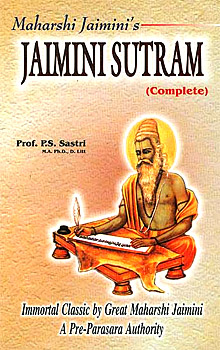
Mimamsa is more appropriately known as Purva Mimamsa. The foundational text for the Purva-Mimamsa school is the Purva Mimamsa Sutras of Jaimini. A foremost commentary was composed by Sabara in ca. 5th or 6th century CE. The school reached its height with Kumarila Bhatta and Prabhakara. Both Kumarila Bhatta and Prabhakara Mishra have penned extensive commentaries on Sabara`s Mimamsa sutra. Purva-Mimamsa is the only one of the six orthodox darshanas besides Vedanta to survive into contemporary Hinduism.
Dharma and Atheism in Purva-Mimamsa philosophy
The Mimamsa School traces to the source of the knowledge of words and meanings. The Purva-Mimamsa school held dharma to be equivalent to following the prescriptions of the Samhitas and their Brahmana commentaries pertaining to the correct performance of Vedic rituals. Mimamsa is ritualistic placing great weight on the performance of Karma as spoken by the Vedas. It is a counter-movement to the mysticism of Vedanta. Purva-Mimamsa is atheist to a certain extent as it places all importance in proper practice as opposed to belief. It rejects a creator God as well as any scriptures on dharma outside the Vedic tradition, yet accepting heaven awaiting the person who has acted righteously in his or her life.
The great object of the Mimamsa Philosophy is the knowledge of duty, its watchword being curious to do duty. The Purva Mimamsa has nothing to do with the great subject of the schools, the liberation of the soul from the ties of ignorance directly.
The origin of Purva Mimasa lies in the scholarly traditions of the final centuries when the priestly ritualism of Vedic sacrifice was being relegated by Buddhism and Vedanta. School gathers momentum in the Gupta period with Sabara and reaches its zenith in the 7th to 8th centuries with Kumarila Bhatta and Prabhakara.