
Dharma as mentioned by Lord Shiva mainly includes execution in property, administration, rites after death, adoption and so on. In Chapter 12 Lord Shiva speaks about Dharma by starting with the qualities of a wise King. It is said that if the Kings do not make rules then men would keep quarrelling with their friends, superiors and relatives. For the sake of wealth they may also resort to killing. The rules need to be laid down according to Dharma so that men do not drift from the right path. The King should punish the wrong doer and divide the inheritance according to the bond.
There are few rules laid down as far as property division is concerned. There are two types of relationship - by birth and by marriage. The descendants have a stronger claim than ascendants and the males are better qualified for inheritance as compared to female counterparts. Some of the rules are given below:
* If the departed leaves son, grandson, daughters, father, wife, and others then the son would get the entire property.
* However if there are many sons they would all get equal shares.
* If a childless man is survived by his father, brother and grandfather, then the father inherits the property.
Again there are other property rules in case the wife is Brahmi. It is said that the Brahmi wife is the superior and the sonless man`s property would go to the wife. Anything that has been endowed by the father and the father in law approved by Dharma is recognized as "Woman`s property". If a woman remains faithful to her Dharma, and lives under the control of the relations of her husband she is entitled to get the property.
There are end of rules as far as property rights are concerned. The wife and children of the Shaiva marriage will receive from the person who inherits the property of the deceased. The Shaiva wife if conducts, is entitled to be maintained by the Shaiva husband alone. She cannot claim to the property of her father and others.
The rules after the death of a family member have also been mentioned. The twice-born and other classes shall purify themselves by observing the rules from the day they hear the cause of it till the end of the period prescribed. When a son hears of his father`s or mother`s death, or if the faithful wife hears of her husband`s death after one year, then the son or the widow should observe for three nights the period of uncleanliness. However the degree of different kinds of uncleanliness depends on the greater or lesser length of the period. Unmarried female shall observe the period of uncleanliness of the father`s family. However after she is married she needs to observe impurity for three days on the death of her parents.
Post marriage wife becomes the same gotra as that of husband. The adopted son would also be of same gotra as the person who adopts him. Without the consent of mother and father a son cannot be adopted. At the time of adoption the adopted should with his kinsmen, perform the sacramental rites. The adopted son shall have the same right to the property of his adoptive mother and father, and the same rights to offer pindas to them as the natural-born son has, since they are his mother and father. Someone who gets the property of another should observe the Dharma of the person he inherits. In financial dealings, in agriculture, in mercantile transactions whatever is taken, the same should be performed in agreement with Dharma.
This chapter ends with the saying that this universe is under the protection of the Lord and whoever wishes to destroy it will themselves be destroyed.
Dharma in Mahanirvana Tantra
Dharma has been dictated in the form of a monologue by Lord Shiva in Chapter 12 of Mahanirvana Tantra.
Recently updated articles in Indian Literature
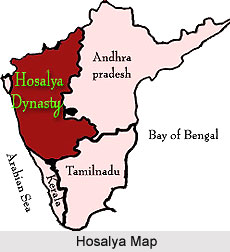
Gadyakarnamrita
Gadyakarnamrita is a 13th-century Sanskrit literary work written mainly in prose. It describes the ninety-day battle at Srirangam between the Hoysala...
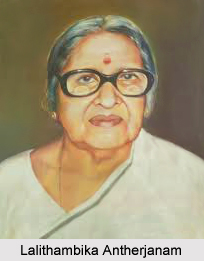
Women Writers in Malayalam Literature
Women writers in Malayalam literature have worked incessantly to make a place for their literary works. In the earlier periods, they were completely o...
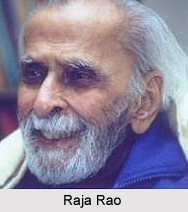
Comrade Kirillov, Novel by Raja Rao
Comrade Kirillov, a distinctive creation of Raja Rao, is presented as a brief yet incisive novelette that offers an ironic portrayal of the self-contr...
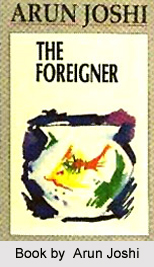
The Foreigner, Novel by Arun Joshi
“The Foreigner” is a book authored by Arun Joshi and published by Vision. It is an illustrious creation in the entire career of Arun Joshi, the famous...
Short Story in Telugu Literature
Short Story in twentieth century Telugu Literature was extremely popular and growing in and developing in a major way. Their popularity was greatly fa...
Related articles in Indian Literature
Mythological Themes in Indian Literature
Mythological themes in Indian literature have been integral to every ancient and contemporary writer and their path to f
Literature During Gupta Age
It is during the Gupta Age literature in the form of poetry, epos and drama gained a colossal importance.
Literature of Aravidu Dynasty
Sanskrit and Telugu were the popular literary medium of communication during Aravidu dynasty.
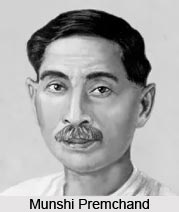
Munshi Premchand
Munshi Premchand was a legendary Indian writer notable for his modern Hindustani literature. A writer of a very high caliber, Premchand`s writings hav...
Sanskrit Poets
The names of some of the Sanskrit Poets are Bharavi, Devarshi Ramanath Shastri, Jayadeva and Srinivas Rath.