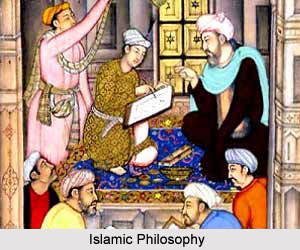
In the development of Islamic Philosophy between 1250 and1900, two distinct phases can be recognised. This entire span is divided into two at about the year 1500. In this period, there was seen a decline of philosophical output and a dependence on mere commentary and glosses of already existing works.
In the earlier part of this period, there was a strong state in Egypt under the Mamluks, and this controlled Syria as well. In the east the Mongols continued to rule Transoxiana, and under Tamerlane, spread westwards once more. Persia was added to their dominions, and there were temporary invasions of Iraq and Syria. Between Egypt-Syria and Transoxiana various lesser dynasties maintained a degree of peace over smaller or larger areas. The most important was that of the Mongol Il Khans of Persia. Without a Caliph, Baghdad had become a provincial city. Iraq was a province of Persia, though something of its old cultural life continued until the invasions of Timur when it was practically destroyed. However, many centres of Islamic learning had developed in Persia, Central Asia, Afghanistan and India. Thus the vast political upheavals produced less dislocation in intellectual life and in social structure than might have been expected. There were indeed great changes, but surprisingly, much managed to survive the storm.
The pattern of the four centuries from 1500 to 1900 is much tidier. Three empires developed. That of the Ottoman Turks, with its capital at Constantinople (from 1453), eventually spread its rule over Syria and Egypt, much of Iraq and most of North Africa, and lasted until the First World War. Persia was united by the Safavid dynasty (Shah Ismail, 1502-24), and sometimes had parts of Iraq added to it. Baghdad was now on the frontier between these two empires, and changed hands several times. The third empire was that of the Mughals in India. It was shorter-lived than the other two. It began to decline before other Indian states about 1700, and then receded as the
British East India Company advanced, until it was extinguished in 1857. These empires gave a certain external stability to the Islamic world.
During these centuries, theological and philosophical thought increased considerably in volume. However, its quality is usually believed to have declined. One of the signs of this alleged decline is the lack of originality. Instead of fresh works like those of al Juwayni and Fakhr ad Din ar Razi, the chief effort of the theologians seems to have gone into the production of commentaries and super-commentaries and glosses on earlier works. One notable instance of this is The Articles of Belief, for which about a dozen commentaries and thirty glosses were written. These are mainly in Arabic, but an Islamic religious literature was also springing up in Turkish, Persian, Urdu and other languages. There were a few original works being composed, but these were mainly in the form of creeds of varying lengths, probably intended from the first to be material for commentaries. The writing of commentaries was probably encouraged by the fact that it was the normal practice to use a text as the basis for lectures. Such a practice in itself, however, does not rule out originality. Some have deemed this state of affairs as rigid conservatism.
Before this rigidity is condemned outright, an attempt ought to be made to discover whether it is performing any important social function. A distinction can be made between the attainment of a definitive creed and rigidity in the interpretation of articles of belief. The problem is therefore whether there is any justification for such theological rigidity as distinct from creedal fixity. It is conceivable that in the disturbed political circumstances of the period rigidity in theology helped to give stability to the social structure. Perhaps it helped to compensate for the loss of even theoretical unity. It is possible too that the rigidity appears greater to us than it really is, since it is easy for the modern scholar to transform his own boredom into a characteristic of the material. In the present survey, of course, there is no possibility of saying anything final about this point, since much further study is required.
Reasons for decline of Philosophical works : On the assumption that the period, especially from 1500 onwards was one, not merely of theological rigidity, but of general cultural decline and decadence, theories have been put forward to account for the phenomena on which these judgements are based. One view is that the cause is to be looked for in the Mongol invasions and the devastation they caused. This has certainly much to do with the relative cultural decline of some centres and regions, Baghdad, for example. However, Egypt, on the other hand, was never invaded by the Mongols, and therefore the Mongols cannot be the sole cause.
Another cause that has been suggested is Ottoman domination. There may be some truth in this as regards the Arabic-speaking world, practically all of which came under Ottoman domination. But it is doubtful if even in these regions it can be the whole truth, since Persia and the eastern Islamic lands, where there once had been a high level of culture, never came under Ottoman sway.
Another factor which, though it cannot explain all the phenomena, may yet be of some importance is the extent to which the Ulema had become dependent on the governments. The Inquisition of 833 to 849 had made it clear that the class of Ulema was ultimately in the power of the government. The Inquisition was brought to and end due to reasons quite unconnected to the Ulema. Both in jurisprudence and in theology one of the functions of rigidity is probably to strengthen the hands of individuals who are prepared to hold out against some forms of governmental pressure and to prevent a betrayal of the general position of the Ulema by individuals who have succumbed to governmental inducements.
Where there is a rigid intellectual structure the limits of individual discretion are greatly reduced, and something is undoubtedly thereby attained. Whether this was the best course in the circumstances cannot be decided without much investigation. It is clear, however, that, even if rigidity at some periods had a positive function, it also had disadvantages. In particular it had made it difficult for the Ulema to adapt jurisprudence and theology to the needs of recent centuries.
The philosophical theologians with their interest in philosophy and their method of commenting on texts, seem to have been largely cut off from the real springs of the spiritual life and restricted to already canalized ideas. Despite this apparent weakness of the philosophical theologians, they have a positive achievement to their credit, which should never be forgotten. They preserved a framework of outward conduct and intellectual dogma within which it was possible for men to live lives of moral uprightness and true religious devotion.

 Islamic Philosophy is concerned with finding a balance between reason and faith. The relation between religion and philosophy is quite deeply ingrained in the Islamic tradition. Islamic theologians are of the opinion that there is no separate body of Islamic philosophy, and the nearest approach to it is the orthodox system of theology. Since all philosophy was ultimately based on the Holy Quran and Sunna, the theologians refused to accept philosophy as something distinct from religion. However, the philosophers claim that Islamic philosophy does indeed form a separate branch of study, distinct from theology. They advance a number of influences which went into the making of the Islamic philosophy and giving it shape. These influences include Greek philosophy, which the early Muslims came into contact with after the conquests of Alexandria, Syria and Jundishapur, pre-Islamic Indian Philosophy and Iranian philosophy. However, arguments notwithstanding, one aspect which clearly stands out is that Islamic Philosophy is clearly rooted in the religion, and conforms to the Quran, with its detailed analysis of the nature of reality and advice on how to live, and the practices of the Prophet, the Sunna.
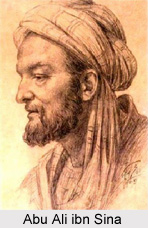 Development of Islamic philosophy, despite the hurdles it faced from the orthodox theologians, continued unabated down the ages. It usually developed in small groups. The Muslim students of the subject were not in any way fanatical disciples of
 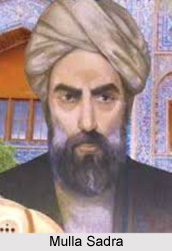 This school of Islamic philosophy is also known as Integral Traditionalism or Perennialism. Integral Tradition does not have a human origin and may be considered as principles revealed from Heaven and binding man to his divine origin, or to what was called a `transcendent unity`. Perennialists claim that the historically separated traditions share not only the same divine origin but are based on the same metaphysical principles, sometimes called Philosophia Perennis.