
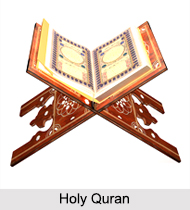
 Holy Quran is the religious book of the Islamic community, and it is said to be the word of God. As God is alive and knows, He must have life, power, knowledge and speech. His speech is the word, the Quran. Quran is regarded as an uncreated, eternal world of Allah. Muslims try to learn the Holy Quran by heart and follow the teachings of their religion from it. The main message of Islam is to worship God and to treat all God`s creation with kindness and compassion.
Holy Quran
Holy Quran is the religious text of the Muslims written in the Arabic language. It is said to be the word of God as revealed to the Prophet Muhammad.
Introduction
Holy Quran is the religious book of the Islamic community, and it is said to be the word of God. As God is alive and knows, He must have life, power, knowledge and speech. His speech is the word, the Quran. Quran is regarded as an uncreated, eternal world of Allah. Muslims try to learn the Holy Quran by heart and follow the teachings of their religion from it. The main message of Islam is to worship God and to treat all God`s creation with kindness and compassion.Etymology of the Holy Quran
The word Quran comes from a root, which means to `recite`. The literal meaning of Islam was revealed through angel Gabriel (on whom be peace) and was preserved in the Holy Quran. It is thus, a recital given by the Prophet Mohammad to his followers who wrote it.
Contents of the Holy Quran
The Quran contains the revelations given to the Holy Prophet of Islam, Prophet Muhammad.
It has 114 chapters and contains all the basic principles of the religion in the form of verses. These revelations were recorded and arranged in their present form by the orders of the 3rd Caliph Uthman in the 7th century. The word is revealed in the Arabic language and it is noted for its inimitable excellent language. The contents of the Holy Quran fall into two groups - those delivered at Mecca and those at Medina respectively.
 Quran is supplemented by another less important text called "Hadith". It contains sayings and teachings of Prophet Mohammad himself. It is also referred to as Sunna and contains the speech, dialogue and practice of the prophet.
Quran is supplemented by another less important text called "Hadith". It contains sayings and teachings of Prophet Mohammad himself. It is also referred to as Sunna and contains the speech, dialogue and practice of the prophet.Reading of the Holy Quran
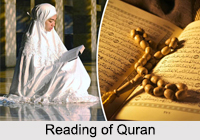
There are seven or ten different `readings` of the Quran. These are for the most part different ways of pronouncing the text, omission or assimilation of certain letters. The contents of the Quran were either divided into the obvious and the ambiguous. It was recognized that some passages were capable of more than one interpretation.
Teachings of the Holy Quran
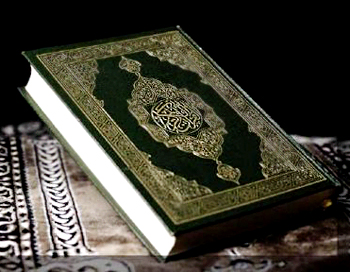 Teachings of Holy Quran emphasize that everything is created by God and Allah is the ultimate truth. Teachings of Quran are classified into five tenets of Islamic faith. They are the belief in the unity of God, Salat, Zakat, Saum and Hajj. The Quran leaves upon a unitary and purposive will. A command of God has been communicated to everything that is created. This order is ceaseless. Quran portrays the moral dualism in the character of man. This in turn gives rise to the moral struggle. The Quran that has been `sent` to Muhammad is the book that discloses the Command: "Muhammad is the final Prophet and the Quran the last Book that has been so revealed".
The Quran emerges as a document that seeks to emphasize all those moral tensions which are required for creative human action. The Teachings of Quran lead to man`s development. For this man should operate within the framework of certain tensions which have been created by the God in him. Quran emphasizes the absolute supremacy and the majesty of God. The idea of justice flows from the supremacy of the Moral Law, which has been equally emphasized by the Quran. The Quran condemns hopelessness and lack of trust in God. Man has immense potentiality and therefore the penalties he face is a result of his failure.
Belief in one God is one of the prime teachings of Quran. From this belief is held to follow belief in angels as transmitters of Divine message, in the Prophets, the human repositories of the Divine revelation, in the genuineness of the message of the Prophets and in the Day of Reckoning.
Prayer has been highly stressed upon as `it prevents from evil` thereby helping man to conquer difficulties along with `patience`. One month`s strenuous fast is prescribed by the Quran. The Zakat or welfare tax was duly designed for the welfare of the community and there were tax-collectors appointed. The institution of pilgrimage has been a powerful vehicle of furthering Islamic brotherhood. The Quran calls upon believers to assume jihad in order to establish the Islamic socio-moral order.
Recently updated articles in Religion in India

Kusumayudha
Kusumayudha is a name of Kamadeva, the Hindu God of Love. Depicted with a sugarcane bow and flower-tipped arrows, he represents attraction and longing...

Bhoyar Caste
Bhoyar Caste is largely found in the Central Provinces of the country. Traditional occupation of Bhoyars is agriculture. They are good cultivators and...

Chasa Caste
Chasa caste is a prominent agrarian community native to Odisha. Traditionally associated with cultivation and farming, Chasas have historically played...
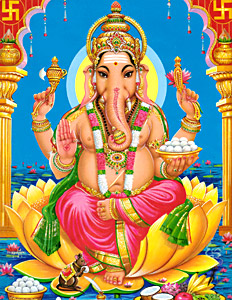
Vigneswara, A Form of Lord Ganesha
Lord Vigneswara is another form of Lord Ganesha or Vinayaka, prominently worshipped as the God of intelligence and good luck in the Indian subcontinen...

Maheswara
Maheswara, meaning “the Great Lord,” is a revered name of Lord Shiva in Hindu tradition. It represents Shiva’s supreme authority over creation, preser...
Related articles in Religion in India
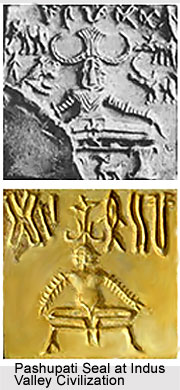
Religion in Indus Valley Civilization
Religion in Indus Valley Civilisation included Hinduism, Buddhism and Jainism. Details about the religion in Indus Valley Civilization have been gathe...
Iyer Brahmin
Iyer Brahmins are originally from Tamil Nadu of South India. They are known for their adherence to Advaita philosophy and Smarta traditions. Tradition...
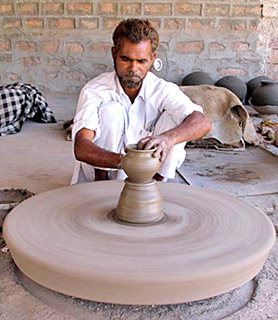
Kumbhakar / Kumhar Caste
Kumbhakar or Kumhar caste is a traditional artisan community in India known for pottery making. Derived from Sanskrit word Kumbhakar, meaning potter,...

Gujjars in Mughal Era
Gujjars in the Mughal era enjoyed great power. Further their power increased with the decline of Aurangzeb, Mughal emperor.
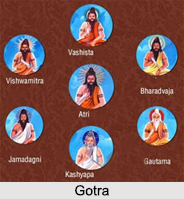
Gotra in Hinduism
In Hinduism, gotra refers to a lineage system tracing descent from ancient sages, primarily through the paternal line. Originating from Vedic traditio...