
The development of the Vijnanavada School of Philosophy began around 150 C.E. Vijnanavada Buddhism contributed two important ideas - the metaphysical idea of release from an original universal awareness and the theological idea of the Trikaya, the three Bodies of Lord Buddha. Vijnanavada was a Mahayana Buddhist school that believed that there are many physical objects.
It is claimed that anything that is material cannot appeal to the consciousness. If physical objects that are external to the mind existed, they would be enduring the whole entity. An atom is indivisible. However if atoms come together they will have sides. If they unite there will be no increase in extent. Idealist Buddhists reject the idea of the integral whole over and above its parts as a single substance is not cognised.
According to Sautrantikas momentary reality cannot be known excepting its representations. On this basis one infers the existence of mind-independent reality. The Vijnanavadas feel that there is no need to infer an objective reality as the casual basis of one`s experience. Organised nature of waking awareness implies that objects are identified at particular time and places. The basic claim of the school is that consciousness itself is the only reality. The apparent diversity of the practical world is the product of instability in the individual field of consciousness. The doctrine distinguishes eight aspects of consciousness, the most essential being the alaya-vijnana which is the basis of personal identity. Due to the previous actions` effect the alaya becomes unstable and proceeds to manifest itself in a dualistic form whereby the notions of `self` and `other` arise. According to the Vijnanavada School enlightenment is attained through recognition of the alaya as the only reality.
This philosophy is based on an argument that when an image is conjured up of an object it seems to be as real as the original object itself. Combining this with the principle of emptiness; it is disputed that both the mental and the external objects are equally deceptive. Vijnanavada gets its name from its theory of a psychological release from the Alaya-vijnana or the original universal consciousness. It is the only Buddhist school that incorporated emanationist ideas. It prefers a complicated position in which the reality perceived by humans appears by virtue of the capacity of the mind to perceive patterns of continuity and regularity.
Vijnanavada School of Philosophy
Vijnanavada School of Philosophy introduced the doctrine of three aspects or trisvabhava to describe the ways in which the alaya manifests itself.
Recently updated articles in Indian Philosophy
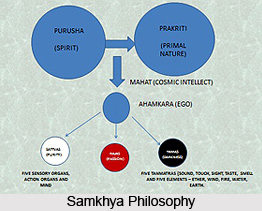
Samkhya Philosophy
Samkhya philosophy is one of India’s oldest intellectual traditions, explaining reality through the interplay of Puruṣha (pure consciousness) and Prak...
Maya, Prakriti in Hinduism
Maya or illusion is a very potent instrument of the Divine Prakriti, the Primal nature. In Hinduism one must be able to come out of Maya in order to a...

Samadhi in Hinduism
Samadhi is the result of meditation or that state of mind when there is an absence of all idea of individuality.
Samadhi in Buddhism
According to Buddhism, oen can only achieve samadhi through strict meditation and right concentration.

Abdul Rehman Jilani Dehlvi
Syed Abdul Rehman Jilani Dehlvi was a renowned Sufi saint of the Qadri Order in India.
Related articles in Indian Philosophy

Ajivika Philosophy
Ajivika philosophy is different from the mainstream religion
Indian Philosophy In The Vedic Period
Indian Philosophy in the Vedic Period was primarily based on the concepts of nature worship.
Achintya Bheda Abheda Philosophy
Achintya-Bheda-Abheda is a School of Vedanta that represents the philosophy of unimaginable one-ness and difference in relation to the power creation...
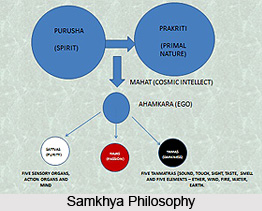
Samkhya Philosophy
Samkhya philosophy is one of India’s oldest intellectual traditions, explaining reality through the interplay of Puruṣha (pure consciousness) and Prak...
Charvaka Philosophy
The Charvaka Philosophy believes that only those things that can be perceived is the ultimate reality.