Kutch district of Gujarat has 10 talukas, of which the major ones are Bhuj (district headquarter), Anjar, Mandvi, Mundra and Gandhidham. The area of the district is 45,652 sq. km.
History of Kutch District
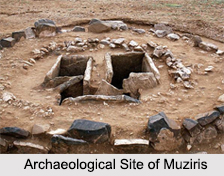
The chronicle of this beautiful district of Gujarat is out of the ordinary. The aloofness of Kutch has kept it a place apart for centuries .For thousand years, the people of Kutch migrated in and out of Kutch to countries like Sindh, Afganisthan, Britain and Africa. Many foreigners who came here have portrayals of Kutch in their journals. Kutch was inhabited from prehistoric times as verified by stone implements found by explorations and excavations at various places. Traces of the astonishing Indus Valley civilization (3000 to 1500B.C.) have been discovered at Dholavira- Kutch (Archaeological Sites in Kutch ). Alexander the great called it `Abhir`, which means the shape of tortoise. It was always remained a place of a less population, especially in the 9th century. Kutch has also experienced frequent earthquake since medieval times. The earliest earthquake recorded in Kutch dates back to 16th June 1819. Since then, over 90 earthquakes of varying intensity have struck the region, but none as severe as the most recent one in 2001.
Geography of Kutch District
The geographical location of Kutch District is 78.89 degree to 71.45 degree East (Longitude) and 22.44 degree to 24.41 degree North (Latitude). The maximum temperature of the district is 45 degree centigrade and the minimum temperature is 4 degree centigrade. Average Rainfall recorded in this place is 587 mm.
Demography of Kutch District
According to the Population Census in the year 2011, Kutch District had population of 2,092,371 of which male and female were 1,096,737 and 995,634 respectively. Kutch District population constituted 3.46 percent of total population of Gujarat. The average literacy rate of Kachchh in 2011 was 70.59 compared to 59.79 of 2001. If things are looked out at gender wise, male and female literacy were 79.40 and 60.87 respectively.
Education of Kutch District
Kutch district has 1512 primary schools, 19 secondary schools and 60 secondary schools. Kutch has many educational and training institutes. The district has 12 Industrial Training Institutes (ITIs) which recommend training in various courses such as electrical, electronic and communication, production, information technology, and mechanical engineering. Government Engineering College at Bhuj offers engineering degree in three branches; mechanical, electrical and mining.
Culture of Kutch District
Kutch district boasts of a culturally rich heritage and vibrant population celebrating traditional fairs and festivals. The Kutch Desert Festival, Ravechi Fair, Navratri Fair, Nakhatrana Fair and Dhrarg Fair are well known among the tourists. Handicrafts are an important part of the culture of the people of this district. Block printing including the intricate `Ajrakh` printing, terracotta work, laquered wood furniture, Bandhani, finest silver ornaments and intrinsic metallic work are renowned handicrafts of Kutch district.
Economy of Kutch District
Kutch district has become a major industrial hub. Over 60 percent of total salt production is contributed by the district. With huge reserves of bauxite, limestone, lignite and bentonite, Kutch district is one of the favoured destinations for most of the mineral based industries. A good number of medium or large scale industries are supported by a sizeable number of small scale industries. Due to presence of two main ports, Kandla and Mundra, Kutch district accounts for a very high cargo movement. Kutch is also known for handicrafts.
Tourism in Kutch District
Tourist from all over the world visit Kutch district for its rich heritage and variety. Key tourist attractions in the district are, Aina Mahal (Old Palace), Prag Mahal (New Palace), Kutch Museum, Cenotoph Complex, and Indus Valley Civilisation site at Dholavira. Swaminarayan Temple, Lakhpat, Koteshwar and Bhadreshwar temple are well known pilgrimage sites. Wild life plays a major role in promoting tourism in Kutch district. Wildlife Ass Sanctuary, Chinkara Sanctuary, and Narayan Sarovar Bird Sanctuary are a must visit places for tourist. The forests have rich reserves of date palms, chikoo, guava, mango, pomegranate, ber etc.
How to reach Kutch District
By Road:
National Highway 8A connects Kutch with Ahmedabad (91km), Vadodara (465 km), Rajkot (218 km) and Surat (632 km). Bhuj is connected with Kandla (45 km from Bhuj) by a State Highway via Anjar.
By Rail:
Mumbai is connected with Bhuj by 5 broad gauge stations. Mundra and Kandla ports are linked by broad gauge rail to the Delhi-Mumbai Industrial Corridor. Bhuj-Gandhidham-Kandla-Ahmedabad broad guage line provides direct connectivity from Kutch to other parts of the country.
By Air:
Bhuj has the only operational airport in Kutch. Kandla, Mandvi Mundra air strips are under development.
By Port:
Mundra Port has a total length of 17.5 mts. Other ports in the district include Kandla and Mandvi. Mundra port is connected to Gandhidham by National Highway and a broad gauge railway line. Other ports are at Kandla and Mandvi.