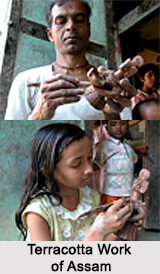
 Terracotta Work of Assam is famous in India and also in abroad. It is also one of the most refined versions of Terracotta Art in India. Assam craftwork represents the rich cultural heritage of India. The magnificent artefacts boost about the mastery skills of the artisans. The terracotta work of Assam has dominated the handicraft segment for ages. The exotic works of art of different mythological figures, idols, decorative showpieces are exquisite example of the thriving terracotta industry of the state.
History of Terracotta Work of Assam
The traditional terracotta work of Assam can be traced back to ancient times. This aesthetic form of art has a deep-rooted origin in this state. It evolved significantly with the evolution of art and culture in Assam. The early artisans mastered the art of creating various forms of religious characters that made its presence in several sacred ceremonies and cultural events. Since time immemorial, this tradition has been handed down from one generation to the other.
Forms of Terracotta Work of Assam
Two different communities, the `hira` and the `kumar` functioning in Assam specialise in clay and terracotta craftwork. Both the communities differ in their method of work. The compression method is followed by the "hiras". They focus on preparing household items and womenfolk of the community are mostly engaged in this work. The "kumar", on the other hand pursue the wheel method. They specialise in the art of pottery work. These products are initially made on the wheel that requires experienced hands. Later they are dried and then kept in the ovens or bhattis. Earthen lamps, plates, diyas, clay dolls, incense sticks holders, chains, pitchers and cups are some of the common products prepared by them. The Goalpara district of Assam is popularly known for its terracotta idols. The Kamrup district is recognised for its blooming terracotta industry. Besides this, the Asharikandi village of Dhubri district of Assam is also popular in this ethic art. Almost 80 percent of the families residing in this village are engaged in terracotta work so that the state and central government has announced this place as a `model village. `
The terracotta craft of Assam has evolved radically with time. It has developed as a hub for crafts and cottage industries. The modern terracotta artisans not only specialise in making traditional images of gods and goddesses but also engage in producing an array of designer items like toys, dolls, vases, pots etc. These incredible craftworks stand as excellent manifestations of the ancient terracotta art of the bygone era. Local tourists as well as foreigners visit the land to have a glimpse of the art form. It has developed from a traditional craftwork to a flourishing industry.