 With a long standing history, Indian astronomy has some of its earliest roots during the period of Indus Valley Civilization or earlier. Indian astronomers left behind their evidence of contribution in the earliest textual mention, which has also been mentioned in the religious literature of India.
During the 1st millennium BCE, the "Vedanga Jyotisa" and other auxiliary branches of learning called Vedangas began to take shape. And by the following centuries, a number of Indian astronomers studied various aspects of astronomical sciences and global discourse along with other cultures followed. A number of instruments were used in Indian astronomy, which was also applied for the studies of calendar.
Ancient Indian Astronomers
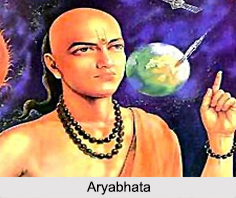
Lagadha was the earliest known Indian astronomer as per the accounts of "Vedanga Jyotisa". The religious compositions of 1200 BCE has numerable astronomical observations and calculations, which were conducted by this talented astronomer. Another renowned astronomer during this age was Aryabhata I, who authored "Aryabhatasiddhanta" and the "Aryabhatiya". He had significant influence on Islamic astronomy and is known to be the first one to discover that the moon shines due to the light of the sun.
 Aryabhata`s ideals were re-established by Brahmagupta, especially the one which asserted the beginning of a new day commencing at midnight. His works enabled the introduction of Indian idea of mathematics in the world of the Arabs. The different Roman, Egyptian and Greek ideologies of astronomy were researched by Varahamihira who also composed the treatise "Pancasiddhantika". The astronomer Bhaskara I had written `Mahabhaskariya`, this along with "Aryabhatiyabhashya" studied the motion of the equinoxes, etc.
Lastly of the ancient period, Lalla was another of the popular Indian astronomers of the 8th century. He combined the techniques of his predecessors Aryabhata, Brahmagupta and Bhaskara I and in his text called the "Sisyadhiv Rddhidatantra", the earliest known description of perpetual mobile is elaborated. Lalla"s works influenced his later generations of astronomers like Sripati, Vatesvara and Bhaskara II.
Medieval Indian Astronomers
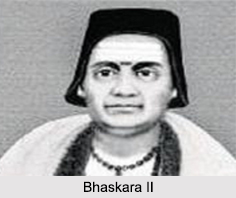
Sripati, Bhaskara II, Mahendra Suri, Acyuta Psarati and Nilakanthan Somayaji were the various Indian astronomers of the medieval India. "Siddhantasiromani" and "Karanakutuhala" were composed by Bhaskara II who observed the cosmography, conjunctions, planetary positions and much more. The astronomer Sripati wrote the book "Siddhantasekhara" which had 20 chapters which spoke about brand new ideologies.
 During the regime of Firoz Shah Tughlaq in the 14th century, "Yantra–Raja" was written by Mahendra Suri which is an important Sanskrit work on astrolabe. The book consists of 182 verses related to the astrolabe and Suri had an impact on astronomers like Padmanabha who existed during the 1426 CE.
Aryabhata`a model of Venus and Mercury was researched and revised by Nilakanthan Somayaji in his composition "Tantrasangraha", and he followed the Kerala School of Astronomy and Mathematics. Acyuta Pisarati was responsible for suggesting about the enhancements in procedures of calculations of eclipses, especially in the "Uparagakriyakrama".
Modern Indian Astronomers
Manali Kallat Vainu Bappu is considered the father of modern Indian astronomy and he served as the president of the International Astronomical Union. He is an important Indian astronomer who had jointly discovered the Wilson- Bappu effect along with Olin Chaddock Wilson, an American astronomer. The Vainu Bappu Observatory has been named in his honour.
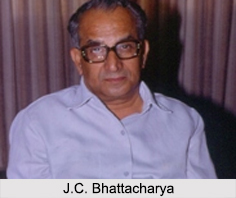
Few of the other contemporary Indian astronomers include the likes of J.C. Bhattarcharya, who was born in 1931 and was famous for his contribution to the sphere of experimental astrophysics. Somnath Bharadwaj is yet another well- known astronomer. Other notable astronomers include Venkatraman Radhakrishnan, Achyuta Panikkar, Prabodh Chandra Sengupta, Jitendra Jatashankar Rawal, Priyamvada Natarajan, Vinod Johri, Mrinal Kumar Das Gupta, Sandip Chakrabarti and many more.