About Siege of Delhi
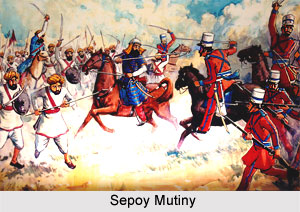 Delhi was the hotseat of rebellious and insurrectional operations both on behalf of the native and British side. The city had already been prepared as a fortification, guarding it from every possible angle. Chief Engineer of the British, Baird-Smith had devised out a plan, because he hated to wait for further delay. He had already consulted with General Wilson about his proposed plan. However, Wilson was not willing to proceed with the issue, without the strict affirmation from the Governor-General Lord Canning. Finally, after Smith had pacified Wilson saying that the loyal Sikhs could not be bound much longer, the urgency of the situation dawned upon Wilson. The rebels had already started to attack their bastioned ridge and fort. Baird-Smith, in coalition with his second command, Alexander Taylor had decided to attack the assaulters from the northern face of Delhi.
The engineers worked untiringly with much energy at these sections. On the morning of the 8th, while still unfinished, and mounting but one gun, the enemy discovered Brind`s section. They opened upon it a fire so concentrated and so relentless that to venture from its protection was to invite almost certain death. A little later the rebels tried to improve the opportunity by despatching a body of infantry and cavalry from the Lahore gate. This diversion really privileged the English. For, while it lasted, the men in the new battery worked with such a will that they succeeded in finishing five platforms. As each platform was completed, the gun mounted on it opened against the enemy. The sortie, which had thus given badly-needed time to the defenders, was beaten back with loss. The first section of No. 1 battery had no sooner been completed than its fire, well directed by the energetic Brind, rendered the Mori bastion harmless. The gallant Kaye also had done his work with tremendous zeal. The fire directed from the left section had done good work against the Kashmir bastion. At noon of the 10th, the half-battery caught fire from the constant discharge of the guns. For a moment or two it seemed that the hard work of the three previous days would be thrown away. The rebels had at once directed on the burning battery every gun they could command.
But from such a catastrophe the battery was saved by the gallantry of Lieutenant Lockhart. He was on duty on the spot, with two companies of the 2nd Gurkhas. As soon as he saw the fire, Lockhart apprehended its fatal consequences. He suggested to Kaye whether it would be possible to save it by working from the outside, and on the top of the parapet. Kaye replied that something might be done if a party were to take sandbags to the top, cut them, and smother the fire with the sand. But the attempt, under the concentrated fire of the rebels, involved almost certain death. Lockhart nobly thought that the occasion was one to justify the risk. Calling for volunteers, he jumped on the parapet, followed by six or seven Gurkhas, and set himself to the task. The enemy`s fire immediately redoubled. Two of the Gurkhas were shot dead. Lockhart rolled over the parapet, with a shot through his jaw. But the survivors hung on, and by incredible exertions succeeded in extinguishing the fire.
Meanwhile No. 2 battery had been traced, on the evening of the 7th. They were discovered in front of Ludlow Castle, 500 yards from the Kashmeri gate. This, too, was divided into two sections, at a distance of 200 yards from each other. They were both directed against the Kashmir bastion. The No. 2 battery intended to silence the bastion`s fire, to knock away the parapet to the right and the left that gave cover to its defenders. The battery also had the intention to open a breach for the stormers. Before dawn of the 11th, it had been completed and armed, and was then unmasked. Major Campbell commanded the left section. The right was first entrusted to Major Kaye, transferred to it from the ignited left section of No 1. But on the officer being wounded on the 11th, it was placed in the capable hands of Major Edwin Johnson.
The third battery required in its construction a large amount of skill and courageousness. It was traced, under the directions of Captain Medley of the engineers, within 160 yards of the Water bastion. This battery was finished and armed by the night of the 1lth.
A fourth battery, commanded by the gallant Tombs for four heavy mortars, was traced in the Kudsiya Bagh. It was completed on the 1lth, ready to open fire whenever its fire might be required.
The rebels had neither been blind nor indifferent to the active movements in the camp of the besiegers. Recognising at last that the meditated attack would be directed against their left, they adopted measures which, if carried out sooner, would have added staggeringly to the difficulties of the attack. They at once set to work to mount heavy guns along the curtain wall between the bastions on the northern face. In other convenient nooks they mounted light guns. Taking advantage of the broken ground, they made in one night an advanced trench parallel to the left attack. 350 yards from it, the soldiers covered their entire front. This trench they lined with infantry.
A tremendous fire from both sides continued from the opening of the new batteries till the afternoon of the 13th. The damage done to assailants and defenders alike were tremendous. Never was there displayed in the British army greater energy, more splendid determination. Men fearlessly exposed themselves to repair damages. At length, on the afternoon of 13th, Wilson and Baird-Smith came to the conclusion that two sufficient breaches had been made. Wilson directed, accordingly, that they should be examined.
This perilous duty was performed by four young engineer officers- Medley and Lang for the Kashmir bastion, Greathed and Home for the Water. The two first named, reached the edge of the ditch undetected, descended into it. Although they saw the enemy was on the alert, they warily examined the breach. They returned, pursued by a volley, to report it practicable. A similar report reached Baird-Smith from Greathed and Home. He therefore advised Wilson not to delay a single day, but to attack the coming morning. Wilson, agreeing with him, issued the necessary orders forthwith.
The order of the attack was as follows: Nicholson, with 300 men of the 75th, under Lieutenant-Colonel Herbert; 250 men of the 1st Fusiliers, under Major Jacob; 450 men of the 2nd Punjab Infantry, under Captain Green, was to storm the breach near the Kashmir bastion, and escalade the face of the bastion. The engineers attached to this column were Medley, Lang, and Bingham.
At the same time Brigadier William Jones of the 61st, commanding the second column, composed of 250 men of the 8th foot, under Lieutenant-Colonel Greathed; 250 men of the 2nd Fusiliers, under Captain Boyd; 350 men of the 4th Sikh Infantry, under Captain Rothney, was to storm the breach in the Water bastion. The engineers with this column were Greathed, Hovenden, and Pemberton.
Similarly, Colonel Campbell of the 52nd Light Infantry, commanding the third column, composed of 250 men of the 52nd, under Major Vigors; 250 Gurkhas of the Kumaon battalion, under Captain Ramsay; 500 men of the 1st Punjab Infantry, under Lieutenant Nicholson, was to attack by the Kashmeri gate after it should have been blown open. The engineers were Home, Salkeld, and Tandy.
Major Reid of the Sirmaur battalion commanded the fourth column. The column was composed of the Sirmaur battalion (2nd Gurkhas), the Guide corps, European and native as could be spared from Hindu Rao`s house, and 1,200 men of the Kashmir (Jammu) contingent. Led by Captain Richard Lawrence, the battalion was to attack the suburb of Kishanganj, and enter by the Lahore gate. The engineers attached to this column were Maunsell and Tennant.
The fifth, or reserve column, was commanded by Lieutenant-Colonel Longfield of the 8th foot. It consisted of 250 men of the 61st, under Lieutenant-Colonel Deacon; 450 men of the 4th Punjab Infantry, under Captain Wilde; 300 men of Baluch battalion, under Lieutenant-Colonel Farquhar; 300 men of the Jhind auxiliary force, under Lieutenant-Colonel Dunsford. To these were subsequently added 200 men of the 60th Rifles, under Lieutenant-Colonel John Jones of that regiment. This column was to support the first column. Its engineers were Ward and Thackeray.
At three o`clock in the morning the columns of attack were drawn up. Every man who composed the columns felt that upon the exertions of themselves and their comrades depended the fate of India. There was a slight but inevitable delay. Then, as the day dawned the columns advanced, and quietly took up the positions assigned to them. They were to remain in that position until signal to advance should be given. Meanwhile, an explosion party, comprising Lieutenants Home and Salkeld, Sergeants Smith and Carmichael, Corporal Burgess, Bugler Hawthorne, and eight native sappers, covered by 100 men of the 60th Rifles were structured. They sped their way to the front to attach kegs of powder to, and blow up, the Kashmeri gate. The bugle-sound from this point was to be the signal of success, and for the advance of the third column.
Nicholson, after one glance to see that the first and second columns were in position, gave the order to advance just after daybreak. The first column moved steadily forward at a walk, until it reached the further edge of the jungle. Then, the engineers and storming party rushed to the breach near the Kashmir bastion. In a few seconds they gained the summit of the glacis. The entire fire of the rebels seemed to be concentrated upon them there. So fierce was it that for ten minutes it was impossible to lower down the ladders. At last they lowered down two, and down these the officers led their men. Once in the ditch, to mount the escarpment and clamber up the breach was the work of a few seconds. There the rebels, who had been so daring up to that point, did not await them. They could not stand the hand-to-hand encounter. The insurrectionists fell back on the second line. The breach at this point was won.
Simultaneously the second column, its engineers in front, pressed forward towards the breach in the Water bastion. While, the storming party, carrying the ladders, moved to the appointed spot. Though the party was exposed to a tremendous fire, yet, they lowered down their ladders and carried the breach. Their supports, mistakenly, rushed to the counter-scarp of the curtain wall, slid into the ditch, climbed the breach, and won the rampart. The mistake was a fortunate one. The actual storming party had been reduced to twenty-five by the fire concentrated upon it in its advance. The supports entering into a critical point of the defences, where an attack had not been anticipated, paralysed the rebels. Jones promptly seized the situation to clear the ramparts as far as the Kabul gate. On the crest of the Gate he planted the column flag, carried that day by Private Andrew Laughnan of the 61st.
Meanwhile, the forlorn hope, composed of the two officers and their following, had advanced straight on to the Kashmir gate, in the face of a very heavy fire. Arrived in front of it, Home and Salkeld, and their followers, each carrying a bag containing twenty-five pounds of gun-powder, crossed the ditch by a barrier gate. They fortunately found the gate open, to the foot of the great double gate. The enemy seemed entirely paralysed by the effrontery of the proceeding, and for a moment froze their fire. Home and Salkeld used the opportunity to attach the bags to the gateway, then to fall back as fast as they could. The bags were laid when the rebels, recovering their senses, reopened their deadly fire. Home had time to jump into the ditch unhurt. Salkeld was not so fortunate. He had laid his bags, when he was shot through the arm and leg, and fell back disabled on the bridge.
Salkeld handed the port-fire to Burgess, commanding him to light the fusee. Burgess, in trying to obey, was shot dead. Carmichael then seized the port-fire, lighted the fusee, and fell back mortally wounded. Then Smith, thinking Carmichael had failed, rushed forward to seize the port-fire. But noticing the fusee burning, threw himself into the ditch. The next moment an incredible explosion shattered the massive gate. Home then told the bugler, Hawthorne, to sound the advance. The bugle-call, repeated thrice, was not heard in the clamour. But the gallant commander of the third column, Campbell, noticing the explosion, at once ordered the advance of the column. It dashed forward, crossed the bridge, and entered the city just as the first and second columns had won the breaches. Campbell at once pressed on to the main-guard, cleared the Water bastion, forced his way through the Kashmir gate bazaar, and reached the gate opening on the Chandni Chawk. He forced the gate, and pressed on till a sudden turn brought him within sight of the great mosque, the Jama Masjid. Its arches and gates were bricked up, and was impossible to be forced without powder bags or guns. Campbell waited in front of it for half-an-hour, in the expectation of the successful advance of the other columns. But as there were no signs of such approach, he fell back on the Begam Bagh, a large enclosure.
An unfortunate incident interfered greatly with the success of the fourth column. A failure on the part of the department concerned to carry out the General`s instructions was its root cause. The column was formed up, composed at 4.30 A.M., in front of the Sabzimandi picket. But the four H. A. guns which had been ordered to accompany it had not arrived. When at last they did come, they brought with them only sufficient gunners to man one gun. Reid was waiting until gunners could be procured, when he heard the explosion at the Kashmeri gate. He discovered immediately afterwards that 500 of the Jammu troops, despatched two hours earlier for the purpose of effecting a diversion by occupying the Idgar, had become engaged. No time was to be lost, so he pushed on without any guns at all.
The assault failed. Reid, who was greatly mortified by the want of guns, facing the unbroken wall of Kishanganj, eighteen feet high, lined with guns and marksmen, had gained the canal bridge with the head of his column. He was meditating a diversion to draw off the attention of the rebels from the main attack when a musket ball, coming from a slanting direction, struck him on the head. It knocked him into the ditch, senseless. Those about him thought he had been killed. When he returned to his senses, Reid found himself on the back of one of his Gurkhas. He was very weak, but he had still strength enough to send for Captain Lawrence. He directed Lawrence to take command, and to support the right flank. The delay, however, had been very injurious. The disorder was further increased. Captain Muter, seeing Reid fall, and regarding Lawrence in the light of a political officer, had assumed command of the portion of the column with which he was serving. By the time that Lawrence had asserted his authority, success had become impossible. He withdrew his men, therefore, leisurely and in good order, on the batteries behind Hindu Rao`s house. The attack on the Idgar, made by the Jammu troops alone, was still more unfortunate. They were not only rebuffed, but also lost four guns. The repulse of the fourth column added greatly to the difficulties of the other three.
Preparations for Siege of Delhi
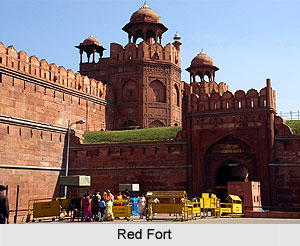 Delhi was the focal centre of rebellion during the ongoing months of 1857. After rampaging various other places in the country, the native crusaders had but one place left to conquer, Delhi. The country was reeling under bloodbath. The English troops were falling short in open confrontations with the intimidating natives. Lord Canning had despatched urgently several brigadiers and generals for the cause of Delhi. Fortifications had started off in right earnest, beginning from the Red Fort. Several other nooks of the Imperial City had been reinforced. A surprise struggle had already ensued after the plannings. After a long night`s endeavour, the English had obtained partial success.
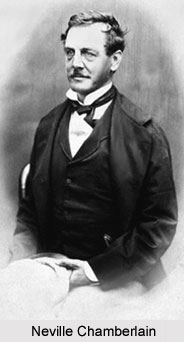 On the 24th June, Neville Chamberlain came from Punjab to assume the post of Adjutant-General. Reinforcements, too, sufficient to raise the effective strength of the British force to 6,600 men, poured in from Punjab. But the rebels likewise had their share of fortune. On the 1st and 2nd of July, the Bareli (present day Bareilly, Uttar Pradesh) brigade, comprising four sipahi (soldier) regiments of infantry, one of cavalry, a horse-battery, and two post-guns, and commanded by a Subahdar of artillery, Bakht Khan, marched in. Khan was almost at once nominated Commander-in-Chief of the rebel forces in the city. Meanwhile, the arrival of reinforcements within the camp had resurrected the question of assault. Once more the plans had been arranged. Regiments were told off. The date, 3rd of July, had been fixed. Suddenly, the information that the rebels meditated a serious attack on the weakest part of the British position that very day, caused its deferment.
Baird-Smith of the engineers had hurried on from the small detachment he was leading in Roorkee, to take active part in the contemplated assault on the city. The rumour of this had reached him early. This man was destined to take a leading part in the eventual siege of Delhi. Summoned from Roorkee, he arrived at three o`clock on the morning of 3rd July, to find that the assault had been postponed.
Baird-Smith found that, as far as ordnance was concerned, the British force was in a very sticky situation. The heavy guns consisted of two twenty-four-pounders, nine eighteen-pounders, six eight-inch mortars, and three eight-inch howitzers. The rebels, on the other hand, could bring to bear on any point thirty guns and twelve mortars. What was still worse, the English had in store only sufficient shot for heavy guns for one day. The rebels had, on the contrary, almost inexhaustible supplies of the Delhi magazine in their midst. To add to the gravity of the position, the day after his arrival in camp, Barnard was seized with cholera. The disease took his life on the 5th. He was a meticulous man and a brave soldier, and his death was universally lamented. General Reed, who had remained in camp, succeeded to the command.
Before Barnard had been attacked by cholera, Baird-Smith had written to that officer to suggest the advisability of an assault. Smith was keenly alive to the difficulty of carrying on a regular siege with resources in guns and material so obviously inadequate. Barnard expired before the proposal could be considered, and it fell upon Reed to give the necessary decision. Reed neither rejected nor accepted the plan. But he kept it so long `in contemplation ` that the opportunity passed away.
On 9th July, the rebels made another grand attack in force. They despatched the 8th Irregulars, the regiment which had mutinied at Bareli (Bareilly). The 8th were despatched through the right of the British camp, by the rear, and as their uniform was the same as that of the loyal irregular regiment in the camp. They were allowed to pass unchallenged. The consequences of this mistake were equally miserable and glorious. They were miserable because the cavalry picket at the Mound, halfway between the Ridge and the canal, on discovering their error, turned and fled. The artillery was not so. It was commanded by James Hills, one of the most gallant and daring soldiers in the world. Hills ordered out his two guns for action right away. But the rebels were upon him, and he had not time to fire. Then, with the cool courage of a man determined at all cost to stop the foe, he dashed into the midst of the advancing troopers, cutting right and left at them with splendid effect. At last two of them charged him and rolled over his horse. Hills speedily recovered to his feet, just in time to renew the combat with three troopers-two mounted, the third on foot. The first two he cut down. With the third the conflict was desperate. Hills had been shaken by his fall, and was held back by his cloak.
Twice did his pistol missfire. Then he missed a blow at his opponent`s shoulder. The latter wrested his sword from his tired hand. But Hills was equal to the occasion. Closing in with his enemy, he hit him several times with his clenched fist in the face until he fell. Just at the moment Tombs, who had found his way through the enemy, seeing Hills`s danger, shot the trooper dead. It was a magnificent pistol shot, fired at a distance of thirty paces. To reach that point Tombs had cut his way through the enemy, whose advance Hills had checked, but not completely stopped. The danger to them was not over then. It called for the sacrifice of another native trooper to insure perfect safety. But this was only accomplished at the cost to Hills of a sword-cut, which split his skull to the brain.
By this time the whole British camp was roused. After a while the rebel troopers were driven back towards Delhi. A fierce battle had been raging on, meanwhile, in Sabzimandi. This similarly ended in the rebuff of the rebels, but not until 233 men had been killed or wounded on the British side.
Five days later there was another hard-fought encounter. This time the rebels attacked Hindu Rao`s house. Hindu Rao`s house was left empty by its dwellers. Hence it was occupied by the British soldiers, situated to the right of the ridge where the garrison had pitched their tents. A vicious battle raged from eight o`clock in the morning till close upon sunset. Neville Chamberlain, with the 75th, Coke`s Rifles (Punjabis), and Hodson`s Horse, eventually drove back the rebels to the gates of Delhi. But again the loss was severe, amounting to seventeen men killed and 193 wounded, of whom sixteen were officers. Among them was Chamberlain, whose left arm was broken. In the week the battle raged, the besiegers had lost twenty-five officers and 400 wounded men.
Meanwhile, Gerald Reed`s health had completely given way. On the 17th, then, he passed over his command to Archdale Wilson. The day following, the rebels made another sortie. But they were forced back by Colonel Jones of the 60th Rifles. The attack had been made, as often before, on the Sabzimandi. To prevent potential attacks in that quarter, the engineers cleared away the houses and walls. These afforded cover to the rebels, and connected the advanced posts with the main pickets on the Ridge. The effect of this was most beneficial. There were no more attacks on the Sabzimandi.
It was the day before this attack, the day, in fact, on which Wilson assumed command, that a report reached Chief Engineer, Baird-Smith. The report spoke about the question whether circumstances did not require the raising of the siege, in consideration of the great losses incurred. It further spoke about the impossibility of taking the place without further reinforcements. The issue would be considered at the next meeting of the General and his staff. Impressed with the unconditional necessity of retaining the grip they now had on Delhi, Smith took the very earliest opportunity of speaking to Wilson on the subject. He pointed out the massive calamities which the raising of the siege would entail. The result of the conversation was to confirm Wilson in his resolution to engage in the siege. To render its success certain, Wilson ordered up a siege-train from Firozpur.
On the 23rd, the enemy made a final attack before the arrival of Nicholson. This time it was directed against Ludlow Castle. The attack was repelled, but the British, pursuing the rebels too closely to the city walls, suffered severely.
On the 7th of August Nicholson arrived in advance of his troops. On 12th, Showers overthrew the rebels from Ludlow Castle, which meanwhile they had managed to occupy. On 14th, Nicholson`s column arrived. On the 25th, he marched with a strong force, to attack the rebels. The rebels had moved from Delhi in great strength to intercept the siege-train. The march took him through marshy ground, interspersed with swamps, and lasted a good twelve hours. At last, close upon sunset, the weary soldiers spotted the rebels. They were composed of the Nimach brigade, occupying two villages protected by guns and covered by deep water, fordable only in one place. The British, however, waded through the ford, which was chest high, under a fire from the guns at the village. Nicholson directed his own attack against this. He sent his other troops against the villages. Addressing his men a few comforting words, he ordered them to lie down. Then the batteries of Tombs and Remmington opened fire. After a few rounds he ordered the men to rise. And he led them through the still marshy ground. Needless to say, they carried the position. At the same time the other troops had driven the rebels from the two villages. The sipahis fought well, but only the Nimach brigade was there. The one from Bareli (Bareilly), which had been ordered to support it, did not come up in time. When they found that they were beaten, the sipahis (soldiers) warmed up their guns and made for the bridge crossing the Najafgarh canal. But Nicholson pursued and caught them. He killed approximately 800 of them, and captured thirteen guns. He then blew up the bridge, and the troops returned the next day to Delhi, taking their spoils with them. Ten days later, 4th September, the siege-guns arrived. The remainder of the 60th Rifles arrived on the 6th, and the Jammu contingent, led by Richard Lawrence, on the 8th.
The arrival of reinforcements had increased the number of troops at the disposal of General Wilson to 8748 men, of whom 3317 were British. Barnard had directed the `coup-de-main` of 12th June, when his entire force barely exceeded half that number. Yet, up to 20th August, Wilson could with difficulty make up his mind to gamble the assault, which, if successful, would break the back of the Mutiny. On that date he wrote to Baird-Smith a letter, to be subsequently forwarded to the Governor-General. In the letter he freely stated the reasons on which his hesitation was based, and asked the officer to return the letter. The answer given by Baird-Smith was emphatic, clear, and decided. He argued that the rebels are more numerous than the assailants, that their position is formidable, their resources are unlimited, their defences strong. But in war somethings must be risked to achieve success. In his opinion, the risk of a rebuff, in an attack well contrived and well organised, was less than the risk of further delay. Punjab, he argued, on the authority of Sir John Lawrence, stripped of its European troops, was fluttering in the balance. To wait for reinforcements would involve inaction, at a time when action alone, in all human probability, could secure the continued compliance of the Sikhs. And if the Sikhs were to rise, the danger would extend to the very camp in which Wilson commanded.
These reasons, clear, pointed, logical dawned upon Wilson. Though he still believed that the results of the proposed operations would `be thrown on a hazard of a die,` he was willing, on the advice of the Chief Engineer, to try that hazard. Baird-Smith was solely responsible then, for the decision to assault the rebellious city. He at once, in alignment with his second in command, Alexander Taylor, drew up the plan of assault.
It was necessary that the attack should be directed against the northern face-the face represented by the Mori, Kashmir, and Water bastions, and the curtain wall connecting them. Fortunately the negligence of the rebels allowed the besiegers to concentrate on the curtain wall a fire sufficient to crush that of the defence. Thus, they could effect breaches through which the infantry could be launched. The plan of the Chief Engineer, then, was to crush the fire of the Mori bastion. That fire silenced the advance on the British left, which was covered by the river, would be secure. And there the assault would be precisely delivered. The evening of the 7th was fixed for the commencement of the tracing of the assaulting batteries.
That day Wilson issued a rousing order to the troops. That evening the engineers began their work. For No. 1 battery a site had been selected below the Ridge, in the open plain, within 700 yards of the Mori bastion. This battery was divided into two sections. The right one was to be commanded by Major Brind, intended to silence the Mori bastion. The left one was to be commanded by Major Kaye, designed to keep down the fire from the Kashmir bastion until the order for delivering the assault should be given.
Effects of Siege of Delhi
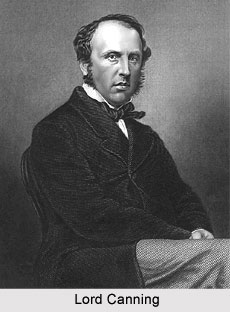 Delhi was regarded a city of the Rajas and everything that was imperial. Since the times of the Mughal dynasty, it had been a point of interest and assaults. After the advent of the British East India Company, numerous princely states had bore the brunt of such ruthless attacks. Delhi however remained unoccupied. A storming had already been experimented by the British. It went off, without much help. Yet again, attempts were in the pipeline. The severe fights and struggles had all started with the introduction of the Enfield Rifle and a certain type of greased cartridge. Lord Canning had arranged all possible kinds of reinforcements, troops, batteries of armed forces for the British victory. Yet again, the generals had been defeated in their machinated endeavours. The Governor-General had despatched several generals and brigadiers, comprising General Wilson, engineer Baird-Smith, Lieutenant Nicholson, Brigadier William Jones, Lieutenant-Colonel Greathed, Colonel Campbell, Major Reid, and the likes. In consultation with all the officers in the battalions, four columns of batteries were set up for the ensuing struggle. There was an additional fifth column, meant to assist the first column in times of emergency. The armed swarm was waiting in hiding to ambush the insurrectionists.
The first three columns were almost gaining success in their feat, waiting for the fourth to usher in the good news. The fourth column, under Major Reid had suffered mortal losses in the form of Reid himself getting knocked down senseless. Captain Lawrence had hugely been incapable to take on Reid`s regiment. They could not secure the breach near the Kashmeri gate.
The first and second columns had been victorious inside the breach. Nicholson at once amassed his men on the square of the main-guard. Turning to the right, he pushed on along the foot of the walls towards the Lahore gate. There, a pesky fire was being kept up on his men. Beyond the Kabul gate, which had been occupied by the second column, Nicholson hoped to feel the support of fourth column. But, the attack of that column had failed. It was this failure which rendered his advance difficult and dangerous.
To reach the Lahore gate Nicholson had to push on under the fire of the Burn bastion. Then, he had to force his way through a long lane, every building in which was manned by sharpshooters. The further end of it was commanded by two brass guns. One was stationed approximately 160 yards from its opening, pointed in the direction of the advance, the other about 100 yards in rear of and commanding it. Behind both was a bullet-proof screen. Projecting from the wall was the bastion commanding the Lahore gate, armed with heavy pieces, and capable of holding a thousand men.
In his advance Nicholson had been exposed to a continuous fire. But he had a position at the Kabul gate which was strong enough for him to maintain until the movements of the other columns should facilitate his advance. But Nicholson, though urged to halt there, was so fully impressed with the necessity of taking the fullest advantage of the so far successful assault, that he resolved at all costs to push on to the Lahore gate. He felt this the more because he was convinced that the rebuff of the fourth column had rehabilitated the hopes of an enemy peculiarly liable to be affected by success. He directed, then, his men to storm the narrow lane.
His men responded gallantly. With a rush they cleared the space up to the first brass gun, and captured it. Then they dashed on towards the second. But within ten yards of this they were attacked by a fire of grapeshots and musketry, by volleys of stones and round-shot. These were thrown by hand, so severe that they recoiled under the dreadful and incessant shower. Lieutenant Butler infiltrated beyond the second gun, up to the bulletproof screen. How he escaped with his life was a miracle, but he rejoined his men.
The men had recoiled only to form again, and once more rush forward. Again did they capture the first gun. This time Greville (1st Fusiliers) had spiked, and again did they dash at the second. The leader of the attack, Jacobs, of the 1st Fusiliers, was mortally wounded. Wemyss, Greville, Caulfield, Speke, Woodcock, Butler, all attached to the same regiment, were in turn struck down. The men, greatly discouraged by the fall of their officers, were falling back a second time. When, an inspiring voice called upon them to follow where their general led. It was the clear-sounding voice of Nicholson. But the broken order could not be restored in a moment. Before a sufficient number of men could respond to the inspiring cry, a bullet pierced the body of the illustrious leader.
The wound was mortal, and Nicholson knew it to be so. But neither the pain he suffered, nor the consciousness of approaching death, could quell the passion of his gallant spirit. He still called upon his men to go on. But he was asking that which had now turned impossible. Nicholson had no guns, and already eight officers and fifty men had fallen in the attempt. There was nothing for it but to retire towards the Kabul gate. This was done, and Jones assumed the command of the two columns.
The third column, meanwhile, was in front of the Jama Masjid, without artillery to beat down its defences. Campbell maintained this position for an hour and a half, exposed to an intense fire of grapeshots, musketry, and canister. The failure of the attack of the fourth column was fatal to a longer maintenance of that position. The Lahore gate being in the hands of the rebels, Campbell was liable to be cut off. He fell back, then, in a soldierly manner, on the Begam Bagh. He resolved to hold it till he could communicate with headquarters. An hour and a half later, however, learning that the fourth column had failed, and that the first and second had been unable to advance beyond the Kabul gate, he fell back on the church. There, he disposed his men for the night in it and in the houses in the vicinity.
Scott`s field-battery which had entered the city by the Kashmeri gate, had during all this time rendered excellent service to the several columns. But, this was arrived at, at a large expenditure of life.
Meanwhile, the failure of the fourth column had become known to the English leaders outside the city. Wilson had directed Hope Grant to move down, with 200 of the 9th Lancers and 400 Sikh cavalry, to cover the Sabzimandi defences and Hindu Rao`s house, laid open to attack. At the same time Tombs`s battery, under Grant`s order, opened fire on the advancing rebels. So far as the checking of the rebels` advance was concerned, these measures were successful. But Tombs`s fire provoked a reply from the heavy guns on the Burn bastion. This fire, at a distance of 500 yards, made terrible openings in the ranks of the cavalry. Six officers and forty-two men were struck down. Rosser of the Carabineers fell with a bullet through his forehead. Nine officers of the Lancers had their horses shot under them. But for two long hours they stood to incur fire.
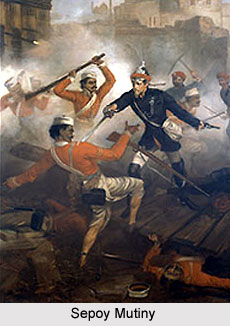 Tomb`s battery felt that by drawing upon themselves the attention of the rebels they were serving the common cause. The battery of the gallant Bourchier vainly came up to aid them with its fire. The blazing from the Burn bastion still continued. Nor did they move until information came that the stormers had established their positions for the night. They then fell back on Ludlow Castle. The battery was conscious that they had not only prevented the disastrous results which the defeat of the fourth column might have entailed, but also that they had occupied the rebels` attention with considerable advantage to the central operations. The reserve column, meanwhile, led by Longfield, had followed the third column through the Kashmeri gate, and cleared the college gardens. One portion of the column had occupied those gardens, the other held the Water bastion, the Kashmir gate, Skinner`s house, and another large building.
Thus ended the first day`s operations, with startling effects. The entire space inside the city, from the Water bastion to the Kabul gate, was held by the first, second, third, and fifth columns. The fourth column, outside the city, held the batteries behind Hindu Rao`s house. It was clear, then, that within the city a solid base had been obtained for further development. But the cost had been massive. In the day`s fight the assaulters had lost sixty-six officers and 1104 men killed and wounded. Four out of the five assaulting columns were within the walls. But the position they held was stretched, and their right flank was very open to attack. The rebels were still strong in numbers, in guns, and in position. They, too, had had success as well as reverses. They had no need to abandon hope of ultimate victory.
To the British general the result of the day`s work was discouraging. The plan which had been so urgently pressed upon him had failed to secure success. His columns had been stopped and driven back. Instead of the whole city, his troops held simply a short line of rampart. Baird-Smith and Neville Chamberlain`s appealing were directed in the same sense to the General. The opinions of these two strong men sufficed to decide Wilson.
The 15th was utilised by the troops within the city in securing the positions gained, in preparing the means to shell the city, in the restoration of order, and in putting a stop to indiscriminate drinking and pillaging. The 16th gave further evidence of the marked effect on the rebel spirits of the British lodgment. In the early morning of that day they evacuated Kishanganj, from where, on the 14th, they had forced back the fourth column. The British then stormed the great magazine, the scene of the heroic action of Willoughby and his comrades on 1lth May. It was found to be full of guns, howitzers, and ammunition. The rebels, made a vain desperate attempt to recover it in the afternoon. They were rebuffed with loss.
Bit by bit the important positions in the city were wrested from the rebels. On the 17th and 18th, the bank, Major Abbott`s house, and the house of Khan Muhammad Khan, were occupied. The besiegers` posts were brought close to the Chandni Chawk and the palace. On the evening of the 18th the position occupied by the besiegers was as follows: their front was marked by the line of the canal. On the banks of the canal, light guns were posted at the main junction of the streets, and sandbag batteries erected. The right and left, indicated respectively by the Kabul gate and the magazine, were communicated by a line of posts. The rear was secure against attack. It had been attempted, during that day to extend the right, to the Lahore gate. But the attack, directed by Greathed of the 8th, had failed.
It had become absolutely necessary to take that gate, now twice attempted. The Burn bastion, which commanded it, was no longer supported, as on the 14th, by rebels in Kishanganj and Taliwari. The General then authorised Alexander Taylor of the Engineers to work his way, on the morning of the 19th, to the Burn bastion. While Taylor, with a party of men, was engaged in this somewhat slow process. Brigadier William Jones held himself in eagerness to proceed, with 500 men from the 8th, 75th, and Sikh regiments, to attack the Lahore gate. This time success crowned the joint efforts. Taylor worked his way through the buildings to the top of a house commanding the bastion. Then Jones advanced, and finding it abandoned, took up his post there for the night. Early the following morning he launched his troops from it, and carried the Lahore gate with a rush. After that success, dividing his force, he detached one portion up the Chandni Chawk to capture the Jama Masjid, the other to gain the Ajmer gate. Major Brind arrived opportunely with reinforcements to command in the carrying out of the first of these operations. He entered the mosque without difficulty. Simultaneously Jones occupied the Ajmer gate.
Brind, when he had carried the Jama Masjid, had noticed that the one thing wanting to guarantee complete success was to storm the palace at once. He sent for and obtained permission to attempt it. His success was complete. The famous fort-palace of Shah Jahan was not even defended. The gates were blown in, and British troops entered. The same afternoon Wilson took up his quarters in the Imperial palace.
Delhi was now virtually won. But there still remained in the vicinity, even in the city itself, thousands of armed rebels, ready to take advantage of the slightest slackness on the part of the victors. So huge had been the casualties that Wilson had merely 3000 men fit for service. From these the guards of the several posts had to be provided. The King of Delhi was still at large, a rallying point to the rebellious. It seemed to the General essential that a determined effort should be made to capture his person.
While events with the King and his lineage were occurring outside the walls, Wilson had, commissioned Brind to clear the city of the murderers and incendiaries. Such insurrectionists still lurked within it, to the number of many thousands. Brind accomplished this task with the completeness which was necessary.
On the 21st, the restoration of regular rule was announced in the appointment of Colonel Burn to be Governor of the city. The day following John Nicholson died from the effects of the wounds he had received on the 14th. He had lingered in agony for eight days. But, he had lived long enough to witness the absolute success of the plans to the attempting and accomplishing of which he had so much contributed. He died with the reputation of being the most successful administrator, the greatest soldier, and the most perfect master of men in India.
The siege of Delhi was indeed calculated to bring out all the great qualities which distinguish the British soldier. Vying with him, alike in his endurance of hardships, his eagerness for enterprise, were the Gurkhas of the Himalayas, the frontier men of the Guides, the hardy Baluchis, the daring Sikhs, the resolute Pathans. Amongst the most remarkable to occupy centre stage were the names of Baird-Smith, of Nicholson, of Barnard, of Neville Chamberlain, of Charles Reid, of James Brind, of Frederick Roberts, of Hope Grant, of John Jones, of Edwin Johnson, of Alec Taylor, of Tait, of Lockhart, of Turnbull, of Seaton, of Hodson, of Dighton Probyn, of Daly, of Tombs, of Renny, of Jacob, of John Coke, of Speke, of Greville, of Watson, of Medley, of James Hills, of Quintin Battye, of Rosser, of Aikman, of Salkeld, of Home.