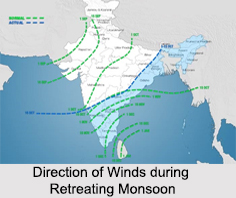
 Indian gets the monsoon by the south-west winds, which lasts from June to September. During September, north-east winds start to gain strength, which then tries to push out the south-west monsoon wind. This action of winds create thunder storms, when the monsoon is about to leave. This entire process is called Retreating Monsoon. The months of October and November are generally known for Retreating Monsoons.
Temperature during Retreating Monsoon
During the Retreating Monsoon season clouds disappear and the sky also gets clear. The temperature during day time starts to fall steeply. Daily range of temperature increases due to the lack of cloud cover.
Pressure and Winds during Retreating Monsoon
Because of the weakness of the monsoon during this time, it starts to move towards south as a result of which the pressure gradient becomes low. The direction of winds in most of the portion of the country is influenced by the local pressure conditions.
Cyclones during Retreating Monsoon
During the Retreating Monsoon, the most severe tropical cyclones are originated mainly from the Bay of Bengal. The cyclones get their highest frequency in October month and in the first half of November. Then, more cyclones are originated in the Arabian Sea as well. The storms from Bay of Bengal generally move in the west or north-west direction; many of them later move towards the north-east portion as well. Almost 55 percent of the Bay storm either cross or affect the Indian coast.
Precipitation during Retreating Monsoon
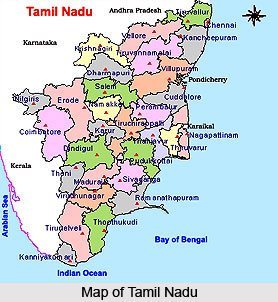
Humidity and cloud covers get much less during the Retreating Monsoon as a result of which, most of the parts of the country do not get enough rainfall. October and November are the rainy seasons in Tamil Nadu and the adjoining areas of Andhra Pradesh to the south portion of the Krishna Delta. This time span is the secondary rainy period of Kerala. The Retreating Monsoon while passing over the Bay of Bengal absorbs all the moisture, which causes this rainfall.
Areas of High Rainfall during Retreating Monsoon
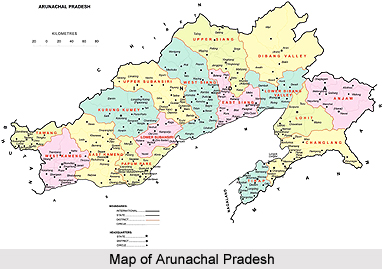
There are two categories of the areas of high rainfall- area with very high rainfall and high rainfall. The areas, which come under the first category, get an annual rainfall of 200 cm and above. The areas are western side of Western Ghats Mountain ranges (200-400 cm), Assam, Nagaland, Meghalaya, Mizoram, Arunachal Pradesh, Sikkim, parts of Manipur, Tripura and north-eastern tip of West Bengal. Generally they receive an annual rainfall of 200 cm with some isolated pockets receiving 400 cm of rainfall. Areas with an annual rainfall of 100-200 cm fall under the second category. The areas are eastern slopes of the Western Ghats, major part of the northern plain, Odisha, Madhya Pradesh, Andhra Pradesh and Tamil Nadu.
Areas of Low Rainfall during Retreating Monsoon
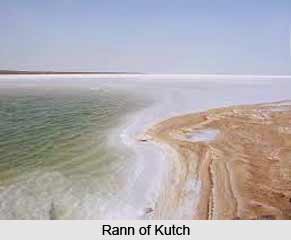
This area is also divided into two groups- area with low rainfall and area with very low rainfall. Areas of low rainfall get an annual rainfall of 50-100 cm and the areas are large parts of Gujarat, Maharashtra, western side of Madhya Pradesh, Andhra Pradesh, Karnataka, eastern Rajasthan, Punjab, Haryana and some parts of Uttar Pradesh. Desert and semi-desert are the areas of very low rainfall with 50 cm of annual rainfall. The areas of this category are western Rajasthan, Kachchh and most of Ladakh region of Jammu and Kashmir.