 History of Indian cinema dated back to the year 1896. The Lumiere Brothers first demonstrated the art of cinema to the sub continent. Bombay was the first Indian city that screened Cinematography, six short films by the Lumiere Brothers. The success of these films led to the screening of more foreign films, for instance, "Vitagraph" by James B. Stewart and "Moto-Photoscope" by Ted Hughes. In other words introduction of cinema in India took place with the aid of the colonisers. The Indian film industry is the oldest and the largest in the world with over 1200 movies released annually.
Transformation from Silent Films to Talkies
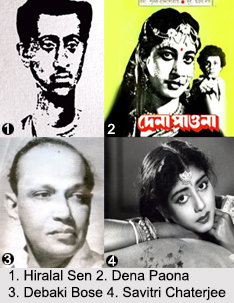
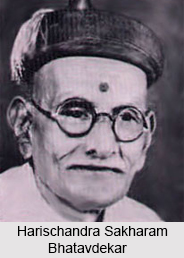
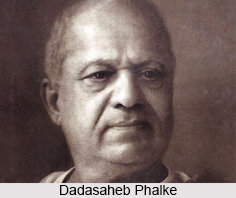
A kaleidoscopic view of History of Indian Cinema includes the pioneering efforts of Save Dada (Harischandra Sakharam Bhatavdekar). He made two short films as early as in 1897. Initial short films in India were directed by Hiralal Sen, starting with "Flower of Persia" (1898). In 1900 the entire Indian entertainment sector underwent huge changes and the emergence of Dadasaheb Phalke took Indian cinema to new heights. Thus, breaking the path of the silent era in films, "Raja Harishchandra", was released in 1913. During this time the main sources for Indian films were the mythological texts. The rapid growth of the Indian cinema led to the end of the silent era and ushered in the era of the talkies. The latter introduced the Indian cinema in a completely new way to the audiences. Now, one could hear the actors and actresses talking, laughing, singing and crying. Initially films were made in Hindi, Tamil, Bengali and Telugu and these films proved to be phenomenal successes.
 Revolution of Indian Cinema
1930s and 1940s witnessed the rise of film personalities, such as, Debaki Bose, Chetan Anand, S.S. Vasan, Nitin Bose and others. Their contributions helped the Indian cinema to grow further. By this time apart from Bombay (Mumbai), the film industry shaped up well in down south too. The Tamil, Telugu and Kannada film industries were making indigenous films as well. By late 1940s films in India were made in various languages but the religious influence was predominant. With struggle for independence the entire scenario altered. Indian cinema then saw films based on the erstwhile contemporary social issues. Movies no longer were limited to the periphery of entertainment; they were now potent instruments to educate the masses as well.
Indian Cinema during 1950s
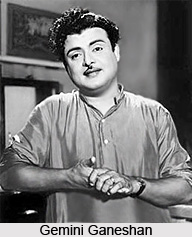
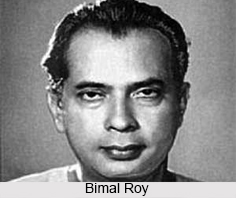
The golden period in the History of Indian Cinema is attributed to the 1950s. Guru Dutt, Mehboob Khan, Raj Kapoor, Balraj Sahani, Nargis, Bimal Roy, Meena Kumari, Madhubala, Dilip Kumar graced the screens. In south India, esteemed actors like Rajkumar, Gemini Ganesan, NT Rama Rao and several other actors and actresses entertained the audiences. Besides them, numerous singers, composers, scriptwriters, cameramen and other technicians lend a helping hand in making some of the most outstanding films that carved their own niches in the History of Indian Cinema.
 Formation of Art Films in India
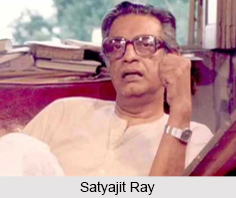
In Bombay while the magic of Guru Dutt and Bimal Roy was preponderant, then Indian cinema moved one step further with the release of K. Asif`s "Mughal-e-Azam" in 1960. A trail of romantic movies followed all over India. While the Indian commercial cinema enjoyed popularity amidst the movie goers, Indian art cinema did not go unnoticed. Adoor Gopalakrishnan, Ritwik Ghatak, Aravindan, Satyajit Ray, Shaji Karun and several other art film directors were making movies that took India to international fame and glory.
Indian Cinema during 1970s
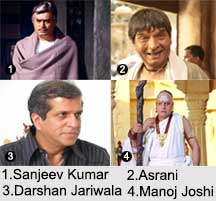
By 1970s Indian cinema enjoyed the histrionics of superstars like Rajesh Khanna, Sanjeev Kumar, Waheeda Rehman, Asha Parekh, Tanuja and others. This was truly the red letter year for Hindi cinema as Ramesh Sippy`s "Sholay" proved to be an iconoclast and gave to Indian cinema its new superstar Amitabh Bachchan. The years 1970 to 1948 are called the Bachchan era in the History of Indian Cinema.
Indian Cinema during 1980s
At one hand Hindi cinema was growing in leaps and bounds and on the other the regional films were making their presence felt too. A number of well established Hindi film stars who became a part of the star system in India actually began their career with the Indian regional films. 1980s saw the rise of several women directors, such as, Aparna Sen, Prema Karnath, Meera Nair and others. It was also the year when Rekha wooed the audiences with her stunning performance in "Umrao Jaan". The regional films like Malayalam, Kannada, Telugu, Bengali and others produced a number of romantic films. Renowned film personalities like Balachander, I.V. Sasi, Balu Mahendra, Mani Ratnam, Ram Gopal Varma and others made their marks as well.
 Indian Cinema"s Meeting with Modern Technology
With romantic films at the helm the Indian cinema ushered into 1990s. A mixed genre was witnessed during this time. Romantic, thriller, actions and comic movies were made. Gradually the face of Indian cinema was undergoing changes once again. The audiences, too, were getting weary of similar storylines. Hence the contemporary Indian cinema, keeping pace with time and technology, witnessed "Dolby Digital Sound" effects, advanced special effects, choreography, international appeal, further investments from corporate sectors along with finer scripts and performances. The aesthetic appeal of cinema became important for the filmmakers.
Stars like Shahrukh Khan, Rajinikanth, Madhuri Dixit, Aamir Khan, Chiranjeevi, Juhi Chawla, Hrithik Roshan, and others explored all possible techniques to enrich Indian cinema with their performances. Even in contemporary India cinema a troupe of new faces came. The post generation of the existing stars are making Indian cinema rich in its true sense using their youthful vivacity and talent. Films, such as, "Gandhi", "Terrorist", "Amu", "Phir Milenge", "Diksha", "Tare Zamin Par", "Pipli live", are intended to educate the mass. Films such as "Sarkar", "Rajneeti", "Page 3", and "Fashion" reflect the political and social scenarios of contemporary society. As years fly away Indian cinema betters itself with more number of films making it to the golden pages of its history.