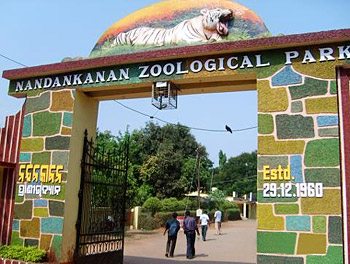
 The Nandankanan Zoological Park is a zoo and Botanical garden, which is spread across 990 acres of land in Bhubaneswar, in the Indian state of Orissa. Nandankanan Zoo was opened to the general public in the year 1979. Nandankanan became the first ever Indian Zoo to link with World Association of Zoos and Aquariums in the year 2009. The Nandankanan Zoological Park, which means Garden of Heaven, also consists of a Botanical Garden and is also partly a sanctuary. The Zoo is situated in the Chandaka forest and comprises of the Kanjia Lake which is around 134 acres. Annually, around 2 million tourists visit Nandankanan Zoological Park.
History of Nandankanan
The zoo was initially situated at Ghatikia close to Khandagiri and Udayagiri caves after a decision taken by Forest officials in 1960, to create a Zoo in Orissa. Although there were several problems initially by the State Finance Department, various small animals were captured by the forest officials. The zoo seemed to pose water problems in the area in the future, thus the present location, near Kanjia Lake was selected. The lake was developed for amusement and recreation also. Nandankanan Biological Park was officially launched and inaugurated December 29th, 1960. The Indian Minister of Food and Agriculture of the time inaugurated the zoo. Further is 1963, a botanical garden was also established. In 1964, more precious animals were transported to the vicinity, like Tiger, that came from the Alipore Zoo in Kolkata, African Lions, Puma and Mugger Crocodiles. In the year 1981 the zoological garden was renamed as Nandankanan Zoological Park.
Animals and Enclosures in Nandankanan
Nandankanan houses around 1660 animals from 120 species, including 42 species of mammals, 54 species of birds, and 24 species of reptiles. In the fiscal year 2008-2009, death rate of animals was lowest in India, at 3.1% per year. Nandankanan is renowned for consisting White Tiger, which supposedly it has produced. Deepak and Ganga, average tawny tigers, gave birth to the first litter of white tigers in the 1980. Eventually, more litters of white tigers were transported to other domestic and international zoos. Nandankanan now houses 34 white tigers.
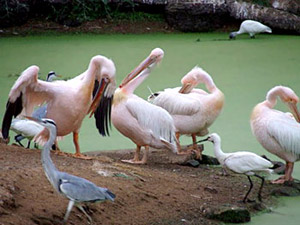 Other than the white tigers, Nandankanan also contains several endangered species like Asiatic Lion, Sangal Lion, Tailed Macaque, Indian Crocodilians, Mouse Deer, Indian Pangolin, Countless Birds, Reptiles and Marine Life. There is also a Reptile Park in the premise, whose entrance is fortified by a statuette of Tyrannosaurus Rex. This Reptile Park has several species of Crocodiles, Lizards, Turtles and Snakes.
Programmes at Nandankanan
Nandankanan Zoological Park has an excellent repute around the world for its various Breeding programmes. The zoo has fruitfully bred White Tigers, Black Panthers and Gharials in captivity. The first white tigers that were born in the zoo were three cubs; although their parents, Deepak and Ganga were normal tigers. These white tigers are referred to as the Orissa strain. Three Crocodilian species have also been bred in captivity at the Nandankanan Zoo. Nandankanan was also among the first Indian zoos to effectively breed Pangolins.
In order to generate funding for better maintenance of animals and to spread general awareness, Nandankanan initiated Adopt-an-Animal programme in the year 2008. The citizens who adopted animals receive a certificate and free entry in to the zoo premises. Moreover, the names of the adopters are exhibited at the animal`s enclosure, and are also mentioned in the annual report of the zoo. Nandankanan Zoological Park was the first zoo to receive tax exemption under section 80G of the Income Tax Act.
The Funds raised by this the program are utilised to support the maintenance activities of all the residents by supplying quality nutritional food, proper equipment, enclosure upgrades, medical care and biodiversity enrichment.
Nearly 67 kinds of mammals, 18 varieties of reptiles and 81 species of birds live in the forest. It is the only forest where one can find the animals in the lap of nature. Nearly four hundred and twenty four species of plants of eighty seven families are found here. The Park plays a pivotal role in saving species from extinction and also in conservation education, awareness, and scientific study for the benefit of the animals.