The medieval temples of India display varied architectural styles. The religious places and temples built at that time were symbolic of the rulers ruling during that era. Wide-ranging in architectural style, the medieval temples offer a glance into the conglomerate society that shaped India. The structural designs of the medieval temples are a blend of foreign and Indian styles.
Architecture of Medieval Indian Temple
There are three stages in the development in the architecture of the medieval Indian temple. Those are the distinct Identity, the cultural synthesis and the stylistic digression.
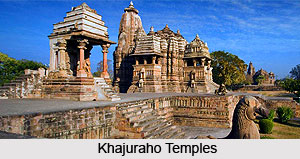
One of the most prominent Central Indian temples is the Devi Jagadamba temple in Madhya Pradesh. This is one of the most erotic shrines situated in Khajuraho. It lies in close proximity to the Kandariya Mahadeva Temple. The temple contains a striking image of Goddess Parvati, wife of Lord Shiva. Firstly the temple was in the honour of Lord Vishnu. Decorated images of Lord Vishnu are seen in the sections of the temple. Worth mentioning is the striking mandapam which is covered by a pyramidal roof on the top. The most-discussed images of mithuna and sensuously made figures of stone are there in the Jagadamba temple.
The Golden Temple of Amritsar is another example of medieval temple of North India. This gurudwara is constructed with white marble overlaid with gold leaf.
In the Banaskantha district of Gujarat, one will come across Ambaji temple, one of the most popular temples in West India. The deity of this temple is the Goddess Ambe Mata. This temple is also one of the famous Shakti Peethas in India. The important characteristic of this shrine is that there is no idol of the goddess, a yantra of marble engraved at a place is worshipped.
Ossian is situated at the boundary of the Thar Desert, about 65 kms North-West of Jodhpur, Rajasthan. Ossian, the once affluent city, possesses more than 100 Jain and Hindu temples of the medieval age. It is said that the town was established by a Rajput prince, Utpaladeva of the Pratihara Empire. It was then recognized as Ukesha or Upkeshapur. The Ossian temples are amongst the most primitive of all temples of Rajasthan of the medieval era.
 On the other hand, one of the most renowned temples of eastern India is the Jagannath temple; Puri. The architecture of this temple comprises Meghnad Prachir, horse gate, lion gate, tiger gate and elephant gate.
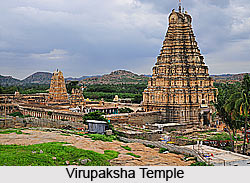
Amongst the South Indian temples of the medieval era, Vittala Temple is well known. This temple is the most beautiful architectural attraction of Hampi. The temple was constructed in 15th century AD. The other temples of the medieval era are Virupaksha Temple or Pampapathi temple in Hampi, Hatimura Temple in Nagaon, Sukresvara Temple in Guwahati, Sri Digambar Jain Lal Mandir in New Delhi, Ettumanoor Temple, Kottayam, Kerala, Rudranath Temple, Chandi Devi Temple in Haridwar and Siddhivinayak Temple in Mumbai.
Apart from the Hindu temples, there are mosques in the Medieval India. One of the notable Muslim places of worship in India is the Jama Masjid. This is the largest among the mosques in India. Jama Masjid was constructed between 1644 and 1658 at the time of Shah Jahan. Made of white marble and sand stone, the mosque possesses three gateways, two minarets of 40m height and four towers.
Experimentation in the construction of religious architecture was first started with the medieval temples in India. From ancient times, India is considered to be the land of spiritualism where people can find different kinds of temples erected with the use of exclusive architecture of that period. The medieval temples of India thus have their uniqueness in architectural design which forms a place of worship and immense tourist attraction.