
Utpaladeva (925-75 CE) was an influential philosopher, theologian who composed the Ishvara-pratyabhijna-karika, or `Verses on the Recognition of the Lord` and the `Shivastotravali`. He was the son of Udayakar. His principal protagonists in his books are Buddhists who belong to the Dignaga and Dharmakirti tradition, whose theory of perceptual process was highly translated into absolute idealism. Utpaladeva rejected the notion of a mind-independent realm of particulars.
Utpaladeva thinks that experience of a structured reality requires that both subjects and objects belong to a single field of experience. Since experience requires a stable subject, there has been a single transcendental conscious substrate of the field of experience. He integrates their categories within a theory of absolute idealism. According to this theory the cosmos is manifested by a single, transcendental conscious dynamism. Categories such as individual substance, action, relation, natural kinds, quality, space, time and the cause-effect relation are objective realities, because they are manifestations projected by the transcendental consciousness.
Through its innate powers of unregulated will, vast knowledge and action, the supreme creates all subjects, objects and occasions of experience in a structured framework of time and space. The dynamic and utterly independent Lord Shiva`s consciousness is modelled on one`s experience of consciousness which oscillates between the illumination of objectivity and reflective awareness. This is influenced by the grammarian Bhartrihari`s principle that without linguistic expression there can be no awareness. Utpaladeva emphasises the liberty of individual subjective awareness which is inspired by the compelling visions produced in meditation. For him it is a narrow-minded type of awareness.
His poems give expression to the philosophical doctrines of Kashmir Shaivism known as Trika philosophy in a devotional form. His philosophy is deep as that of Adi Sankaracharya. He uses a symbolic language which appeals to all sections of people.
The available works of Utpaladevacharya are Pratyabhijnya Karikas and Ajadapromatri-Siddhi.
Utpaladeva`s philosophy is characterised by unique blend of metaphysics, epistemology, linguistic philosophy and religious experience. Utpaladeva through his arguments lead students to the recognition of identity with Lord Shiva.
Utpaladeva
Utpaladeva was a major theorist of the Pratyabhijna School of non-dualistic Kashmiri Shaivism. He was a disciple of Somananda.
Recently updated articles in Religion in India
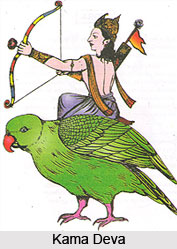
Kusumayudha
Kusumayudha is a name of Kamadeva, the Hindu God of Love. Depicted with a sugarcane bow and flower-tipped arrows, he represents attraction and longing...

Bhoyar Caste
Bhoyar Caste is largely found in the Central Provinces of the country. Traditional occupation of Bhoyars is agriculture. They are good cultivators and...

Chasa Caste
Chasa caste is a prominent agrarian community native to Odisha. Traditionally associated with cultivation and farming, Chasas have historically played...
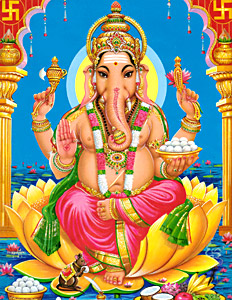
Vigneswara, A Form of Lord Ganesha
Lord Vigneswara is another form of Lord Ganesha or Vinayaka, prominently worshipped as the God of intelligence and good luck in the Indian subcontinen...
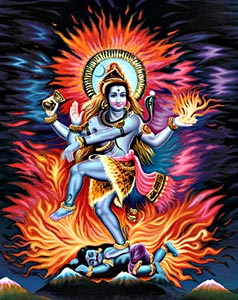
Maheswara
Maheswara, meaning “the Great Lord,” is a revered name of Lord Shiva in Hindu tradition. It represents Shiva’s supreme authority over creation, preser...
Related articles in Religion in India
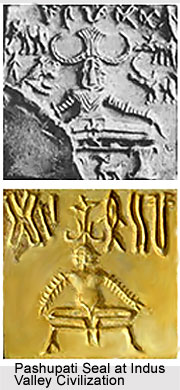
Religion in Indus Valley Civilization
Religion in Indus Valley Civilisation included Hinduism, Buddhism and Jainism. Details about the religion in Indus Valley Civilization have been gathe...
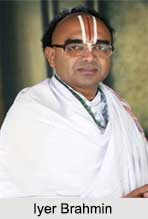
Iyer Brahmin
Iyer Brahmins are originally from Tamil Nadu of South India. They are known for their adherence to Advaita philosophy and Smarta traditions. Tradition...
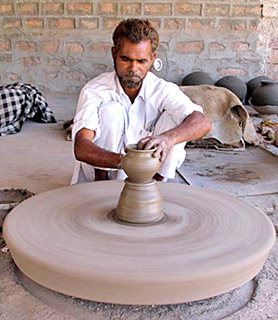
Kumbhakar / Kumhar Caste
Kumbhakar or Kumhar caste is a traditional artisan community in India known for pottery making. Derived from Sanskrit word Kumbhakar, meaning potter,...

Gujjars in Mughal Era
Gujjars in the Mughal era enjoyed great power. Further their power increased with the decline of Aurangzeb, Mughal emperor.
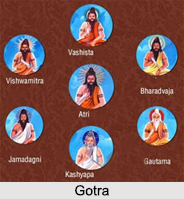
Gotra in Hinduism
In Hinduism, gotra refers to a lineage system tracing descent from ancient sages, primarily through the paternal line. Originating from Vedic traditio...