
 Poppy Seeds are quite commonly used as a culinary ingredient in India, helping create deliciously robust and creamy curries. They are used, whole or ground, as an ingredient in several dishes. They also are pressed to obtain poppy seed oil. Poppy seeds of culinary use have none of the alkaloids that comprise the narcotic.
Poppy Seeds
Poppy Seeds are nutritious oilseeds used as a condiment in cooking. Its flavour is often characterized as walnut-like, fruity and slightly smoky.
Introduction
Poppy Seeds are quite commonly used as a culinary ingredient in India, helping create deliciously robust and creamy curries. They are used, whole or ground, as an ingredient in several dishes. They also are pressed to obtain poppy seed oil. Poppy seeds of culinary use have none of the alkaloids that comprise the narcotic.Etymology of Poppy Seeds
Poppy seeds are oilseeds obtained from poppy plant. The botanical name of the plant is "Papaver somniferum". It belongs to the "Papaveraceae" family. While the poppy plant is also known to be the source of opium, the seeds that are extracted from the pods are completely harmless. It is known as "Khus Khus" in Hindi, "Gasagasalu" in Telugu, "Kasa Kasa" in Tamil, "Kas Kas"in Malayalam, "Gasegase" in Kannada, "Posto" in Bengali and "Khush Khush" in Punjabi. The poppy seeds are consumed extensively in West Bengal, Andhra Pradesh and Tamil Nadu.
Types of Poppy Seeds
 There are different varieties of poppy seeds. Some of the popular types are:
• Blue poppy seeds - Also called European poppy seeds as they are mostly seen on Western breads and in confectionery.
• White poppy seeds - Also called Indian or Asian poppy seeds, they are featured in the respective cuisines.
• Oriental poppy seeds - Also called opium poppy, this one yields opium and is grown for commercial purposes.
Poppy Seed Oil
 Poppy Seed Oil is an edible oil from poppy seeds. It has smooth, subtle flavors that also work well as a condiment. It is a non-yellowing drying oil forming a hard and lustrous layer. The oil is rendered colourless by exposure to the sun. It dries much slower and more uniformly than linseed oil.
Poppy seeds contain up to 50% of edible oil, which is extracted by either cold or hot expression. It has Iodine value of 132-142 and Saponification value of 188-196. In India, the oil is generally extracted by cold pressing the seed in small presses in homes or small establishments (oil yield about 20%). Raw cold-pressed oil is pale to golden yellow in colour.
Poppy seeds have long been thought to have health benefits. Ancient Greek athletes often consumed a mixture of poppy seeds, honey and wine for health and strength.
Types of Poppy Seed Oil : Hot pressed oil is largely used in soap making. It may be rendered edible by refining. The oil yield from black and white seed is about the same, but the former is more commonly used for expression of the oil because of its easier cultivation. However, white seeds reported to yield the finest oil. Seeds from the capsules, which have not been scarified for opium, give a higher yield of oil than from those scarified.
Uses : In the 19th century poppy seed oil was used as cooking oil, lamp oil, and varnish, and was used to make paints and soaps. Today, all of these uses continue, and poppy seed oil has additional culinary and pharmaceutical uses.
• In oil painting, it is a popular oil for binding pigment, thinning paint, and varnishing finished paintings.
• Iodized poppy seed oil has several kinds of pharmaceutical uses.
• Prevention of iodine deficiency.
• Poppy seed oil had long been used as a carrier to treat tumors.
• With their abundance of carbohydrates and calcium, organic poppy seeds are considered a good source of energy.
• Raw poppy seed oil is high in essential fatty acids.
• Poppy seed oil is rich in linoleic acid which protects against heart disease and heart attacks and oleic acid that prevents breast cancer.
• The poppy plant has been used for the manufacture of medicines.
• Poppy seeds have no narcotic properties. poor hair and nail quality, and act as a supportive agent for osteoporosis
• heartburn
• muscle spasms and pain in the back of the head by calming the nervous system
• The poppy slows the process of aging.
• Poppies also aid in wound healing, enhance fertility, and support the nervous system.
• The fine poppy aroma has a soothing effect on the mind, and thus can be used as a relief for headaches, overworking, and stress, as well as in massage blends for children.
Poppy seed oil was sometimes added to olive and almond oils as "Adulterant". Poppy seed oil is widely used for culinary purposes. Poppy seed oil has a faint aroma and a pleasant taste. It is free from narcotic properties and is used mixed with olive oil or as salad oil. It has a longer shelf life than other oils and possesses no narcotic effects.
Uses of Poppy Seeds
 Uses of poppy seeds in India are ecstatically governed on the basis of its soulful utilisations in the field of medicine and of course, its more famous counterpart, the cuisine delights. Poppy seeds, though have been notoriously known in history to be a prized possession of envy of the royals, as to who would capture it and own a plantation, has in contemporary times, reached a pan-Indian acceptance. Although it is acknowledged that plantation and farming of poppy seeds are pretty difficult and needs utmost care and nourishing, the plant and its seeds - opium, do yield much agrarian economy for the country. Poppy seed is legendary for its usable properties in much of the indigenous preparations known to the Indian kitchens. Emoting out a rich, numbing aroma, uses of poppy seeds are also acknowledged to be of needs in the aboriginal and home remedial measures in times of both mental and physical distresses.
Uses of poppy seeds find its preliminary element as a classic add-on to buttered egg noodles, fruit salad dressings and fragrant yeast breads. Poppy seeds lend a nutty flavour and texture to cookies, cakes, breads, strudels, pastry crusts and pancake, including even waffle batters. The seeds of the poppy plant are used extensively in and on umpteen food delights such as bagels, bialys, muffins or cakes. The seeds can be crushed to manufacture poppy seed oil, which can vastly be employed in cooking, or as carrier oil for oil-based paints. The primary flavour compound for poppy is 2-pentylfuran.
The seeds themselves consist of extremely low levels of opiates. As a cuisine art for gastronomy, poppy seeds are extensively used in Middle Eastern and Asian cuisine, especially Indian, Mughlai and North West Indian cuisine. In Eastern India, where poppy seeds are grown in plenty, there exists many scrumptious and salivating curries, made from poppy seeds paste. Since they are considered to intrinsically comprise high cooling properties, their usage is thought to alleviate digestive disorders and the husk, when ground with the seeds, is a great purifier for the intestinal system too.
 The poppy seed contains sizeable quantities of calcium. The seed from the herb serves as exceedingly beneficial food for lactating and pregnant mothers, for all its nourishing and nutritious contents. In addition, uses of poppy seeds further gains a supreme position due to also containing a very high percentage of protein, in the form of globulin. This has an amino acid set-up, similar to whole seed protein.
Poppy seed sublimely complements honey spread atop bread, lending a nice contrast of texture. Fried in butter, poppy seed can be supplemented to noodles or pasta. It seasons vegetables and their accompanying sauces, especially asparagus and root vegetables. Sploshed atop coleslaw, the seeds exude out a contrast of both colour and texture. Poppy seeds are used to top creamed potatoes and au gratin dishes and sometimes appear in fish dishes too!
In the East, the white poppy seed is mostly employed in cooking. Chappatis (Indian whole-wheat griddle breads) can contain some amount of it, particular curries and motleys of mixed spice contain a humble proportion of poppy. Its function in curry is in some degrees, to thicken the liquid and affix texture. The whole seeds are used perfectly in chutneys. The oil extracted from poppy seeds, with the French term as oillette, is used for cuisine purposes and is an adequate substitute for olive oil. The European poppy variety, Papaver rhoeas, is used to prepare a syrup, similar to that of rose hips, which is occasionally used in soups. Known to be pretty tough to grind, it requires a special kind of tool. These hand-operated grinders are rather common in Austria and Germany, but seldom seen in elsewhere. Poppy seed syrup is earned from the flowers of the corn poppy or rose poppy; it is used in squashes. This variety is also characteristically known as `headache` - so named due to a momentary dizziness caused after smelling it. The Indian version of poppy seed - `maw seed` - serves as a healthy food for the birds.
Besides the already mentioned finger-licking recipes that use poppy seeds to the fullest, the herb variation is also seen in domains of medicinal importance. India serves as the most productive opium producers that is used for medicinal purposes, making poppy-based drugs, such as morphine or codeine, for domestic use or exporting raw poppy materials to other countries. Cough concoctions and syrups are also manufactured from this variety, which is further used as a poultice with chamomile.
Uses of poppy seeds finds itself being involved as an infusion, which is believed to help in times of ear and tooth ache. The seeds, further in its utility principles, in addition to possessing culinary profits, possess appetising and stimulating qualities. The uses and dangers of poppy plant derivatives, such as morphine, heroin and codeine, are much well known and accepted in current times. During the Middle Ages an anaesthetic was produced named `the soporific sponge`, an infusion made of poppy, mandrake, hemlock and ivy, that was decanted over a sponge and held under the patient`s nostrils. Beyond its medicinal utilities, however, none of its forms should be taken for more than three days at a stretch. Being a powerful narcotic, it just might pose chances to induce symptoms of severe addiction.
 One of the best known usages of poppy seeds is as an excellent cure for insomnia, restlessness and sleeplessness. All one needs to do is take a teaspoon full of poppy seed oil every night before retiring for sleep. Alternatively, approximately two tablespoons of milk extracted from poppy seeds can be blended with sugar and had at bedtime, to tempt a cure for insomnia. This is most likely an effective relaxant, but its narcotic properties could also be one concrete reason for it being such a good remedy for sleeplessness.
Yet another condition where poppy seeds come up as an efficient cure is dysentery. Approximately a quarter teaspoon of poppy seeds roasted till brown and then coalesced with honey and taken twice a day effectively alleviates the symptoms of dysentery as well as checks dehydration. In tropical countries, poppy seeds also serve to relieve skin conditions like the dry itch. Mashed to a paste with lime juice, they are an effective remedy for irritating instances of dehydrated scratches. These are just some of a selected of the usages that poppy seeds find in traditional medicine. However, its taste as a condiment is good enough a reason to stock poppy seeds in one`s kitchen cupboard.
Recently updated articles in Food in India
Food in Gupta Period
Food during the Gupta Period reflected the diverse culinary traditions of ancient India. People consumed both vegetarian and non-vegetarian dishes, in...

Mehboob Alam Khan
Mehboob Alam Khan is a renowned culinary historian, chef, and educator dedicated to preserving Hyderabad's rich gastronomic heritage. Celebrated for r...
Assamese Cuisine
Assamese Cuisine is a mixture of different indigenous styles with regional variations and considerable external influences. Assamese use simple and fl...
Tamarind
Tamarind Pulp is the thick pulp of ripe fruit of Tamarind which is commonly used as condiment.
Food in Mauryan Period
Food in Mauryan Period largely includes the food and drinks during 300BC to 75 AD which has been extensively discussed in Arthashastra, rock edicts of...
Related articles in Food in India
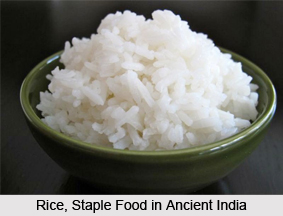
Food in Ancient India
Food in Ancient India has been largely agro based as the society in India in the ancient times was primarily agro based. The food of ancient India ref...
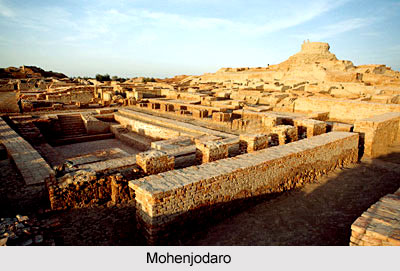
Food in Indus Valley civilization
Food in Indus Valley civilization largely depicts the agrarian culture of ancient India. As this had been one of the earliest civilisations of India,...
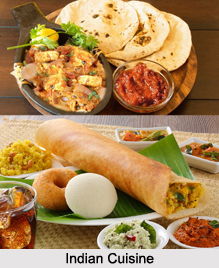
Indian Regional Cuisines
The intriguing style of different cooking style contributes to the diversity of the Indian regional cuisines.
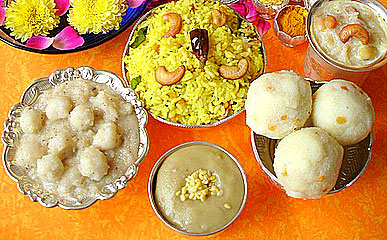
Indian Festive Foods
Indian Festive foods augmenting the richness of Indian festivals, have gained popularity.
Ancient Buddhist Cuisine
Ancient Buddhist Cuisine has been well described in the early Buddhist works in which food has been classified into four categories.