
 Bharatanatyam originated in Tamil Nadu which is also referred to as artistic yoga and Natya yoga. The name Bharatanatyam is derived from the word "Bharata" and, thus, associated with Natyashastra. Though the style of Bharatanatyam is over two thousand years old, the freshness and richness of its essence persists even today. The technique of human movement which Bharatanatyam follows can be traced back to the 5th century A.D. from sculptural evidence. This classical dance has a mesmerizing effect as it uplifts the dancer and the beholder to a higher level of spiritual consciousness. It is a dancing style that comprises of Bhava, Raga, Tala, and Natya which reflect the real meaning of the Bharatanatyam.
Bharatnatyam Dance
Bharatanatyam is a classical Indian dance form renowned for its intricate movements, expressive gestures, and rich storytelling. Rooted in ancient tradition, it combines rhythmic footwork, graceful postures, and emotive facial expressions, captivating audiences with its cultural depth and artistic beauty.
Introduction
Bharatanatyam originated in Tamil Nadu which is also referred to as artistic yoga and Natya yoga. The name Bharatanatyam is derived from the word "Bharata" and, thus, associated with Natyashastra. Though the style of Bharatanatyam is over two thousand years old, the freshness and richness of its essence persists even today. The technique of human movement which Bharatanatyam follows can be traced back to the 5th century A.D. from sculptural evidence. This classical dance has a mesmerizing effect as it uplifts the dancer and the beholder to a higher level of spiritual consciousness. It is a dancing style that comprises of Bhava, Raga, Tala, and Natya which reflect the real meaning of the Bharatanatyam.Etymology of Bharatanatyam
In 1932, during a gathering convened by the Madras Music Academy, E Krishna Iyer and Rukmini Devi Arundale presented a noteworthy proposal aimed at bestowing a heightened level of esteem upon the classical Indian dance form formerly known as Sadiraattam, alternately referred to as Parathaiyar Aattam or Thevarattam. This proposal entailed a renaming of the dance style, thus giving birth to the appellation "Bharatanatyam."
E Krishna Iyer and Rukmini Devi Arundale not only advocated for the name change but also played an influential role in the transformation and refinement of the Pandanallur style of Bharatanatyam.
The etymological roots of "Bharatanatyam" offer an insightful glimpse into the essence of this classical art. The term "Bharatam" is regarded by many as a backronym, where "bha" represents "bhavam" referring to feelings and emotions, "ra" symbolizes "ragam" signifying melody and the framework for musical notes, and "tam" signifies "talam" representing rhythm. Thus, the compound word "Bharatanatyam" inherently encapsulates the idea of a dance form that seamlessly and harmoniously integrates bhavam, ragam, and talam.
Furthermore, it is noteworthy that "Natyam," appended to "Bharata," is derived from the Sanskrit language and straightforwardly translates to "dance." Therefore, when dissecting the etymology of Bharatanatyam, one finds a profound linkage to the fundamental elements of expressive dance, melody, and rhythm, rendering it an apt name for this venerable and intricate dance form.
E Krishna Iyer and Rukmini Devi Arundale not only advocated for the name change but also played an influential role in the transformation and refinement of the Pandanallur style of Bharatanatyam.
The etymological roots of "Bharatanatyam" offer an insightful glimpse into the essence of this classical art. The term "Bharatam" is regarded by many as a backronym, where "bha" represents "bhavam" referring to feelings and emotions, "ra" symbolizes "ragam" signifying melody and the framework for musical notes, and "tam" signifies "talam" representing rhythm. Thus, the compound word "Bharatanatyam" inherently encapsulates the idea of a dance form that seamlessly and harmoniously integrates bhavam, ragam, and talam.
Furthermore, it is noteworthy that "Natyam," appended to "Bharata," is derived from the Sanskrit language and straightforwardly translates to "dance." Therefore, when dissecting the etymology of Bharatanatyam, one finds a profound linkage to the fundamental elements of expressive dance, melody, and rhythm, rendering it an apt name for this venerable and intricate dance form.
Origin of Bharatanatyam
Bharatanatyam has developed in the South and gradually was restricted to what is now known as Tamil Nadu. It is evident from chronicles that the Chola and the Pallava kings were great patrons of the arts. Rajaraja Chola maintained dancers in the temples in his kingdom. The tradition of the Natyashastra is widespread. The origin and tradition of Bharatanatyam is appealing and enlightening. This dance form was nurtured in the temple by the Devadasis, servants of the God. It was taken to the princely courts and the Chola and the Pallava kings were believed to be the great patrons of this art. The contributions of the South Indian saint-poets and musicians cannot be ignored. Bhakti or devotional cult was infused into the tradition by these poets. The literary content of Bharatanatyam was provided by them and their musical compositions determined the repertoire of this dance form. The solo or the sadir nritya is the direct descendant of this tradition. Besides the rich history of Bharatanatyam, another mythological tale is also attached to the origin of this dance. It is believed that Goddess Parvati taught this dance form to Usha, daughter of Banasura, a demon. Usha taught the same to the Gopikas of the city of Dwaraka, birth place of Lord Krishna. This is how the spiritual dance form Bharatanatyam was introduced to the mankind.
History of Bharatnatyam Dance
 Etymology and History of Bharatnatyam
The term "Bharatnatyam" derives from the chief exponents of the dance form in ancient times, the devadasis, who were women in the service of the gods. The term itself means "the dance of the devadasis." However, in the early 20th century, there was a shift in perception, and the educated elite sought to separate the art from the devadasis, who were deemed disgraceful practitioners. This led to the adoption of the term "Bharata Natyam," which could apply to any of the chief schools of classical dance in India, all of which were based on Bharata`s work.
In 1932, E. Krishna Iyer and Rukmini Devi Arundale played a significant role in reviving Bharatnatyam and giving it a measure of respect. They proposed renaming the dance form from Sadiraattam to Bharatanatyam at a meeting of the Madras Music Academy. They also made modifications to the Pandanallur style of dance. The word Bharatam is seen as a backronym, with "bha" standing for bhavam (feelings, emotions), "ra" for ragam (melody), and "tam" for talam (rhythm). The term Natyam is a Sanskrit word for "dance." Thus, Bharatanatyam came to connote a dance that harmoniously expresses feelings, melody, and rhythm.
 Nataraj, the Lord of the Dance, played a significant role. The temples in South India, such as the Chidambaram temple, were adorned with sculptures and carvings depicting various dance postures. These sculptures provided the basis for the 108 karanas or body postures in dance described in the Natya Shastra.
The Vaishnavite temples at Belur and Halebid also contributed to the history of Bharatnatyam. The sculptures and legends related to Lord Vishnu and his avatar Krishna added new songs and stories to the dance`s repertoire. The kingdom of Vijayanagar further flourished Bharatnatyam, and the influence of the Muslims introduced new terms and elements into the dance form.
Bharatnatyam in Colonial Era
During British colonial rule, classical Indian dance forms, including Bharatnatyam, faced ridicule and discouragement. The colonial authorities associated these dance forms with debased erotic culture and sought to suppress them. In 1910, the Madras Presidency of the British Empire banned temple dancing, which effectively ended the tradition of Bharatnatyam performances in Hindu temples.
However, in the early 20th century, the revival and renaissance of Bharatanatyam gained momentum with the efforts of individuals like E. Krishna Iyer and Rukmini Devi Arundale. They played a significant role in bringing Bharatanatyam out of the temples and into the public domain, giving it a new life and recognition as a respectable art form.
Resurgence and Revival of Bharatanatyam
E. Krishna Iyer, an advocate and cultural activist, worked tirelessly to revive Bharatanatyam and restore its glory. He believed in the significance of preserving India`s cultural heritage and promoting its traditional art forms. Alongside him, Rukmini Devi Arundale, a theosophist and renowned Bharatanatyam dancer, dedicated herself to the revival and transformation of the dance form.
Arundale was instrumental in modifying and refining the Pandanallur style of Bharatanatyam, bringing it closer to its current form. She also played a crucial role in establishing Kalakshetra, an academy for the arts in Chennai, which became a center for learning and promoting Bharatanatyam. With their combined efforts, E. Krishna Iyer and Rukmini Devi Arundale brought Bharatanatyam back into the limelight and encouraged the participation of dancers from various social backgrounds.
Reforming Bharatanatyam
The revival of Bharatanatyam not only transformed the perception of the dance form but also brought about a significant shift in the demographics of its practitioners. Previously, the dance was primarily performed by the devadasis, who were women dedicated to serving the Gods in temples. However, with the revival, Bharatanatyam became accessible to women from different backgrounds, including high-caste families. This opened up opportunities for aspiring dancers to learn and perform Bharatanatyam without the restrictions imposed by the devadasi system.
The efforts of E. Krishna Iyer, Rukmini Devi Arundale, and other pioneers of the revival movement paved the way for the establishment of numerous schools, academies, and institutions dedicated to teaching Bharatanatyam. Today, there are several renowned gurus and institutions across India and abroad that impart training in this classical dance form. Bharatanatyam has also gained international recognition and is performed and appreciated by artists and audiences worldwide.
The history of Bharatanatyam is a testament to its resilience and adaptability. From its origins as a temple dance performed by devadasis to its revival and transformation into a widely recognized classical dance form, Bharatanatyam has evolved and grown over the centuries. It has embraced new influences and incorporated elements from other dance forms while retaining its essence and cultural significance.
Development of Bharatanatyam
The advent of a new era and the continuous experiment in the performing art form acted as a foundation for the recent development in Bharatanatyam. The dance form went through various assessments to gain the present shape. Bharatanatyam Dance has a rich legend to share that acted as a sustaining cause for its prominence. The dance form was codified and documented as a performing art in the 19th century by four brothers who were called the Tanjore Quartet. Chinnayya, Ponniah, Sivanandam and Vadivelu of the Tanjore Court during King Sarabojis rule between 1798 AD-1824AD introduced Bharatanatyam with its various forms such as the Alarippu, Jathiswaram, Sabdham, Varnam, Tillana. The four brothers revised Bharatanatyam into its present shape by introducing various forms like the Alarippu, Jathiswaram, Sabdham, Varnam, Tillana. The dance form was carried from one generation to another and the direct descendants of these four brothers formed the original group of Nattuvanars or dance teachers of Bharatanatyam in Tanjore.
Adavu in Bharatnatyam
 Adavu is the fundamental dance unit of Bharatnatyam. It is a combination of 3 units: Sthana, Chari and Nritta Hastha. This classical dance form employs the human body as a medium to communicate the creative expressions. Every part of the human body is used in Bharatnatyam. Every main limb (anga), minor limb (pratyanga) and subsidiary limb (upanga) of the human body is harnessed for expressing the themes expressed through the dance. This is called Angika abhinaya. As far as adavu is concerned, it uses all the human body parts. The body is trained along with the mind. Thus both achieve a oneness and work in harmony. These are categorised as Nritta, composed of two major components: tala and laya.
Adavus in Ancient Treatises
Adavus have been mentioned in various treatises of ancient India. For instance in both Koothanool (Tamil book on Dance) written by Saathanar and Sangita Muktavali by Devendra, one finds the mention of Adavu. Another reference to it is in Sangeetha Saramritham composed by the Tanjore King, Tulaja (1729-1735).
Types of Adavus
There are several types of Adavus. Each group has its separate rhythmic syllable which is reduced while practicing the adavus. Most of the adavus are performed in `aadhi taalam` (eight counts) or `rupaka taalam` (six counts). The combination of adavus can be set in any specified tala in a dance performance. However, except a few exceptions, Adavus are generally performed in Araimandi (half seated position).
Practice of Adavus
While practicing the adavus, a regular pattern needs to be followed. The adavus are practiced in the following kaalas or speeds:
* Prathama or Vilambita (slow speed)
* Dwitiya or Madhyama (medium speed)
* Tritiya or Dhurika (fast speed)
As mentioned in the Natyashastra, the Adavus have the same composition as the Karana. However, they are not similar to the karanas. Though the origin of the Adavus remains shrouded in mystery yet when performed with the Angashudha, these are a visual treat to witness.
Technique of Bharatnatyam
 Technique of Bharatnatyam includes Abhinaya, Nritta and Nritya. The human body in Indian dance has been conceived as a mass which can be equally divided along a central median. When the weight is equally divided the completely balanced position that emerges is known as samabhanga. The slightly imbalanced position is called abhanga. The distinctive feature of Bharatnatyam is that it conceives movement in space along straight lines or in triangles.
The dancer begins with samapada position which is the basic position with the feet facing front. The dancer`s body is neither relaxed nor rigid. Thereafter the foot is turned sideways which is known as the kalai tiruppudal in Tamil. Then is the ardhamandali position in which the feet are sideways and the knees are also bending sideways. The line joining the two shoulders is considered as base of one triangle and the waist as the imaginary apex of an inverted triangle. A second triangle is conceived with the thighs as the two sides and the line joining the two knees as the base of this triangle. The space covered by the two calves and the line joining the two knees forms the third triangle.
The head forms the first unit and its lateral movements are common. The torso is seen as a whole unit. The lower limbs are seen either as straight lines or two sides of an imaginary triangle in space. The upper limbs follow the lower limbs or weave a circular pattern which is covered by the lower limbs. It is the latter aspect with the use of torso as a single unit which gives Bharatnatyam its uniqueness.
As far as foot is concerned in the first position, the entire foot touches the bound and weight is equally distributed. This is known as tattu. In the same position the second type of foot contact occurs and third type of foot contact result when the heel touches the ground and the toe is raised. Then follows the permutation and combination of these positions by the use of one foot or both the feet. The unit which emerges as a coordinated pattern of the feet, knees, torso, arms and hands is known as the adavu. These adavus can be set in a composition and can be executed in the ardhamandali position. Symmetrical pattern is achieved by executing a movement first by the right foot and then by the left foot. The first adavu is known as the tattu adavu suggesting flat foot contacts in the basic ardhamandali position.
 The dancer begins her practice by stamping in single units. The dancer can execute other patterns by stamping the right foot twice and then the left foot twice. The next is a stamping sequence of right, right, left and left, left, right. These are executed in relation to different categories of talas to which these adavus are choreographed in the repertoire.
The second variety of the adavu is known as nattu adavu where the foot is placed in such a way that the heel is down and the toes are up. There are many varieties of this adavu. The basic movement is that of a straight extension of one leg while keeping the other bent with the foot sideways. Leg extension is practiced by first extending one leg either to the right or to the left. The hands and arms follow the movement of the legs. As in the case of ail adavus they are practiced usually in three tempos and also with the dancer`s feet for the first time covering space.
The dancer begins her practice by stamping in single units. The dancer can execute other patterns by stamping the right foot twice and then the left foot twice. The next is a stamping sequence of right, right, left and left, left, right. These are executed in relation to different categories of talas to which these adavus are choreographed in the repertoire.
The second variety of the adavu is known as nattu adavu where the foot is placed in such a way that the heel is down and the toes are up. There are many varieties of this adavu. The basic movement is that of a straight extension of one leg while keeping the other bent with the foot sideways. Leg extension is practiced by first extending one leg either to the right or to the left. The hands and arms follow the movement of the legs. As in the case of ail adavus they are practiced usually in three tempos and also with the dancer`s feet for the first time covering space.
The third group has a combination of the flat feet with a slight jump on the toes. This introduces toe-heel movement. Other varieties include jumping on both toes in the ardhamandali position followed by the right foot and then the left foot stamping the ground; jumping on the toes followed by stamping of both the heels on the ground. Most of the varieties of this adavu are executed in the ardhamandali position without leg extensions. There are a number of movements where there is also a leg extension, especially a back leg extension with opposite twists of the torso. In this particular movement diagonals of arms are also emphasized.
The fourth variety is one of the distinctive features where both the toes hit the ground simultaneously followed by stamping of the heels. A sub-division of this group is the sliding or the slipping sideways of both the feet in an erect position. The dancer does glides in an erect posture sideways and then uses the heel-toe movement rather than the toe-heel movement. The final sequences are done in the third tempo which is built on this adavu.
The fifth group is where the dancer learns a variety of permutations and combinations. The first sub-division is stamping of the right foot and then the left foot, followed by a jump on the heels, on the third beat, and stamping of only the right foot on the fourth beat. This is repeated a number of times. The building of complex rhythmical structures gives a distinct style and flavour to Bharatnatyam. The sixth group has two varieties where the dancer tries to build up movement by the use of only one foot or leg in groups of three beats.
 The next group known is another example of the number of permutations and combinations which can be woven around a basic movement executed to three beats. Certain varieties of this adavu provide the climax to dance sequences. The di di tai group is the use of extended leg and its contraction. In another variety, the arms weave circular patterns. The right hand which is first extended in front gradually moves back to the shoulder level on its own side. While the left hand goes back and by turning the waist, it is brought over the head and into a front-down position ending in the hasta known as the alapadma.
The eighth group known as the poi adavu means the soft silent dance patterns accompanied with graceful hops and jumps. Its distinctive feature is the lifting of the feet very silently to a new position and coming back to its original position and then the left leg being extended as in the second variety. Some jumps of Bharatnatyam belong to this group. The final and the ninth provide variation through arms and stamping in the ardhamandali position in the beginning.
The division of adavus differs from family to family in the Bharatnatyam sampradaya. The system of the adavu as a basic unit is followed rigorously, though its categories may vary. A number of these adavus can be put together to form sustained dance sequences. These patterns are known as the tirmanams. The word tirmanam is literally used for the rhythmic syllables spoken by the dance conductor as he plays on the cymbals. The tirmanam is recited vocally. The weaker beats are counted only by the fingers or waving of the hand. In the Nritta portion, the dancer first performs these patterns only to the beat of the drum and then, as she proceeds, executes them to the sung melodic line.
Role Of Dancers in Bharatnatyam
1. The Nayika (Heroine) Bhava: The shastras have classified the basic mental status of woman, the Nayika, into eight divisions, called Ashtanayika bhavas. These divisions portray the heroine in different situations; express different feelings, sentiments & reactions.
The Ashtanayika Bhavas:
•Abhisarika - She is the one who boldly goes out to meet her lover.
•Kalahantarika - She is the one who is repenting her hastiness in quarrelling with her lover, which has resulted in their seperation.
•Khandita - She is the one who is angry with her lover for causing disappointments.
•Proshitapathika - She is the one who is suffering in the absence of her beloved, who is away on a long journey.
•Swadheenapathika - She is the one who is proud of her husbands or beloved`s love and loyalty.
•Vasakasajjika - She is the one who is preparing for the arrival of her beloved, by decorating herself and her surroundings, to provide a pleasant welcome to her lover.
•Virahotkantita - She is the one who is separated from her lover & is yearning for reunion.
•Vipralabda - She is the one who is disappointed that her lover has not turned up at the tryst as he promised.
Other classifications of the Nayika bhava:
•Mugdha - Inexperienced in love.
•Madhya - Partly Experienced in love.
•Pragalbha - Matured in the art of love
•Sweeya - Married & faithful to her husband.
•Parakeeya - Married but in love with another man.
•Samanya - A free woman, who truly belongs to any man for a price.
•Jyeshta - The preferred one.
•Kanishta - The other woman.
•Uttama - Self-controlled & tolerant.
•Madhyama - Literally the middle one, who gives as she gets.
•Adhama - Literally the low one, who has no self-restraint.
The Companion to the Nayika plays an important role in any padam, javali or Ashtapadi. This Companion is the one to whom the Nayika will convey her feelings, she is the one who will take the message, if any, from the nayika to the nayaka, she is the one who will sort out the differences between the nayika & the nayaka. This companion is usuallly a girl who is close to the Nayika.
Classification of the Companion is as follows:
•Daasi - Servant
•Sakhi - Friend
•Kaaroo - Woman from a lower caste
•Chatriya - Step Sister
•Prativamshini - Neighbour
•Lindini - Saint
•Shilpani - Artist
•Swaa - Nayika herself as a messenger
 2. The Nayaka Bhava
Just like the heroines, the moods and emotions of the hero are also classified into different divisions. The main division is
•Dheerodaatta eg. Lord Rama
•Dheeroddhata eg. Demon Ravana
•Dheeralalita eg. Vatsaraaja
•Dheerashanta eg. Buddha
The Other Classifications:
•Pati - Married & faithful to his wife.
•Upapati - Married but in love with another woman.
•Vaisika - One who pays & enjoys women.
Further Nayaka Classifications:
•Anukoola - Faithful to the Woman. eg. Lord Rama
•Dakshina - Loves all his wives or women. eg. Arjuna
•Drishta - When rejected pleads to be accepted by his woman. eg. Vaali
•Shatha - The deceitful one. eg. Lord Krishna
The Nayaka experiences most of the ashtanayika bhavas also though the depiction of ashtanayika is more than the nayaka. Nayakas Companion plays an important role too.
In the ancient scriptures, a professional dancer was called "patra". The AbhinayaDarpana has a sloka that describes Patra Prana Dasha Smrutaha- the ten essential qualitiess of the professional dancer:
•Javaha (agility)
•Sthirathvam (steadiness)
•Rekhacha (graceful lines)
•Bhramari(balance in pirouettes)
•Drishtir (glance)
•Shramaha (hard work)
•Medha (intelligence)
•Shraddha(devotion)
•Vacho (good speech)
•Geetam (singing ability)
Bharathanatyam is an attempt to embody the divine beauty, charm, rhythms and symbols that exist in heaven. Bharathanatyam is a means of spiritual elevation both for the dancer and the audience.
The Ashtanayika Bhavas:
•Abhisarika - She is the one who boldly goes out to meet her lover.
•Kalahantarika - She is the one who is repenting her hastiness in quarrelling with her lover, which has resulted in their seperation.
•Khandita - She is the one who is angry with her lover for causing disappointments.
•Proshitapathika - She is the one who is suffering in the absence of her beloved, who is away on a long journey.
•Swadheenapathika - She is the one who is proud of her husbands or beloved`s love and loyalty.
•Vasakasajjika - She is the one who is preparing for the arrival of her beloved, by decorating herself and her surroundings, to provide a pleasant welcome to her lover.
•Virahotkantita - She is the one who is separated from her lover & is yearning for reunion.
•Vipralabda - She is the one who is disappointed that her lover has not turned up at the tryst as he promised.
Other classifications of the Nayika bhava:
•Mugdha - Inexperienced in love.
•Madhya - Partly Experienced in love.
•Pragalbha - Matured in the art of love
•Sweeya - Married & faithful to her husband.
•Parakeeya - Married but in love with another man.
•Samanya - A free woman, who truly belongs to any man for a price.
•Jyeshta - The preferred one.
•Kanishta - The other woman.
•Uttama - Self-controlled & tolerant.
•Madhyama - Literally the middle one, who gives as she gets.
•Adhama - Literally the low one, who has no self-restraint.
The Companion to the Nayika plays an important role in any padam, javali or Ashtapadi. This Companion is the one to whom the Nayika will convey her feelings, she is the one who will take the message, if any, from the nayika to the nayaka, she is the one who will sort out the differences between the nayika & the nayaka. This companion is usuallly a girl who is close to the Nayika.
Classification of the Companion is as follows:
•Daasi - Servant
•Sakhi - Friend
•Kaaroo - Woman from a lower caste
•Chatriya - Step Sister
•Prativamshini - Neighbour
•Lindini - Saint
•Shilpani - Artist
•Swaa - Nayika herself as a messenger
2. The Nayaka Bhava
Just like the heroines, the moods and emotions of the hero are also classified into different divisions. The main division is
•Dheerodaatta eg. Lord Rama
•Dheeroddhata eg. Demon Ravana
•Dheeralalita eg. Vatsaraaja
•Dheerashanta eg. Buddha
The Other Classifications:
•Pati - Married & faithful to his wife.
•Upapati - Married but in love with another woman.
•Vaisika - One who pays & enjoys women.
Further Nayaka Classifications:
•Anukoola - Faithful to the Woman. eg. Lord Rama
•Dakshina - Loves all his wives or women. eg. Arjuna
•Drishta - When rejected pleads to be accepted by his woman. eg. Vaali
•Shatha - The deceitful one. eg. Lord Krishna
The Nayaka experiences most of the ashtanayika bhavas also though the depiction of ashtanayika is more than the nayaka. Nayakas Companion plays an important role too.
In the ancient scriptures, a professional dancer was called "patra". The AbhinayaDarpana has a sloka that describes Patra Prana Dasha Smrutaha- the ten essential qualitiess of the professional dancer:
•Javaha (agility)
•Sthirathvam (steadiness)
•Rekhacha (graceful lines)
•Bhramari(balance in pirouettes)
•Drishtir (glance)
•Shramaha (hard work)
•Medha (intelligence)
•Shraddha(devotion)
•Vacho (good speech)
•Geetam (singing ability)
Bharathanatyam is an attempt to embody the divine beauty, charm, rhythms and symbols that exist in heaven. Bharathanatyam is a means of spiritual elevation both for the dancer and the audience.
Melattur Style of Bharatnatyam Dance
 Melattur style of Bharatnatyam dance was innovated, developed and improvised greatly out of devadasi traditions and Melattur Bhagavata Mela by Mangudi Dorairaja Iyer, a sanyasi following Srividya Upasana. Mangudi Dorairaja Iyer was born in the year 1900 and died in 1980.
Bharatnatyam Dancer of Melattur Style
Mangudi Dorairaja Iyer re-established the Suddha Nrittam (complicated and stylized tapping footwork that searches various time measures in various tempos), Bhattasa Natyam and Perani Natyam (dance on the clay pot). He became associated in Shuddha Nrittam after watching a brilliant performance by devadasi of Cheyyur Sengalvarayar temple, who performed it along with other 71 types of items (e.g. Kavita, Nritta, Vadya, Sangeeta and others).
Themes
Mangudi went against the traditional Bharatnatyam gurus and avoided all the items that glorified the poets human patrons, as performing such items would not go with his devotion to spiritual practices of Srividya Upasana. It is only the holy rishis or the deities who are considered of such glorification. Thus, the elements or repertoire of a Melattur style dancer consists mostly of the ancient items performed in the temples.
Footwork
In the Melattur style of dancing, instead of stumping the foot hard against the floor the dancer is expected to use salangai (ankle bells) in a better manner that helps in producing rich variety of sounds and also glorifies the rhythm.
Another typical feature is the presence of pancha nadais and wide use of gati bhedas. For instance in varnam there would be gati bhedam in every jati. There is a particular stress on crisp adavus, fluid variations or patterned korvais.
Abhinaya
Due to the influence of Melattur Bhagavata Mela, this style uses the dramatic style, i.e characterisation which requires highly complicated and expressive abhinaya. The facial expression needed for Melattur style dancer are not so rigidly defined like in case of other styles of Bharatnatyam. And it is not understated or theatrical, but required high degree of individual improvisation and introspection. As a result of devadasi association, there is tremendous emphasis on sringara rasa, rather than on neutral bhakti.
The nritta abhinaya is varied from most other styles in the sense that each body movement is to be reflected in a different facial expression in a spontaneous manner.
Other Distinctive Features
* The dance movements are supposed to be performed with larger amplitude on a wide scale of tempos, making it physically the most demanding style of Bharatnatyam.
* The application of loka dharmi and natya dharmi is different from other Bharatnatyam styles.
* The Melattur style dancers wear a special protective cotton belt around their waist
Costumes in Bharatnatyam Dance
 The costumes in Bharatnatyam are intended to look beautiful. The costumes in Bharatnatyam are worn by devadasis to dance for Gods in temples, or for kings in palaces. From the ancient texts and sculptures, one can see that the original costume did not cover most of the dancers` bodies. There are several varieties of Bharatnatyam costumes, some of which do not restrict the dancer"s movements, while the others do. The modern costumes are deeply symbolic, as their purpose is to project the dancer"s "sukshma sharira", in the material world.
Types of Costumes in Bharatnatyam
There are two most popular styles, which are artistically used in the Bharatnatyam costumes. One is the Skirt style or Saree, which is donned in an artistic manner and the other fashionable version is the Pyjama style. In these styles the costumes are intrinsically embroidered with different religious motifs and designs in threads of pure gold and shimmering silk. The pleats of the sari are draped in a such a way that it opens out in a beautiful manner which showcases the entire zari work especially during symbolic postures like Muzhu Mandi, which is a full sitting pose and Aria Mandi which shows a half sitting pose.
Costumes in Bharatnatyam Dances for Women
Bharatnatyam costumes for women resemble Indian sarees, but are specialized for the dance. Despite the resemblance to saris, they are not single pieces of cloth, but combinations of a number of specially stitched pieces. This customization makes them easy to wear, and easier to dance in than a sari. Most costumes involve pleated pieces at the waist that fan out attractively during various movements. The costumes are bright and colourful. They inherit from the sari tradition the use of contrasting border colours, and the borders of the various pieces of the costumes form patterns that decorate the dancer"s form. Women wear a tight fitting "choli" of the same colour and material as the "dhoti". The saree is well complimented with traditional jewellery that includes the ones that adorn her head, nose, ear and neck and vivid face make-up specially highlighting her eyes so that the audiences can view the dancer"s expressions properly.
 Costumes in Bharatnatyam Dances for Men
The costumes of men are simpler, usually a "dhoti" covering the lower body and no upper garment. It is usually of richly embroidered needlework or shimmering silk or satin. It fits easily above the ankles and is pleated along the legs, which it protects. The men also wear ankle bells or salangai. They wear much less jewellery than women. Men do apply the same makeup to the eyes as women, since it serves an important purpose in the dance, but not to the hands and feet.
Ghungroo in Bharatnatyam Costume
An essential item of the Bharatnatyam costume is the pair of anklets or ankle bells known as ghungroo in Hindi. They make the rhythmic footwork of the dance audible. The salangai are blessed by the dancer"s guru, they are worshipped on special occasions, and are never worn casually. Dancers wear anklets made of rope or leather with rows of sleigh-like bells, traditionally made of copper attached on the anklet. The dancer`s talent is judged (along with style and presentation) by the amount of ringing heard and the number of bells on the anklet. The less ringing heard from the anklet the better the dancer, who is seen to have control and fluid movement. Typically, beginners have 1-2 rows, intermediate dancers have 3 rows, and advanced dancers have 4-5 rows.
 Jewelleries for Bharatnatyam
Jewelleries are one of the main parts of the costumes in Bharatnatyam dancers. They wear a unique set of jewellery known as "Temple Jewellery" during the performance. "Armlets", "wristlets" or "bangles", "earrings" and "necklaces" serve to enhance the dancer appearance. Women wear a "veni" or semi circle of real or artificial flowers round the bun or plait of the hair. In the centre of the forehead a "tika" or dot is impressed. The most typical items of jewellery are the "thalaisaman" (headpiece), with the "rakodi", worn just above the flowers in the hair, and the "Chandra- Suryan" (moon and sun) on either side, as the head symbolises the heaven. The ear ornaments consist of three pieces, the "maatal" (chain), "jhumki" (hanging earring) and the "thodu", which fits on to the lobe.
For the neck there is the "adigai", which consists of a "choker" and "pendant", and a "longer chain" with a broad padakkam or pendant designed in red, green, and pearly stones with peacock or floral designs set in a half-moon like frame. An undulating bangle, "vanki"; for the upper arm, "gold bangles" for the wrist, an "odyanam" or broad ornament belt, and occasionally a hair ornament called "sarpam" or snake to decorate the long plait, completes the whole.
Make-up for Bharatnatyam
There is, of course, makeup for the dance, and Bharatnatyam makeup has a few unique features. Heavy lines are drawn around the eyes, extending outwards past the eyes. Similarly, the eyebrows are darkened and extended outwards with liner. The purpose of this makeup is to accentuate the movements of the eyes and eyebrows, and make them more visible, because they are an important part of the dance, especially for expression. A red dye is applied to the soles of the feet and the tips of the toes, as well as to the fingertips. It is also painted in a solid circle in the palm of each hand. This unique decoration serves to emphasize the movements of the hands and feet.
Bharatanatyam in Devadasi Culture
Bharatanatyam has been subject to scholarly discourse regarding its historical roots within the context of the Devadasi culture. This debate traces back the roots of Bharatanatyam to an ancient tradition associated with the Devadasis, which translates to "servant girls of Devas". The temporal origins of this association lie within the timeframe ranging from 300 BCE to 300 CE.
Historical records, including sculptures and textual accounts, do indeed make reference to the presence of dancing girls within ancient Indian society, and they depict the existence of temple quarters specifically designated for women. However, it is imperative to clarify that these sources do not categorically identify these women as courtesans or prostitutes, as was posited by certain early colonial Indologists.
Historical records, including sculptures and textual accounts, do indeed make reference to the presence of dancing girls within ancient Indian society, and they depict the existence of temple quarters specifically designated for women. However, it is imperative to clarify that these sources do not categorically identify these women as courtesans or prostitutes, as was posited by certain early colonial Indologists.
Decline and Revival of Bharatanatyam Dance
In the 18th century, the advent of the East India Company and the subsequent establishment of British colonial rule in the 19th century ushered in a period of disparagement and discouragement for classical Indian dance forms. British colonial officials, accompanied by Christian missionaries, propagated derogatory stereotypes regarding these performance arts. They presented the "nautch girls" of North India, particularly the Kathak dancers, and the "devadasis" of South India, associated with Bharatanatyam, as symbols of moral depravity, an alleged debased erotic culture, and servitude to idols and priests. This portrayal culminated in the initiation of the "anti-dance movement" in 1892 by Christian missionaries, who demanded the cessation of these dance traditions. The anti-dance campaigners went so far as to accuse Bharatanatyam of serving as a facade for prostitution, while revivalists questioned the constructed colonial narratives.
The year 1910 witnessed the Madras Presidency of the British Empire imposing a ban on temple dancing, effectively prohibiting the practice of classical dance within Hindu temples. This decree ignited protests against the stigmatization and dehumanization of temple dancers, with Tamil communities expressing concern that a cherished and culturally significant dance tradition was being unjustly persecuted under the guise of social reform. E. Krishna Iyer, a lawyer versed in the traditional Sadir style, emerged as a prominent advocate for the revival of classical art forms. He challenged the cultural discrimination and the assumed association between dance and prostitution, raising pertinent questions about the need for extensive training in performance arts for individuals involved in illicit activities. Iyer`s unwavering commitment to the cause led to his arrest and imprisonment on charges of nationalism, during which he garnered support for Bharatanatyam from fellow political detainees.
Amidst these tumultuous circumstances, individuals from the West, such as the American dancer Esther Sherman, undertook a transformative journey to India in the 1930s. She immersed herself in the learning of Indian classical dances, adopting the name Ragini Devi, and actively contributed to the revival of Bharatanatyam and other ancient dance forms.
The early 20th century, coinciding with the Indian independence movement, served as a pivotal juncture for cultural resurgence and historical rediscovery. During this period of political and cultural upheaval, Bharatanatyam transitioned from its restricted confines within Hindu temples to a mainstream art form. Visionaries such as Rukmini Devi Arundale, Balasaraswati, and Yamini Krishnamurti played instrumental roles in this transformation, championing and propagating the Pandanallur and Thanjavur styles of Bharatanatyam.
In the latter half of the 20th century, Tamil Hindu migrants resettled in the United Kingdom reintroduced the tradition of temple dancing within British Tamil temples, contributing to the ongoing revival and preservation of Bharatanatyam as an integral part of their cultural heritage.
The year 1910 witnessed the Madras Presidency of the British Empire imposing a ban on temple dancing, effectively prohibiting the practice of classical dance within Hindu temples. This decree ignited protests against the stigmatization and dehumanization of temple dancers, with Tamil communities expressing concern that a cherished and culturally significant dance tradition was being unjustly persecuted under the guise of social reform. E. Krishna Iyer, a lawyer versed in the traditional Sadir style, emerged as a prominent advocate for the revival of classical art forms. He challenged the cultural discrimination and the assumed association between dance and prostitution, raising pertinent questions about the need for extensive training in performance arts for individuals involved in illicit activities. Iyer`s unwavering commitment to the cause led to his arrest and imprisonment on charges of nationalism, during which he garnered support for Bharatanatyam from fellow political detainees.
Amidst these tumultuous circumstances, individuals from the West, such as the American dancer Esther Sherman, undertook a transformative journey to India in the 1930s. She immersed herself in the learning of Indian classical dances, adopting the name Ragini Devi, and actively contributed to the revival of Bharatanatyam and other ancient dance forms.
The early 20th century, coinciding with the Indian independence movement, served as a pivotal juncture for cultural resurgence and historical rediscovery. During this period of political and cultural upheaval, Bharatanatyam transitioned from its restricted confines within Hindu temples to a mainstream art form. Visionaries such as Rukmini Devi Arundale, Balasaraswati, and Yamini Krishnamurti played instrumental roles in this transformation, championing and propagating the Pandanallur and Thanjavur styles of Bharatanatyam.
In the latter half of the 20th century, Tamil Hindu migrants resettled in the United Kingdom reintroduced the tradition of temple dancing within British Tamil temples, contributing to the ongoing revival and preservation of Bharatanatyam as an integral part of their cultural heritage.
Elements in Bharatnatyam Dance
 Elements in Bharatnatyam dance present a smooth narration by the dancer. It has been a well established fact that the dance was performed both as a solo and in group. The present form of Bharatnatyam resolved into a solo dance style about the 19th Century through contribution of four brothers from Tanjore-Chinnayya, Ponnayya, Vadivelu and Sivanandam. Bharatnatyam is traditionally a temple dance, essentially different in attitude and degree of abstraction rather than in intrinsic quality. New developments have been constantly added to the repertoire in Bharatnatyam. However, the scope of the performance as evolved by the four brothers is more or less adhered to by the performers of Bharatnatyam.
In the first half the traditional Indian dance of Bharatanatyam artists generally performs;
* Pushpanjali or Alaripu, Jatiswaram, Shabdam
* Varnam
In the second half:
* PadamAshtapadi or Tillana
* Mangalam
Elements of Bharatnatyam have been described below:
Arangetram
Arangetram is a Tamil word. This is the first public performance of an artist. After learning Bharatnatyam under the guidance of an accomplished guru, this performance is the testing time for both the guru and the disciple as on this occasion, the public judges the guru`s knowledge and the disciple`s talent together. Hence, the guru decides when the disciple is ready for public appearance. At least ten to twelve years of training is necessary to give a commendable performance.
Alarippu
A recital begins with Alarippu. This is an invocation and performed to the rhythm of the drum. It is an example of pure, abstract dance which is executed through a number of elemental rhythmic patterns. The basic movements are introduced almost like introduction of chief notes of melodic scale, in ascending and descending order. The movements of neck, shoulder and arms are introduced with great charm. This is followed by the ardhamandali. The movements of all major and minor limbs are employed in their simplest forms. This is apparently the warming-up dance for the entire performance.
 Jatisvaram
Jatisvaram is another example of a pure dance composition in which the performer weaves several patterns on a basic musical composition. Jatisvaram is the name of a musical composition which follows the rules of the svara jati in musical structure and consists of pallavi, anupallavi and charanam. It has no lines of poetry in it. The passages are important. The metrical cycle which guides the musician also guides the dancer. The dancer introduces for the first time full sequences of various types of adavus. The combinations are simple and the dancer attempts to present patterns only in one group of adavus. Both the first note of the melodic line, the first beat of the metrical cycle and the end of the dance sequence synchronize beautifully. The dance cadences are set to the full line of the svara and combinations of different svaras in the second half. The dance patterns depend on the nature and duration of the svara.
Each melody consists of twenty-four beats but the time interval and the pause position of the notes have variations. The dancer has to always keep in mind the exact treatment of the note in the melody. The musical pattern rules the pattern of the dancer. It will be observed that, in the first portion, there is general synchronization of the dancer`s movements and the notes of the melodic line. In the second portion, there is a synchronization of the notes along with the movements of the dancer. The dancer can present as much as pure dance as she can in Jatisvaram. It provides the dancer opportunity for presenting a wide range of improvisation both in terms of the adavu sequences and rhythmic patterns.
Sabdam
Sabdam is a composition in Carnatic music. Here, the dancer performs to a song and introduces mime. The mime is simple and only the literal illustration of the word is presented through movement. The end sequences are of pure dance and serve as a bridge between the pure Nritta compositions and major composition of the varnam.
Varnam
The dancer proceeds to deliver the varnam after performing all elements of dance, which is the most intricate. The varnams provides full scope to the dancer to improvise on a theme. The dancer starts by presenting cadences of tirmanams. They are woven in three tempos, making the dance very elaborate. In the introduction there should be harmony between the dancer, the singer and the drummer. Varnam has many levelled layers of the musical theme. The beginning of each pure dance sequence is understood by stamping the feet constantly which maintains the inner beat of the time cycle. Simultaneously the drummer prepares a particular rhythmic sequence for the next sequence. The combination of the toe-heel pattern accompanied with miming is the most challenging part of varnam.

The last part of the varnam is known as charanam. Here, the abhinaya is performed first to the sahitya and, finally, the Nritta sequences are performed to svara of the sahitya passages sung just prior to it before. The literary content of this musical composition is the description of a god, either Lord Vishnu or Lord Shiva, and the pallavi and the anupallavi describe many faces of the God. In the charanam, the devotee`s, yearning for the god is described. Though the building up is slow and cautious, it invariably communicates a deep feeling of faith and adoration.
As far as technique is concerned the dancer is free to improvise on musical note and on the literary word. Dancer can also present through gestures other images related to but not contained in the word. The varnam helps to exploit the dancer`s imagination. She executes the abhinaya portion with the aim to evoke Sthayi bhava. In the pure dance sequences the dancer has freedom within the limitations which has been set. She improvises on the svara patterns in a variety of ways.
Abhinaya Padams
There is a period of relaxation provided by the dancer herself. She presents padams. External literary content refers usually to a lady in love calling her lover. The dancer presents a type of heroine in a state of expectancy of union or separation. The allegorical content of these pieces are traced to the Bhakti movement. The literary imagery is so rich that a dancer without adequate background and training tends to execute them only superficially. A matured Indian Bharatnatyam dancer is provided training. The dancer can and sometimes does introduce other compositions such as kirtana or the svarajati the repertoire. The principle behind these compositions is the same as in the varnam, though the prominence varies.
Devaranama
Expressions are given foremost importance while performing these poems, since they need a lot of grace. The artist should be matured enough to understand the lyrics and the situation to show the rasas. The dancer can also perform the Devaranama instead of Ashtapati.
This item is a devotional piece where the lyrics are in praise of god, describing the God etc. This is a pure abhinaya item with almost no emphasis on Nritta. Usually the lyrics are in Kannada language. These songs are the compositions of great visionary like Purandharadaasa, Kanakadaasa, Vijayadaasa and Vyasaraaja to name a few. The compositions are popularly known as Daasa Sahitya. It is a devotional literature written in simple language understood by common man. It has made remarkable contribution to the spiritual and cultural upliftment of people by preaching philosophy of love, devotion and peaceful co-existence.
Tillana
 The recital concludes with a pure dance which known as the Tillana. This is a musical composition of mnemonics sung in a raga set to a particular metrical cycle. The dancer by this time reaches a degree of flexibility and gracefulness of movement. She fully develops here what she had introduced in the Alarippu. She starts with eye movement shifting to the neck movement, and then proceeding to the shoulder movement, to the erection of torso. Thereafter there are standing postures, the leg extensions, the pirouettes and the ardhamandali positions. All the tempos are used. Even semi circles are introduced in floor choreography. Finally, at a faster pace, the dancer ends her recital by a concluding eraddi or by a quick exit.
Most dance recitals of Bharatnatyam ended here a few years ago, however presently a different style is also used o end it which is the final shloka in Sanskrit. Nritta portion ends in the finale of the Tillana. The abhinaya portion ends with the gravity of a solemn shloka invoking god.
This was the most common sequence of a Bharatnatyam recital until the fifties of this century. Many changes have taken place since then. Interesting musical compositions have been used, the repertoire has been enlarged and the sequence has changed. The navasandhi and the sloka have regained popularity and some lesser prominent Jatisvaram, varnam and Tillana have been introduced.
Ashtapadi
These are poet Jayadeva`s Sanskrit compositions called Geeta-govinda, an extremely romantic composition. It describes the love of Lord Krishna and Radha in twelve cantos containing twenty four songs. The songs are sung by Krishna or Radha or by Radha`s maid. Each Canto is named differently considering Krishna`s state of mind, like,
* Saamodadamodara - Joyful Krishna
* Aakleshakeshava - Careless Krishna
* Mugdhamadhusoodhana - Bewildered Krishna
* Snigdhamadhusoodhana - Tender Krishna
* Saakankshapundareekaksha - Longing Krishna
* Kuntavaikunta - Indolent Krishna
* Naagaranaaraayana - Cunning Krishna
* Vilakshalakshmeepatihi - Abashed Krishna
* Mandamukunda - Languishing Krishna
* Chaturachaturbhuja - Intelligent Krishna
* Saanandadamodara - Blissful Krishna
* Supreetapeetambara - Ecstatic Krishna
The process of constantly refreshing the tradition by either reviving older forms or by introducing new forms has kept the Bharatnatyam vital and healthy. Changes in repertoire are expected and it should be welcomed. The dance style has gained immense popularity during recent years.
Theme of Bharatanatyam Dance
Bharatanatyam is a solo, feminine type of a dance, which is tender and erotic. The basic theme is love, where the female dancers usually perform as a devotion to the Supreme Being; or love of a mother for child. It epitomizes the adoration of lovers separated and reunited. This dance is considered to be a fire dance, where there is a mysterious display of the abstract element of fire in the human body.
The theme of Bharatanatyam comes alive through the zealous performances of the dancers. It is the combination of technique, styles and Abhinaya. It starts with an invocation to Lord Gnana Sabesar of Vazhuvoor. The themes are personalized depending on the dancer. The dancers need to posses ten essential attributes which include agility, steadiness, graceful lines, balance in pirouettes, glance, hard work, intelligence, devotion, good speech, and singing ability.
The theme of Bharatanatyam comes alive through the zealous performances of the dancers. It is the combination of technique, styles and Abhinaya. It starts with an invocation to Lord Gnana Sabesar of Vazhuvoor. The themes are personalized depending on the dancer. The dancers need to posses ten essential attributes which include agility, steadiness, graceful lines, balance in pirouettes, glance, hard work, intelligence, devotion, good speech, and singing ability.
Arangetram in Bharatanatyam Dance
A Bharatanatyam arangetram is a significant milestone in the journey of a young dancer within the realm of Indian classical dance. The term "Arangetram" itself translates to "ascending the stage," encapsulating the essence of this solo debut performance. It represents the culmination of a dancer`s extensive training, usually spanning a decade or more, in the intricate art of Bharatanatyam.
The arangetram is not just a matter of timing; it is a symbolic rite of passage that marks the dancer`s readiness for the solo stage. This readiness is determined by the guru, the esteemed teacher, who assesses the student`s proficiency and mastery of the dance form. Thus, the arangetram stands as a symbolic "coming-of-age" celebration in the dancer`s journey.
Arangetram follows a carefully structured sequence called "Margam," comprising seven to eight distinct stages, each contributing to the dancer`s artistic expression and mastery.
Pushpanjali: The Arangetram commences with the Pushpanjali, a dance offering flowers and salutations to deities, guru, and audience. It symbolizes humility and respect, setting the tone for the performance ahead.
Alarippu: Alternatively, the performance may start with Alarippu, a rhythmic invocation. This dance combines gratitude and blessings while serving as a warm-up exercise to focus the dancer`s mind and body.
Jatiswaram: Jatiswaram follows, introducing melody to Alarippu`s movements. It remains a pure technical performance (nritta) with intricate footwork synchronized to the beat of Carnatic music, showcasing the fusion of rhythm, melody, and motion.
Shabdam: Shabdam marks the introduction of expressions into the performance. Dancer, vocalist, and musicians collaborate to present compositions that praise deities and their qualities, communicating emotions through gestures and expressions.
Varnam: The Varnam is the heart of the Arangetram, the longest section that allows for improvisation. It combines intricate movements, storytelling, and harmonious interaction with music to convey emotions, tales of love, or battles between good and evil.
Padam: In Padam, simplicity reigns. It is a stage of reverence, where the dancer expresses devotion or religious prayers through abhinaya (expression). The choreography becomes emotional, the music lighter, and the connection with the audience profound.
Tillana: The Tillana marks the climax of the performance, transitioning from expressive dance to pure movement and music. It is a rhythmic closure to the nritya portion, leaving the audience with a lasting impression.
Shlokam or Mangalam: The performance concludes with either a Shlokam or Mangalam, where the dancer seeks blessings for all present, bringing the spiritual journey full circle.
The Margam sequence in Bharatanatyam embodies a holistic journey, transitioning from rhythm to melody, then to expressions and emotions, and ultimately returning to the rhythm. This journey reflects the completeness and symmetry of this ancient art form, showcasing the dancer`s dedication, skill, and devotion.
The arangetram is not just a matter of timing; it is a symbolic rite of passage that marks the dancer`s readiness for the solo stage. This readiness is determined by the guru, the esteemed teacher, who assesses the student`s proficiency and mastery of the dance form. Thus, the arangetram stands as a symbolic "coming-of-age" celebration in the dancer`s journey.
Arangetram follows a carefully structured sequence called "Margam," comprising seven to eight distinct stages, each contributing to the dancer`s artistic expression and mastery.
Pushpanjali: The Arangetram commences with the Pushpanjali, a dance offering flowers and salutations to deities, guru, and audience. It symbolizes humility and respect, setting the tone for the performance ahead.
Alarippu: Alternatively, the performance may start with Alarippu, a rhythmic invocation. This dance combines gratitude and blessings while serving as a warm-up exercise to focus the dancer`s mind and body.
Jatiswaram: Jatiswaram follows, introducing melody to Alarippu`s movements. It remains a pure technical performance (nritta) with intricate footwork synchronized to the beat of Carnatic music, showcasing the fusion of rhythm, melody, and motion.
Shabdam: Shabdam marks the introduction of expressions into the performance. Dancer, vocalist, and musicians collaborate to present compositions that praise deities and their qualities, communicating emotions through gestures and expressions.
Varnam: The Varnam is the heart of the Arangetram, the longest section that allows for improvisation. It combines intricate movements, storytelling, and harmonious interaction with music to convey emotions, tales of love, or battles between good and evil.
Padam: In Padam, simplicity reigns. It is a stage of reverence, where the dancer expresses devotion or religious prayers through abhinaya (expression). The choreography becomes emotional, the music lighter, and the connection with the audience profound.
Tillana: The Tillana marks the climax of the performance, transitioning from expressive dance to pure movement and music. It is a rhythmic closure to the nritya portion, leaving the audience with a lasting impression.
Shlokam or Mangalam: The performance concludes with either a Shlokam or Mangalam, where the dancer seeks blessings for all present, bringing the spiritual journey full circle.
The Margam sequence in Bharatanatyam embodies a holistic journey, transitioning from rhythm to melody, then to expressions and emotions, and ultimately returning to the rhythm. This journey reflects the completeness and symmetry of this ancient art form, showcasing the dancer`s dedication, skill, and devotion.
Symbolism in Bharatanatyam Dance
 In Bharatanatyam, communication through symbols takes the form of expressive gestures and pantomime, all meticulously choreographed to the rhythm and melody of music. These gestures, known as "Hasta" or "Mudras," convey the "Ras" (sentiment or emotional taste) and "Bhava" (mood) of the underlying story. The dance draws out the "Bhava" through "Abhinaya," a skillful blend of gestures and facial expressions that immerse the audience in the narrative.
To effectively convey spiritual ideas and stories, a Bharatanatyam dancer focuses on four essential aspects of a performance:
Angika: This pertains to gestures, body language, and movements, all of which are crucial in conveying the essence of the narrative.
Vachika: The auditory elements, including song, recitation, music, and rhythm, enhance the emotional depth of the performance.
Aharya: Stage setting, costume, makeup, and jewelry are significant components that contribute to the visual appeal and authenticity of the performance.
Sattvika: The artist`s mental disposition and emotional connection with the story and audience are vital. It is in this aspect that the artist`s inner and outer state resonates with the narrative.
Bharatanatyam employs various types of symbolic gestures, categorized into three main groups:
Asamyuta Hastas: These are single-hand gestures that resemble words in a glossary, presented as a list or embellishment during the preliminary performance (nritta).
Samyuta Hastas: Two-hand gestures are expressive symbols that, when sequenced, form sentences with profound meanings. These gestures are integral to the storytelling process, conveying a range of emotions through facial expressions and abhinaya.
Nrtta Hastas: Dance hand gestures, an essential element in the dance, play a significant role in expressing emotions and sentiments.
Yogic Influence and Bhakti Yoga
Notably, Bharatanatyam encompasses approximately 20 asanas, or yoga poses, including Dhanurasana (the bow), Chakrasana (the wheel), Vrikshasana (the tree), and Natarajasana (the pose of dancing Shiva). This connection with yoga enriches the dance`s physicality and spirituality. Additionally, Bharatanatyam is considered a form of Bhakti Yoga, fostering a profound connection between the dancer, the audience, and the divine.
Recently updated articles in Indian Dances
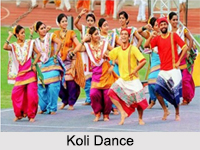
Koli Dance
A folk-dance form of Maharashtra, the Koli dance is mainly performance by the Koli community of the region. Known for their primary profession of fish...
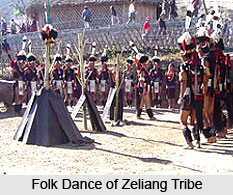
Folk Dances of Nagaland
Folk Dances of Nagaland reflects the naga tradition and culture of the local habitants. In most of the cases, naga dances are monopoly of men with som...
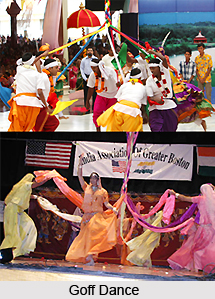
Goff Dance
Goff dance of Goa is performed during the Shigmo festival in the month of Phalgun in Hindu calendar. Goan peasants mainly practice this dance after th...
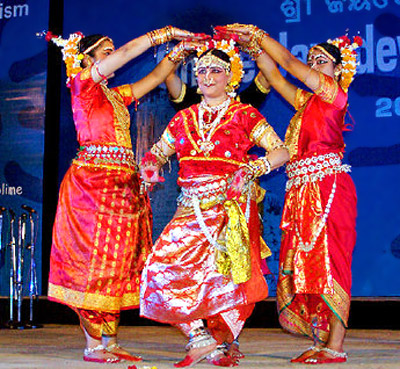
Abhinaya Chandrika
Abhinaya Chandrika is an ancient text on Odissi dance that explain every minute details of Odissi performance. The text explains about different mudra...
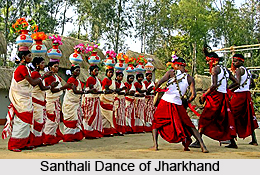
Santhali Dance
Santhali dance is a vibrant folk tradition of the Santhal tribe, reflecting the deep connection of the Santhal tribe with nature, community, and celeb...
Related articles in Indian Dances
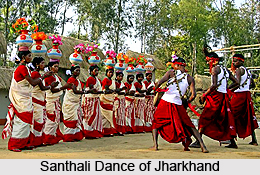
Santhali Dance
Santhali dance is a vibrant folk tradition of the Santhal tribe, reflecting the deep connection of the Santhal tribe with nature, community, and celeb...
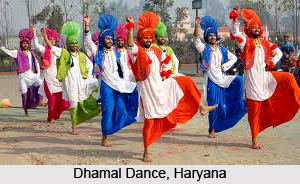
Dhamal Dance
A folk dance form of Haryana, the Dhamal Dance has its roots in the days of the Mahabharata. This dance form is primarily performed by men in the outd...
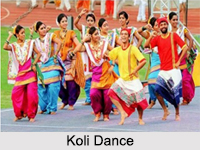
Koli Dance
A folk-dance form of Maharashtra, the Koli dance is mainly performance by the Koli community of the region. Known for their primary profession of fish...
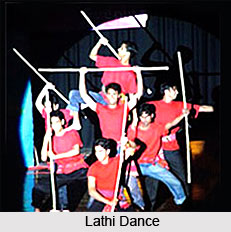
Lathi Dance
Lathi dance is a dance form of West Bengal performed on the occasion of Muharram.
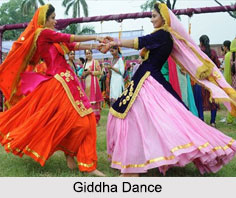
Giddha Dance
Giddha Dance of Punjab, performed only by the women, is a very popular folk art form in India. During Lohri, the Punjabi women reveal their joy throug...