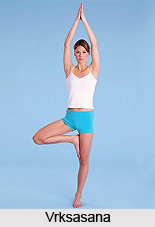
 Vrksasana, or Vrikshasana, is a cultural yoga asana that strengthens the calf and ankle muscles and mimics a tree in the completed posture.
Meaning of Vrsksasana
Vrksasana means the tree pose in Sanskrit. This Cultural Asana derives its name from the resemblance of the final pose to an erect tree.
Yoga Texts and Vrksasana
Vrksasana was first mentioned in the Gheranda Samhita, a significant Hatha Yogic text first compiled in the 18th century. It was mentioned in subsequent asana compendia. It now finds a place in a number of yoga sequences and is a well known posture.
Practice Vrksasana
A sequential process for performing Vrskasana follows.
1. Stand erect with legs together, hands by the side of thigh, gaze in front.
2. Fold your right leg at the knee and place the sole near the left thigh joint.
3. Bring both the hands in Namaskara Mudra.
4. After maintaining it for some time, release your hands and stand on both the feet.
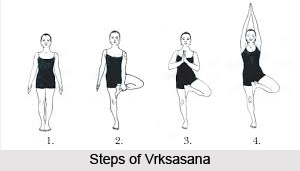 5. Now practice similarly from the other leg. This completes one round of Vrikshasana.
Effects of Vrksasana
1. This improves body-minded co-ordination.
2. Thigh and calf muscles, ankles and the spine are made strong.
3. Stretches the groins and inner thighs, chest and shoulders
4. Improves sense of balance.
5. Relieves sciatica and reduces flat feet.
Precautions in the practice of Vrksasana
1. Remember to stand erect.
2. Folded knee should point toward their respective sides.
3. This is a balancing pose. If you feel like losing your balance then come back and practice again.
4. People with high blood pressure should not raise their arms overhead.
Beginners Tip: If a raised foot tends to slide down the inner standing thigh, put a folded sticky mat between the raised-foot sole and the standing inner thigh.