
Tropical wet and dry climate is also known as monsoon savanna in India. This climate is enjoyed by most of the Plateaus of Peninsular India excluding the semi-arid tract that is situated immediately to the east of the Western Ghats. The tropical wet and dry climate is characterized by persistently high temperature in the coolest month and dry winter. Further, another feature of this climate is long dry period that spreads over winter and early summer. Mean monthly temperature is above 18 degree Celsius during the winter season. Summer before the onset of rains is very hot, particularly in the interior low level areas where in May maximum temperature may increase up to 46 degree Celsius and sometimes even up to 48 degree Celsius.
As far as the tropical wet and dry climatic season in Nagpur is concerned, the mean monthly temperature of May, which is the hottest month, is around 35 degree Celsius and of December, which is the coolest month, it is around 20 degree Celsius. This region is out of the influence of westerly depressions. Thus, there is very little rainfall during the winter season except in Tamil Nadu and the adjacent part of Andhra Pradesh and Karnataka, which receive rainfall in October, November and December. Besides, having different rainfall regime, Tamil Nadu is cooler during summer by around 3 to 4 degree Celsius and warmer by almost 4 degree Celsius during winter than other areas where the tropical wet and dry climate is prevalent. Tamil Nadu and coastal Andhra Pradesh are thus divided as a sub region.
The number of dry month ranges from five to seven and the annual rainfall from 75 to 150 cm. rainfall is received from June to September although in the south, it continues falling up to the end of December. The months of October, November and December receive more than half of the annual rainfall in Tamil Nadu. Rainfall decreases to the west. Withered trees and dried up grasses burst into life and rivers become turbulent during the rainy season.
Moreover, the tropical wet and dry climate or the monsoon savanna is further subdivided into two major parts and these are - North East Indian Plateau type and Tamil Nadu type.
Tropical Wet and Dry Climate
Tropical Wet and Dry Climate in India is generally characterized by dry winter and high temperature during the summer season. It is divided into North East Indian Plateau type and Tamil Nadu type.
Recently updated articles in Geography of India
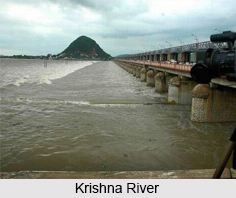
Krishnaveni River
The Krishnaveni River, presently known as the Krishna River, is one of India’s major rivers. Originating in the Western Ghats of Maharashtra, it flows...

Wakal River
The Wakal River is an important tributary of the Sabarmati River, originating in Rajasthan’s Aravalli Range and flowing through Rajasthan and Gujarat....
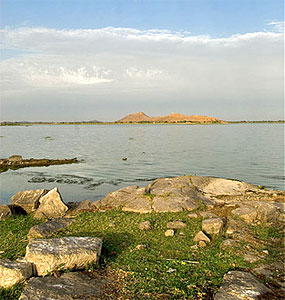
Pahuj River
Pahuj River is an important tributary of the Sindh River that flows through the Indian states of Madhya Pradesh and Uttar Pradesh. Originating in the...
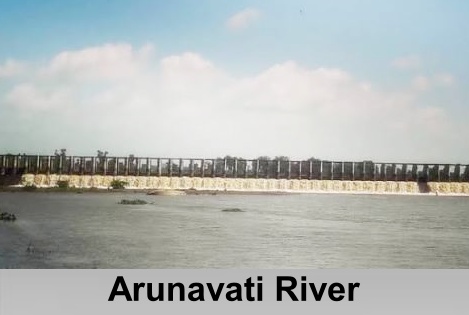
Arunavati River
Arunavati River is a seasonal right-bank tributary of the Tapi River, flowing through parts of Madhya Pradesh and Maharashtra. Originating in the Satp...
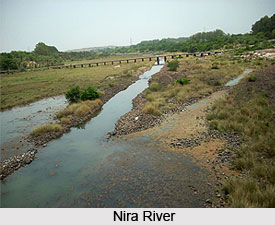
Nira River
Nira River is an important tributary of the Bhima River flowing through Maharashtra. Originating in the Western Ghats, it traverses Pune, Satara, and...
Related articles in Geography of India
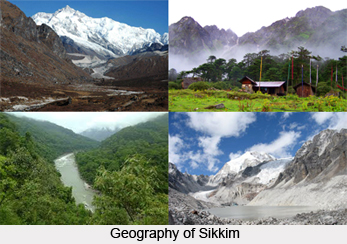
Geography of Sikkim
Geography of Sikkim is characterised by a vast array of magnificent hillock that extends from one corner of the state to the other.
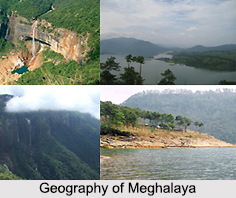
Geography of Meghalaya
The suitable climate, highland plateaus, rivers and the flora and fauna together forms the geography of Meghalaya.
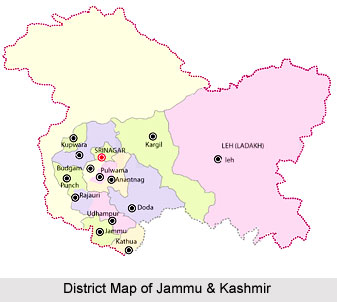
Geography of Jammu & Kashmir
Jammu and Kashmir is encompassed by valleys. Some of the dominant valleys of the state are Kashmir Valley, Tawi Valley, Chenab Valley, Poonch Valley,...
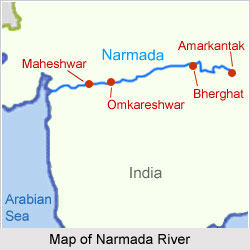
Narmada River
Narmada River is regarded as the 5th longest river of India and the life line of Madhya Pradesh. Narmada River basin spreads over an area of about 98,...
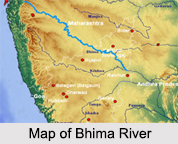
Bhima River
The Bhima River is the largest tributary of the Krishna River and is significant in the western and southern Indian states.