
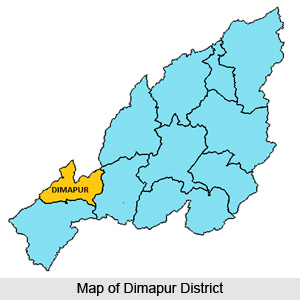
 Dimapur District was inaugurated as the eighth district of Nagaland in December, 1997, with its headquarters located at Dimapur. Earlier it was a sub-division under Kohima District. Besides being referred to as a gateway of Nagaland and Manipur, main commercial activities of the state, is centered on Dimapur. Dimapur District is bounded by Kohima District on the south and east, Karbi Anglong District of Assam on the west, Karbi Anglong and Golaghat District of Assam, in the west and in the north. Dimapur city, the district headquarter is distinct in its character where all the different communities have congregated, portraying a mini India.
Dimapur District
Dimapur District is one of the eight districts of Nagaland and has its administrative headquarters at Dimapur. Dimapur District was created in the year 1997.
Introduction
Dimapur District was inaugurated as the eighth district of Nagaland in December, 1997, with its headquarters located at Dimapur. Earlier it was a sub-division under Kohima District. Besides being referred to as a gateway of Nagaland and Manipur, main commercial activities of the state, is centered on Dimapur. Dimapur District is bounded by Kohima District on the south and east, Karbi Anglong District of Assam on the west, Karbi Anglong and Golaghat District of Assam, in the west and in the north. Dimapur city, the district headquarter is distinct in its character where all the different communities have congregated, portraying a mini India.History of Dimapur District
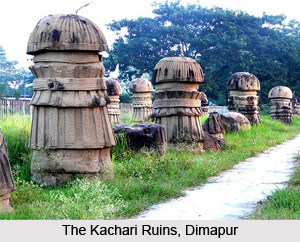
Dimapur is the ancient capital of Kachari tribe, who ruled till 13th century AD. Reminiscences of the glory of this kingdom can be found in the ruins that are scattered in and around the town. These ruins give evidence of a culture that were predominantly Non-Aryans. Dimapur District draws its name from the Kachari dialect; `di` - meaning river, `ma` - meaning great or big, and `pur` - meaning city, together connoting `the city near the great river`. Kachari kingdom flourished in Dimapur is evident from the existence of Kachari Rajbari Fort ruins, housing the ancient stone monoliths, and the many excavated tanks.
Geography of Dimapur District
 A large area of Dimapur District is in the plains with an average elevation of 260 metres above the sea level. Dimapur is situated at 25 degree 54 minutes 45 seconds north Latitude and 93 degree 44 minutes 30 seconds east longitude. Climate is hot and humid in the plains of Dimapur District during summer (reaching a maximum of 36 degree Celsius, with humidity up to 93 percent) while the winter months are cool and pleasant. The average annual rainfall in the district is around 1504.7 mm.
Administration of Dimapur District
Administration of Dimapur District is headed by a deputy commissioner. This district has four sub-divisions; Nuiland and Medziphima with Additional Deputy Commissioner as the administrative head and Kuhuboto and Dhansririphar sub-divisions headed by Sub-divisional Officer.
Tourism in Dimapur District
 Tourism in Dimapur District includes visits to several sites like nature parks, waterfalls, and temples as well as historical sites. The tribal culture of the region is one of the major attractions for the travellers. Tourism in Dimapur District implies an enriching and rejuvenating experience for the tourists. The district is known for its scenic beauty and this aspect enhances the charm of the tourism experience of the visitors.
Some of the popular tourist attractions offered by Dimapur District are mentioned below -
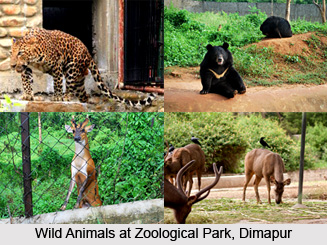
Zoological Park: The Zoological Park is located 6 kms away from the township of Dimapur with a total area of 176 hectares. The topography of the area is gentle rolling plateau with low lying area ideal for aquatic birds. It was inaugurated in the year 2008 with the objective of serving as a Conservation Centre for fauna of North-East India.
Diezephe Craft Village: Located 13 kms from Dimapur, Diezephe Craft Village houses weavers and craftsmen, deft in the arts of woodcarving, bamboo and can works. This village is popular for its diverse handloom and handicrafts. It also reflects the rich culture of the region.
 Green Park: Green Park is considered as a perfect place to rejuvenate or relax for the tourists. As the name suggests, this place is full of greenery. This park is located within the state Horticulture Nursery.
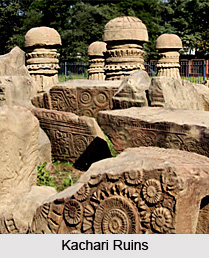
Kachari Ruins: Kachari ruins are situated in Dimapur, the ancient Kachari capital. It is one of the important sites of megalithic culture. Most of the ruins appear to be contemporaneous with the Kachari civilization. Though the Kacharis are predominantly Non-Aryan with elaborate rituals and the cult of fertility, there are evidences of a touch of Hindu influence on most of them. Dimapur contains ruins of temples, reservoirs and other monuments of which the most notable are their monolithic structures. The monoliths represent the elaborate rituals of the cult of fertility. The beautifully executed entrances to these monuments are still in pristine condition. The North East Zone Cultural Center has a small well-maintained museum showcasing the cultural heritage of the this region of the country.
Nagaland Science Centre: Nagaland Science Centre, the first of its kind in the state, has been setup with the primary objective of promoting creative learning of science in an informal way. There are different galleries in this science centre.
The places of tourist interest of Dimapur District attract people from all parts of the country.
Rituals of Ganga Dussehra
The celebration of Ganga Dussehra takes place at major ghats of India including Rishikesh, Haridwar, Garhmukteshwar, Allahabad and Varanasi. Thousands of pilgrims partake in the celebrations. Aartis are performed by the priests in the honour of Goddess Ganga. Standing beside, another priest pours water on the heavily cloth wrapped hands of the first priest for protecting him from burns. Chants and songs in the praise of Ganga can be heard from the devotees amidst the floral fragrances. They also take holy dip in the river. The river flows with great force by twilight, however pilgrims still do not cease to take the holy dip. It is believed that the dip in the river calms and cleanses the mind. In case a person is unable to take a bath, he performs Ardhaya near the river followed by Tarpan and Tilodak. In the evening the ambience of the ghat gets filled with the sound of kirtans, bhajans and shlokas. Leaf boats are also offered to the river with flames, sweets and flowers which creates a mesmerizing spiritual experience. On the occasion of Ganga Dussehra grand fairs are organized at different parts of the country.
Legend of Ganga Dussehra
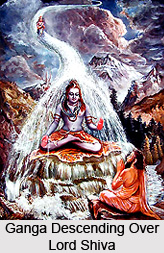 Legend of Ganga Dussehra states the events, as per Indian mythology, which led to the initiation of its celebration. It narrates the tale of King Sagara, belonging to Ikshvaku dynasty, who ruled over Ayodhya and had two queens namely Keshani and Sumati. Neither of the queens was able of bearing a child. Thus the king performed severe austerities so that his wives could produce sons. Later Queen Keshani gave birth to a son named Asmajas and Sumati bore 60,000 sons. For declaring his suzerainty over the neighbouring kingdoms, King Sagara performed the Ashvamedha sacrifice. As per the custom, the sacrificial horse was set free for wandering in the neighbouring kingdoms. A battle ensued if the horse was caught and the consequence of the battle decided the winner. The horse was followed by 60,000 sons of King Sagara. When it entered a cavern where sage Kapila was performing meditation, they followed course. On being unable to find the horse in cavern, they assumed that the horse was captured by Kapila. As Kapila was a sage, they did not kill him but began creating disturbances in his meditation. As a result Kapila got annoyed and burnt the 60,000 sons of Sagara with a curse.
After the elapse of ages the great grandson of Sagara, named Bhagiratha, once came across the bones of his dead ancestors. He wished to perform the `shraddha` of his ancestors but the ceremony was not feasible due to unavailability of water. During that period the country was encountering severe draught as Agastya had drunk all the waters of the ocean. Thus Bhagiratha prayed to the Creator, Brahma, and pleaded him to end the draught. Brahma in turn asked him for praying to Lord Vishnu who was the Preserver of the earth to allow the heavenly Ganga for descending to the earth. Ganga, in fact, issued from his big toe. Lord Vishnu agreed to the prayers of Bhagiratha but also asked him to request the third member of the Hindu trinity of Gods, Lord Shiva, for allowing the torrential rain, before coming down to earth, fall over his head. This was asked because if the extremely forceful river descended on the earth unchecked, the earth might split up with her fall.
Lord Shiva also agreed to this and received the enormous weight of the cascading Ganga over the hair piled high on his head. The river while meandering through the labyrinth of his hair slowed down, losing its force and progress. It then came down gently to the Himalayas and proceeded gradually towards the plains pleasing the parched earth with its water. This is the reason for which the anthropomorphic image of Ganga is depicted in the matted hair of Lord Shiva, who is also known as Gangadhara. The effort of Bhagiratha was highly praised by his ancestors and all the Gods. It has been termed as `Bhagiratha`s Prayatna` which signifies doing a noble work despising all odds.
Significance of Ganga Dussehra
River Ganga is an important river religiously, historically, mythologically and economically. Originating from Gangotri in Himalayas the river has nurtured numerous lives up to the Bay of Bengal. The sacred water of Ganga River is extensively used in Hindu rituals. The festival is entirely dedicated to commemorate the presence of this holy river in India. The name Dussehra also signifies a special meaning in which `Dus` refers to ten and `Hara` means defeat. Thus is the believed that praying on Ganga Dussehra can help in achieving salvation from 10 sins.
Recently updated articles in States of India
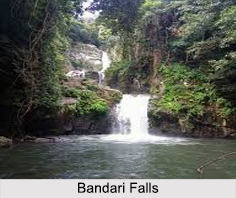
Bandare Waterfalls, Meghalaya
Bandare Waterfalls in South Garo Hills, Meghalaya, is a secluded natural attraction surrounded by dense subtropical forests and rugged mountain terrai...
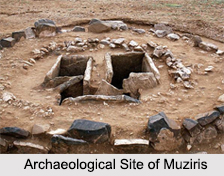
History of Thissur District
Early History of Thissur District explains flourishing of the port cities. Now these port cities are transformed into archaeological sites.
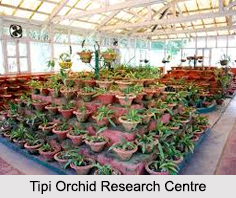
Tippi Orchid Research Centre, Arunachal Pradesh
Tippi Orchid Research Centre in Arunachal Pradesh is renowned for its rich collection of exotic and endangered orchids. Surrounded by lush rainforest...
Tourism in Nashik District
Pilgrimage tourism in Nashik district involves visiting the various places of Hindu and Jain worship located here. Some of the holiest sites for Hind...
Mangadu, Kerala
Mangadu in Kerala’s Kollam district is a significant megalithic site known for its urn burials, cist burials, menhirs, and stone circles. Excavations...
Related articles in States of India
East Indian States
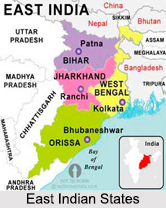
East Indian States comprises of Bihar, Jharkhand, West Bengal, Odisha and also the Union Territory of Andaman and Nicobar Islands. It defines the cult...
Purnia District in Bihar
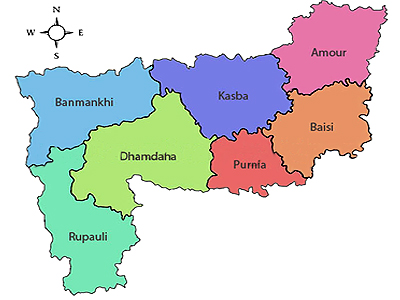
Purnia District is located in Bihar and extends from River Ganga to Nepal. The district has a rich Hindu history and glorious past.
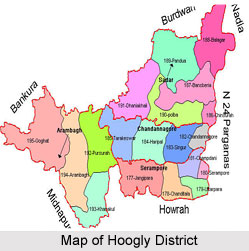
Hooghly district
Hooghly District along the bank of the river Hooghly is one of the principal trading ports of West Bengal.
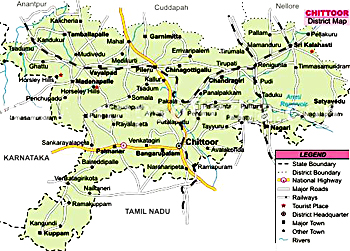
Geography Of Chittoor District
Geography of Chittoor district is spread along the topography of the land which is divided into two natural divisions; Chittoor has a dry and healthy...
Districts of West Bihar
Districts of West Bihar is comprised of medieval monuments that were built by the different governors of Mughal era.