
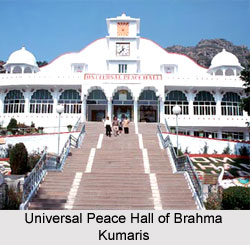
 To develop the inner strength, to cultivate the inner values and above all to teach a practical method of meditation The Brahma Kumaris World Spiritual University recognizes the very inherent goodness of all people.
Brahma Kumaris
Brahma Kumaris develops the inner strength while cultivating the inner values through spiritual understanding.
Introduction
To develop the inner strength, to cultivate the inner values and above all to teach a practical method of meditation The Brahma Kumaris World Spiritual University recognizes the very inherent goodness of all people.History of Brahma Kumaris
 The history of BKSWSU is a tale of a journey, from a humble beginning to a mammoth growth. There are actually a very few organizations to witness such growth. BKSWSU, which is now a name in the arena of the spiritual universities, has witnessed an enormous growth. Again this growth has not hindered its principle and BKSWSU has therefore quite successfully maintained and adhered to its original principle.
The age-old history of the Brahma Kumaris still whispers the tales of the days when it was known in the name of Om Mandali. The University came into being under the name and style of Om Mandali and was consisted of only a handful of men, women and children living in Hyderabad, Sindh (now part of Pakistan, but at that time part of colonial India). Gradually from this humble beginning the BKSWSU steadily became a name in the arena of spiritual education. Dada Lekhraj who happened to be one of the most respected and wealthy members of their community realized the dreams of this spiritual university.
Dada Lekhraj`s vision further discovered a knowledge which transcended all earthly things; a knowledge about the nature of the inner self, the soul, the knowledge of God and of time. This simple but profound concept awakened a sheer sense of recognition in those with whom this transcendental vision was shared.
It was right after one year of its establishment, Om Mandali moved away from Hyderabad to Karachi. For the greater purpose of self conversion, contemplation and to further devote time to that intense spiritual study at least four hundred individuals lived there.
World Headquarters of Brahma Kumaris
The year 1950 was indeed an important year in the history of Brahma Kumaris. It is in this year the community moved to Mount Abu. Mount Abu, has been credited for its serenity and pristine splendor and certainly for its age-old heritage. Perched high in the Aravalli Mountains, Mount Abu with its divine grandeur had all those ex factors, to be the right place for reflection and contemplation. Perhaps this was the reason why the community moved the headquarters to the Mount Abu. Named as Madhuban (Forest Of Honey) in a rented building there at Mount Abu the community established the University`s World Headquarters.
Expansion of Brahma Kumaris in India
The expansion of Brahma Kumaris in India is again a tale of a ceaseless journey. Dada Lekhraj better known as Brahma Baba felt the sheer necessity to share the knowledge he did receive, with the rest of India. The year was 1952 and with the greater intention of implementing his plans sent a few young women members to Delhi and the then Bombay to establish study centers to teach Raja Yoga meditation. The expansion of Brahma Kumaris in India thus began humbly however today; a single town in India could not be found without a Brahma Kumaris study center.
In The organization did expand rapidly. It was in the year 1971, the permanent centers were established in London and Hong Kong. This further strengthened the roots of the organization whilst leading towards a colossal worldwide expansion in terms of both geographical growths as well as in the growth of overall membership.
In The organization did expand rapidly. It was in the year 1971, the permanent centers were established in London and Hong Kong. This further strengthened the roots of the organization whilst leading towards a colossal worldwide expansion in terms of both geographical growths as well as in the growth of overall membership.
Brahma Kumaris Spiritual University
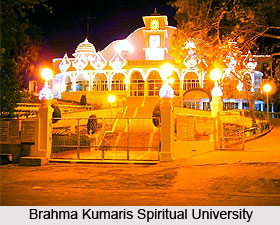 Besides the mountain summits, temples and forts Mount Abu is famous for a place of interest that is quite different from these. It is the Brahma Kumaris Spiritual University and Museum. This organization is also known as Prajapita Brahma Kumaris Ishwariya Vishwa Vidyalaya. The main aim of this monastery is to educate people morally and spiritually. This neo-Hindu sect promotes Raja Yoga, and different forms of meditation. The headquarters of this institute is located in Rajasthan. Brahma Kumaris Spiritual University was established in 1950. The teachings of this organization propagates that there must be equality amongst all religions.
According to this sect it does not matter by which means an individual worships his god as all the paths lead to the supreme power. In fact what is necessary is total devotion. To attain God one must be imparted with spiritual knowledge. Yoga and meditation are some of the ways in which man can reach out to that supreme power. In Mount Abu the travelers would find a Brahma Kumari clad in white attire. Today Brahma Kumaris Spiritual University has 4500 branches all over the world.
The main objective of the university is the establishment of universal peace. The university run here offers several courses to the interested students. Residences are also available at this educational institution. There is a museum too that displays the scriptures and other artifacts that belong to the organization. There is a separate meditation hall too where the tourists can try their hand at meditation. There is no entry fee for entering this museum.
Each year people from all over the world visit Brahma Kumaris Spiritual University and Museum in Mount Abu.
Brahma Baba
Brahma Baba , Founder of Brahma Kumaris : Born in the year 1876 into a humble home as Lekhraj Kripilani, Brahma Baba was the son of a schoolteacher. Strict Hindu tradition was induced in him from his early days. In the year 1836, Baba begun his journey, the journey in understanding the truths of life and founded the Btahma Kumaris.
Spiritual Leaders of Brahma Kumaris
 The young women whom Brahma Baba once put in the front position to deliver and spread his messages later became the beacons of peace and love in the world of greed, violence and anger.
One of the most asked questions is "Is this Brahma Kumaris a women`s organization?" the answer is indeed "No". Though primarily at its initial stage women administered it yet men and women all contribute uniformly. It is the strange unification on multiversity and masculinity, the perfect medley of feminineness and maleness that makes Brahma Kumaris an establishment of its own rank.
With eight young women Brahma Baba formed a Managing Committee In October 1937 and in February 1938, he ceded his entire worldly assets to a Trust doled by them. The role of women in the growth of Brahma Kumaris is therefore undeniable. Brahma Baba quite ideally envisioned that the womanly timbres like patience, tolerance, sacrifice, kindness and love will surely become the foundation of Brahma Kumaris which certainly supports in personal growth, human relations, and in the development of caring communities.
The union of man and woman, the ideal harmony of the feminine qualities with the masculine magnificence was the very cornerstone of the spiritual partnership of Brahma Kumaris. Today, even though women leads the establishment, yet there are many men coordinating centres, playing other key managerial roles.
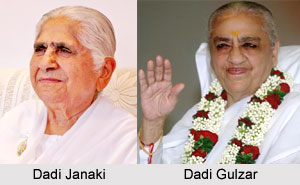
Dadi Janaki , Brahma Kumaris
At the age of 21 Dadi Janaki joined the BKWSU as the founder member in the year 1937. She established a number of BK centres throughout India, In 1974, in London, UK, Dadi Janaki established the first BK centre. Under her guidance there are now more than 100 centers present in 100 countries. In the year 2007, she was appointed Administrative Head of the BKWSU
Even at the age of 92, Dadi Janaki still holds a peerless daily lecture and touring schedule. She has traveled extensively and has encountered with people from the grass roots to government leaders. There is nothing impossible according to her and wishes to even make the impossible, possible.
With a compassionate heart and an unswerving optimism Dadi Janaki has delimitated the very conception of freedom in the West. Acknowledged as a great teacher Dadi Janaki has also received international recognition. For the ones who are searching for hope and peace, Dadi Janaki is an inspiration.
Dadi Gulzar , Brahma Kumaris
A matchless amalgamation of purity, bravery and humour, Dadi Gulzar was only 16 when Brahma Baba asked her to leave the headquarters and to open a meditation centre in Lucknow. Innocence, piousness and courage characterize the tale of Dadi Gulzar who traveled through India as a young girl, sheltered only by the confidence that God was there steering her life
Dadi Gulzar has a tremendous hope and belief in the human potentiality in creating a better tomorrow. From a very young age she has dreamt of a world where technology, together with communal, economic and political structures, are in alliance. . Dadi Gulzar is the Director of Brahma Kumaris centre in Delhi and Kashmir.
Brahma Kumaris Administration
The World headquarter is ideally seated at the Mout Abu, Rajasthan. It comprises the Administrative Head, Additional Administrative Head, Joint Administrative Head, a Governing Board and a Management Committee.
<br>
<br>
The International Coordinating Office is located in London, UK. With the coordination with the Administrative Head, Additional Administrative Head, Joint Administrative Head, Executive Directors and Regional Coordinators the International coordinating office operates. It also acts as a relationship and interaction center for the national and regional coordinating Offices.
<br>
<br>
The Regional Coordinating Offices are located in, the United Kingdom Australia, Kenya, Russia and in the USA. Coordinating the University`s activities within their respective region is the major role of the Regional Coordinating Offices. These act as the principal interface between the National Coordinating Offices, the International Coordinating Office and World Headquarters
<br>
<br>
The National Coordinating Offices are located in all the countries. The National Coordinators organize the relationships and actions of all correlated centres and sub-centres in their country and also the centers and sub centers operate in total harmony. In accord to the principles and guidelines of BKWSU all centres are managed.
Students of Brahma Kumaris
Brahma Kumaris offers education in moral and spiritual value. Individuals aged above 18, whoever support the guiding, teachings and philosophy of the BKWSU can attend the daily classes twice a week on a regular basis. There is an option of free enrollment also. The students from all strata of the society here at the BK centre thus mirror a variety of backgrounds, echelon of education, profession and age.
Current data show that the University has 825,000 students and over 8,500 centres in 100 countries and territories.
Current data show that the University has 825,000 students and over 8,500 centres in 100 countries and territories.
Recently updated articles in History of India
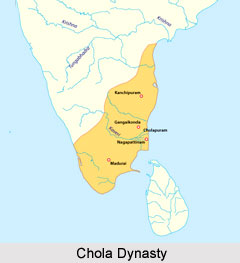
Chola Dynasty
Chola Dynasty is a Tamil dynasty and had longest duration of ruling in parts of South India. Chola dynasty had ruled South India successfully for a ex...
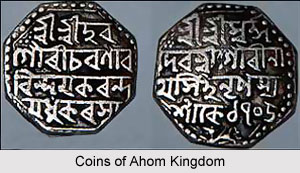
Suhungmung
Suhungmung was the fourteenth ruler of the Ahom dynasty who ruled from the period 1497 to 1539 AD. His reign was significant in terms of expansion of...
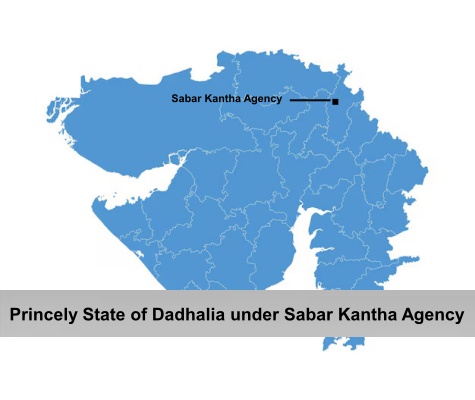
Princely State of Dadhalia
Princely State of Dadhalia was located in the present state of Gujarat. The state covered a total area of 28 sq miles and comprised of 15 villages. Th...
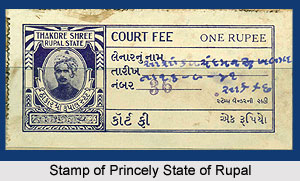
Princely State of Rupal
Princely State of Rupal was a part of the Baroda Agency, a sub division of Western India States Agency. It was under the administrative control of the...
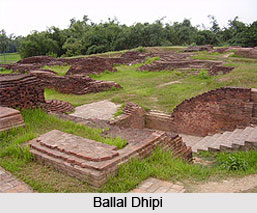
Archaeological Sites of West Bengal
Archaeological sites of West Bengal reveal several aspects of ancient India. Excavations by the Archaeological Survey of India have furnished artefact...
Related articles in History of India

Mughal Architecture during Babur
Mughal architecture during Babur marked the foundation of a new architectural era in India, blending Timurid, Persian, and local influences. His reign...

Architecture during Sayyid and Lodi Dynasty
Architectures during the Sayyid and Lodi dynasty were mainly the tombs and monuments for the dead rulers. It were carefully designed and meticulously...

Brahmanical Sources of Ancient History
Brahmanical Sources of ancient history are contained in the Vedas and they constitute one of the most important literary sources of information about...

Coins of Chola Empire
Coins of Chola Empire were issued in gold, silver and copper and carried the Chola emblem.

Coins of Khilji Dynasty
Coins of Khilji Dynasty had an influential feature that was followed by the other dynasties.