 Shifting cultivation is an integral part of the life of these tribal communities. Operation from clearing of forests to harvesting are closely inter woven with their life. Shifting cultivation is intimately blended with their beliefs, rituals, customs and festivals. Shifting cultivation used to be an ideal of utmost land productivity. It used to be an optimal mix of agricultural, hortipastoral and silvipastoral system. It was so when Jhuming cycle was longer (close to 40 years). Increased population shortened the Jhuming cycle. In places it has now been reduced to 2 years. Productivity has fallen. Many Jhumed areas are as good as wastelands. Low productivity pushes Jhuming areas progressively larger. With reduction in period of its cycle, shifting cultivation has become a great biodegradation factor in the Eastern zone.
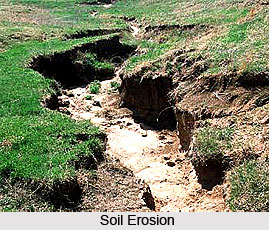
Landslides are also common in this part of the country. Small landslides often waste the top soils. Steep slopes and high rainfall produce torrents causing stream bank erosion. Waste riverine lands exist. They are flooded during monsoons. The reservoirs silt up, river beds fill up and swollen rivers overtop banks with progressively increasing ferocity. Floods have become quite common in these affected parts. Gully erosion manifests itself in areas never known before.
Low reservation in forests is characteristic of the East zone. Private ownership of forest is also seen here. Non-sustainable commercial felling of forests in recent past has done great damage. Many landslips of the past have graduated to huge landslides now. Weak geological formations demand careful handling of hill slopes in this region. Subsidence is also common. Better moisture leads to regeneration of some or other vegetation. Consequently, even extensively overgrazed, bare mountain slopes keep, willy-nilly, soils more or less protected from splash and sheet erosion. But these slopes can not tolerate excavation. Cutting for road construction damages slopes profoundly. Cut and fill slopes are highly unstable as this concentrates land slips along hill roads.
Thus it can be seen that soil erosion in the Eastern zone, apart from being the result of a number of physiographical factors, is mostly due to human practices of farming.