
Sirsa Fort is located in Sirsa district of
Haryana, near the Thar Desert,
approximately 250 kilometres north-west of New Delhi and 260 kilometres
south-west of Chandigarh, the state capital. The fort is situated to the
south-east of the present-day town of Sirsa, where the material remains of the
ancient fort can still be seen.
Sirsa Fort in Haryana
Sirsa Fort, located in Haryana’s Sirsa district, is an ancient fort associated with the town’s long history. Believed to have origins dating back to the medieval period, it witnessed the rule of several dynasties.
Introduction
History of Sirsa
According to local tradition, the town of Sirsa was founded
in the 7th century A.D. by a king named Saras, who is also believed to have
constructed the fort.
The name Sirsa is traditionally associated with the abundance of siris trees,
scientifically known as Albizia lebbeck, that once grew in the surrounding
region. In ancient times, the town was supposedly known as Sirsapattan. Sirsa
is regarded as an ancient settlement in Haryana and is believed to have formed
part of an old route leading towards the erstwhile city of Takshila.
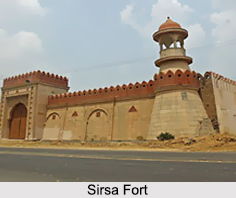
The historical significance of Sirsa is reflected in its references in several ancient texts. The town finds mention in the Mahabharata, Panini’s Ashtadhyayi, and the Buddhist text Divyavadana. Historically known by names such as Sairishaka and Sarsuti, Sirsa and its fort witnessed the rule of several dynasties and powers, including the Mughals and the Marathas.
One of the notable accounts of Sirsa’s medieval history appears in the Tarikh-i-Firishta. According to the chronicle, the Ghaznavid Sultan Mas'ud I captured Sirsa in 1037 during his campaign to conquer Hansi. His troops reportedly encountered large quantities of sugarcane growing around Sirsa. They are said to have used the sugarcane to fill the moat surrounding the town’s fortress, enabling them to launch an attack on the fort.
The Ghaznavid hold over Sirsa, however, appears to have been short-lived. Subsequent internal conflicts within the Ghaznavid Empire may have allowed the Tomara dynasty to regain control of the region. This possibility is supported by the discovery of coins belonging to Tomara rulers from both before and after 1037 at Sirsa.
The fortunes of Sirsa changed considerably in the later
centuries. The town was deserted following a devastating famine in 1783. It was
subsequently refounded in 1838 and, nearly three decades later, was
incorporated as a municipality in 1867.
Archaeology of Sirsa Fort
The archaeological significance of Sirsa is closely associated with the Ther Mound, where the ruins of the ancient town of Sarishika and the Sirsa Fort are believed to lie buried. The site extends over an area of more than five square kilometres. Despite its considerable archaeological potential, extensive excavations have not been undertaken, largely because of the dense human settlements that have developed over the site.
Nevertheless, archaeological discoveries from the area have provided valuable evidence of its historical importance. Stone sculptures, coins, an inscription, pottery fragments, the remains of the Sirsa Fort, and various other antiquities have been recovered from the region. These findings have helped shed light on the long and complex history of Sirsa and its importance as an ancient settlement.
Today, Sirsa represents a blend of historical heritage and modern attractions. The remains of its ancient fort, archaeological sites, and historical associations preserve the memory of its rich past, while the modern town continues to attract visitors. Together, these elements make Sirsa a distinctive destination where the region’s ancient, medieval, and modern histories converge.
Recently updated articles in Indian Monuments
Sirsa Fort in Haryana
Sirsa Fort, located in Haryana’s Sirsa district, is an ancient fort associated with the town’s long history. Believed to have origins dating back to t...
Badshahpur Fort
Badshahpur Fort is a historic defensive structure reflecting the architectural traditions of its era. Built with granite and red sandstone, the fort w...
Sitabenga and Jogimara Caves
Sitabenga and Jogimara Caves in Chhattisgarh are ancient rock-cut monuments dating to the early historic period. Known for their Brahmi inscriptions,...
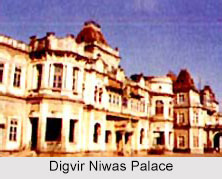
Digvir Niwas Palace
Digvir Niwas Palace in Vansda, Gujarat is one of the popular heritage buildings that reflect the majestic architecture of the early 20th century.
Historical Monuments of Satara
Among the historical monuments of Satara the fort at Satara is the most famous. Most of the constructions here belong to the Marathas.
Related articles in Indian Monuments

Monuments of Lakshwadeep
Monuments of Lakshwadeep are famous for their ancient religious feel and historical value.

Monuments of West Bengal
Monuments of West Bengal, mainly from the British era, are considered as priceless heritage of the state and attracts many tourists to the state.
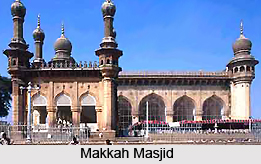
Monuments of Telangana
Monuments of Telangana covers the ancient, medieval and modern historical structures illustrating the architectural grandeur and attracting thousands...
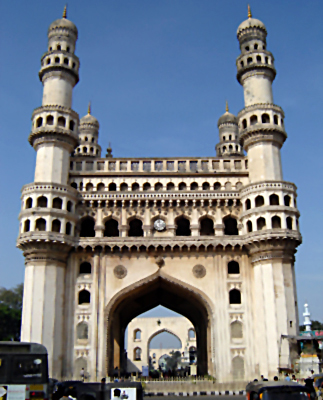
Architecture Of Andhra Pradesh
Architecture of Andhra Pradesh is an illustration of diverse types of Hindu, Buddhist and Islamic architectural styles.
Architecture of Lucknow
Architecture of Lucknow is mostly Islamic in nature. It is representative of 18th and 19th century Indian architecture. The architecture is broadly di...